
Radio Cadena Agramonte emisiora de Camagüey





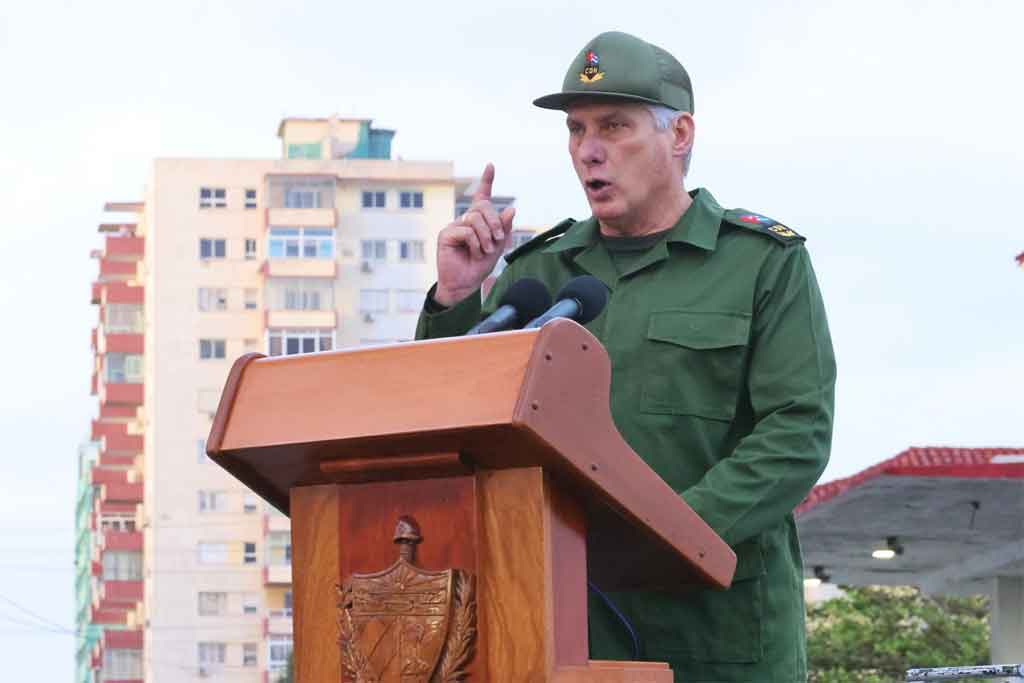
Havana, Dec. 2 - The current situation of arboviruses was, once again, the focus of this week's meeting between the First Secretary of the Central Committee of the Party and President of the Republic, Miguel Díaz-Canel Bermúdez, and experts and scientists in health matters, in which it was reported that there has been a decrease of 2.4% in cases of nonspecific febrile syndrome at the national level, although with a slowdown compared to last week.
Despite the reduction in reports generally, there is an increase in seven provinces, in Las Tunas, Holguín, Pinar del Río, Mayabeque, Granma, Pinar del Río and Sancti Spíritus, mainly in the first three, reported Dr. Carilda Peña García, vice minister of public health.
Moderated by the head of the sector, Dr. José Angel Portal Miranda, at another point in the meeting, Raúl Guinovart Díaz, PhD in sciences, expert in Mathematics and director of Science and Technology at the University of Havana, emphasized that, according to the prediction analysis by region and country, the behavior of arboviruses in the coming weeks will be unfavorable.
In a separate interview with the press, Guinovart Díaz explained that, in addition to the vector control measures already in place, this time of year, with its decrease in temperatures, is conducive to reducing the Aedes aegypti infestation.
However, he warned that the mosquito will now seek refuge in warmer places, especially inside homes, making it vital for the population to reinforce preventive measures within their homes, particularly the elimination of possible breeding sites.
Earlier, Dr. Carilda Peña García reported that dengue transmission is maintaining the same pattern as the previous week. It is present in 14 provinces, 43 municipalities, and 51 health areas.
Regarding Chikungunya, she explained that a decrease has been observed over the last three weeks, reaching a 25.9% drop last week. Of the 5,716 new febrile cases reported, 5,409 were suspected and 307 were confirmed.
To date, 38,342 cases of Chikungunya have been recorded, of which 37,101 are suspected and 1,241 are confirmed. These cases have been reported in all 15 territories of the country and are concentrated in 113 municipalities and 199 health areas. Regarding Oropouche, she noted that no cases were reported in the last week either; the last case was confirmed on September 26.
Regarding the situation of acute respiratory infections (ARIs), the Vice Minister of Health reported a decrease over the last five weeks.
In the week that just ended, she said, there was also a 2.4% decrease compared to the previous week, with fewer than 893 medical visits for this reason. However, she clarified that a period of increased cases of ARIs is expected to begin.
This endemic corridor is not in an epidemic zone, she assured, but there is a group of viruses circulating and cases that should keep us on alert.
The specialist provided new data on COVID-19 surveillance. She reported that only 13 cases were diagnosed in October. During the year, 3,407 studies for COVID-19 have been carried out, 1,896 PCR and 1,511 antigen tests. Surveillance has been maintained, the necessary resources are available, and there has been no variation in the Omicron strain and the subvariants that have been circulating.
Commenting on the data presented by the Minsap authorities, Díaz-Canel insisted on the need to continue offering the population all the information, doing so with complete transparency and breadth, and doing so on a daily basis.
Regarding the use of new technologies for vector control, with emphasis on the Aedes aegypti mosquito, IPK specialists elaborated on techniques such as the sterile insect method, through irradiation; genetic modification of mosquitoes (transgenic insects); and the use of bacteria that infect the mosquito, all with the goal of reducing or eliminating its population.
These techniques, validated and promoted by the World Health Organization (WHO) and the Pan American Health Organization (PAHO), have achieved significant development in more than 20 countries, with Brazil leading the Latin America and Caribbean region. (Granma Digital) (Photo: Internet)