
Radio Cadena Agramonte emisiora de Camagüey





Havana, Jan 4. - Some years ago, a commercial for the well-known credit card Mastercard used a clever device: a young woman, a child, and an elderly man expressed their desire to fulfill some crazy dream, to which the narrator responded: with Mastercard, it's possible. But the final sequence sealed the message in an unexpected way (which, paradoxically, produced the effect of consolidating the excessive prior claims): a child ran to hug his father, and the voiceover declared, "no, Mastercard cannot buy your child's love."
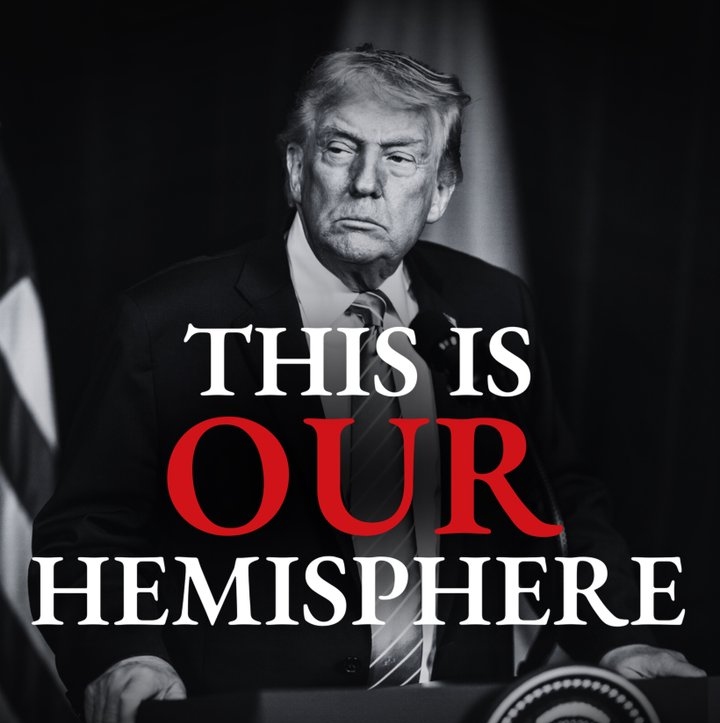
In a system where the value of a human being is often measured by the money they possess (their purchasing power) and not by their virtues or contributions to Humanity, there will always be those who believe they can buy everything. Donald Trump, a capricious and arrogant millionaire at the helm of a declining world power, knows only the recourse of force: that of money and that of arms. Did he bully other children at school, or was he bullied? A tempting question for psychoanalysts. Trump buys and threatens, says "let my will be done," seated on the throne of the merchants who were expelled from the temple by Jesus. Everything seems possible: inciting coups d'état (the novelty: in his own country); practicing pedophilia; murdering boatmen allegedly transporting drugs in the Caribbean Sea (already over a hundred) to intimidate a sovereign government that refuses to surrender its natural resources; stealing oil tankers, foreign companies, or others' assets; imposing sanctions and blockades on countries and their rebellious leaders; bribing or blackmailing weak rulers; (attempting to) annex territories rich in natural resources like Greenland or the Orinoco belt; being complicit in the genocide of the Palestinian people and, despite it all, believing he deserves to receive the Nobel Peace Prize and the devotion of subjugated peoples. Perhaps one day he will appear at the wedding of one of his Latin American lackeys and demand the "droit du seigneur" (the right to claim the bride on her wedding night). Some childhood trauma has returned him to Antiquity or the Middle Ages, when kings or emperors were remembered for the extent of the territories they conquered and their bloody military victories. But he does not resemble the romanticized memory of Charlemagne; his face, his empty gestures, his arrogance, his historical incapacity, resemble those of Hitler and Mussolini.
But I affirm the idea that the crumbling Western empire is the last in human history. Enough of declining empires and rising empires. Enough of empires. Multilateralism must lead us toward another possible world, where peoples exchange knowledge and wealth, where solidarity establishes the true human hierarchies. Let not the economic hegemony of the most powerful be sustained upon the exploitation of the weakest. Of course, this is a matter of class, that is, class struggle, both within each nation and externally. I heard an online lecturer say that the use of the term colonialism placed the cause of social contradictions in external factors and concealed the existence of class struggle within colonized countries.
An absurd idea: the neocolonial aristocracies, as Che Guevara pointed out, are vice-bourgeoisies in the service of metropolitan bourgeoisies. And the fundamental contradiction of the twentieth century, also in Che's sharp words, occurred between exploited peoples and exploiting peoples, according to an inevitable pattern: the internationalization of the class struggle. That is why when a segment of subaltern nations rebels and attempts to take charge of its own destiny, it challenges the entire imperialist system. It has always seemed a great paradox to me, or perhaps a fully conscious ideological purpose, that science fiction films depict technologically advanced future worlds in which rich and poor, exploiters and exploited, conquerors and conquered subsist in a "natural" way: as if class contradictions had a genetic origin and not a social (historical) one.
Brute force, however, is the child of impotence. He who threatens and rants lacks other resources to command respect. Our America, due to its geographic position, its riches, and its history, becomes once again the stage where Western imperialism, which is the current form of capitalism, plays out its survival. José Martí wanted a free Cuba and a free Puerto Rico as containment walls against imperialist expansion. Cornered, displaced from other markets, the once giant needs to forcibly control what it always called its "backyard."
Trump's lies lack sophistication; he has no time to construct them, and he believes he doesn't need them: he speaks of a crusade against drug trafficking and frees a drug-trafficking ally, a former president of Honduras, to help him subjugate his people; he speaks of restoring "democracy" in Venezuela and brazenly declares his intention to appropriate that country's natural wealth. The Trump Corollary to the Monroe Doctrine does not lie. The union of our peoples, since that of their governments will not always be possible, is the only alternative for salvation. "The trees must line up so the giant of the seven leagues cannot pass!" wrote José Martí on a January 10th, but in 1891.
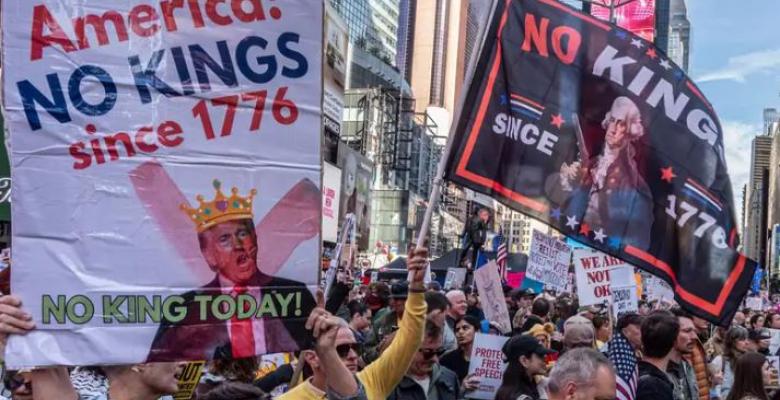
Yes, Trump's megalomania expresses, by contrast, the empire's awareness of its own fall. Unlike our Fidel, who in his will requested that no center or street bear his name, and that no statues or busts be erected in his honor, a believer, like Martí, in the strength of ideas, Trump follows the long tradition of the conqueror: the new over the old symbol, so that we remember the force of power. There are no scruples. From the national holidays that provided free entry to his country's national parks, Trump has eliminated two very significant ones: Martin Luther King Day and Juneteenth, which commemorates the abolition of slavery. In their place, he has incorporated his birthday. The magnate-president sponsors the construction of a gigantic American football stadium that will bear his name and has added his surname to the Kennedy Center. "We don't want kings," was the slogan of protesters in several U.S. cities.
The year ends badly, but I will not describe what we all know or live through. It is true that Capital seems unstoppable in its diabolical "games" of death—in Gaza, in Ukraine, in the Caribbean Sea—that traditional multilateral mechanisms like the United Nations prove useless, that now, at this very moment, children are dying, murdered by bullets or missiles, by hunger or disease, while the world celebrates the new year. But beware, the number of the dissatisfied, those who resist and show an unbreakable will to fight, grows each day. The cry of the gladiators, forced to fight, resonates strangely: Hail Trump, those who are going to prevail salute you! (Text and Photo: Enrique Ubieta/ Cubasí)