
Radio Cadena Agramonte emisiora de Camagüey





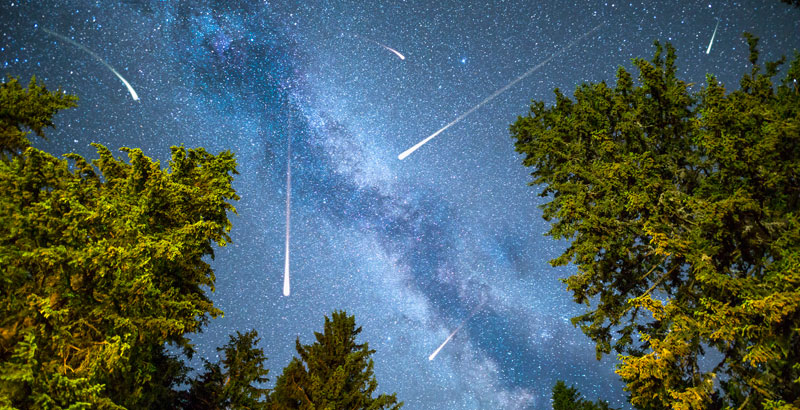
Washington, Dec. 24 - The Quadrantid meteor shower, the first of 2026, will reach its peak on January 3 and 4 and will be visible from the Northern Hemisphere, according to the Starwalk astronomy portal.
Until January 12, lovers of this sky spectacle will be able to see meteors, as the Quadrantids are known to produce bright fireballs even after the peak.
This meteor shower can offer dozens of shooting stars per hour under suitable conditions, but next year the Quadrantid peak will coincide with a full moon, which will significantly reduce the number of visible meteors (to about 10 per hour), according to Starwalk.
This is also one of the few meteor showers that features an extremely narrow peak each year, which in this case lasts only about six hours, according to the EarthSky website.
On January 3, Earth will be at its closest point to the Sun in its orbit, at 147 million kilometers, while on July 6 it will be at its farthest point (152 million kilometers), notes the website cite-espace.com.
The radiant (the point from which the shooting stars appear to originate due to perspective) of the Quadrantids is located in the constellation Boötes.
The Quadrantid meteors originate from dust scattered by 2003 EH, an object almost four kilometers wide considered an extinct comet, the source explains. (PL) (Photo: Taken from the Internet)