
Radio Cadena Agramonte emisiora de Camagüey





Havana, Dec 31.- The ways in which Cuba is perceived and understood outside its territorial waters are nuanced, drawing from the current political contexts in each place as well as the historical experiences and memory of their peoples.
Suddenly, Cuba becomes many things from the intricacies of a distant country. Cuba can serve as a unifying element among sectors and individuals who otherwise would not tolerate breathing the same air in a room. Cuba can also be a source of discord and a measure of political authenticity.
Certain leftist leaders seem to be apologizing for their cowardice. The smaller their souls are, the easier it is for them to deny Cuba, and behind the scenes, they excuse themselves to their people, arguing that if they support it, they will not win. And they do not win at all because people can easily smell when they are sold smoke disguised as perfume.
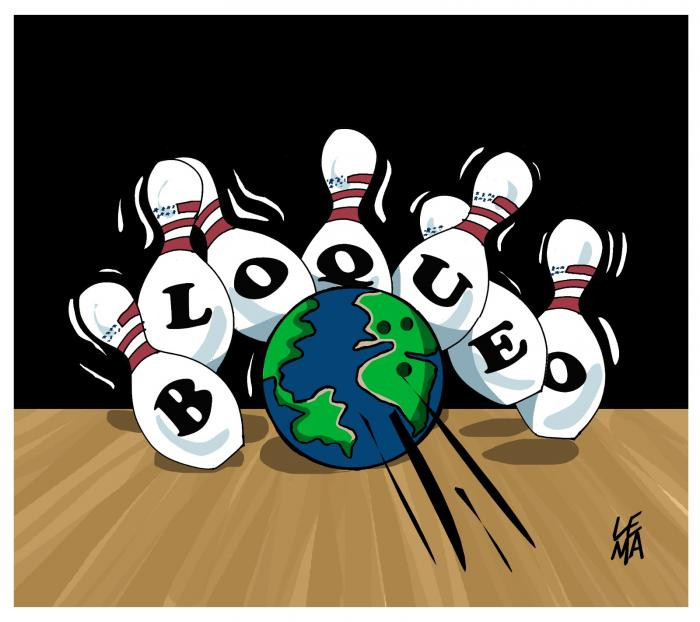
Cuba is often a nostalgic resource, a myth, a prejudice, an inspiration, a contradiction, and uncertainty… The annual vote in the United Nations General Assembly against the U.S. blockade of the archipelago is undoubtedly the most significant event in terms of international resonance. The figures of harassment are updated, and efforts are made to quantify the damages. This holds high value as it graphically represents something and leads to the concrete, which is often dismissed as mere propaganda.
The numbers and lines that record the impacts are, at a minimum, impressive each year. It must be said that numerical data has its limits. The increase in avoidable deaths and the deterioration of living conditions for millions of people has a side that is unquantifiable and silently violent, which we all know very well.
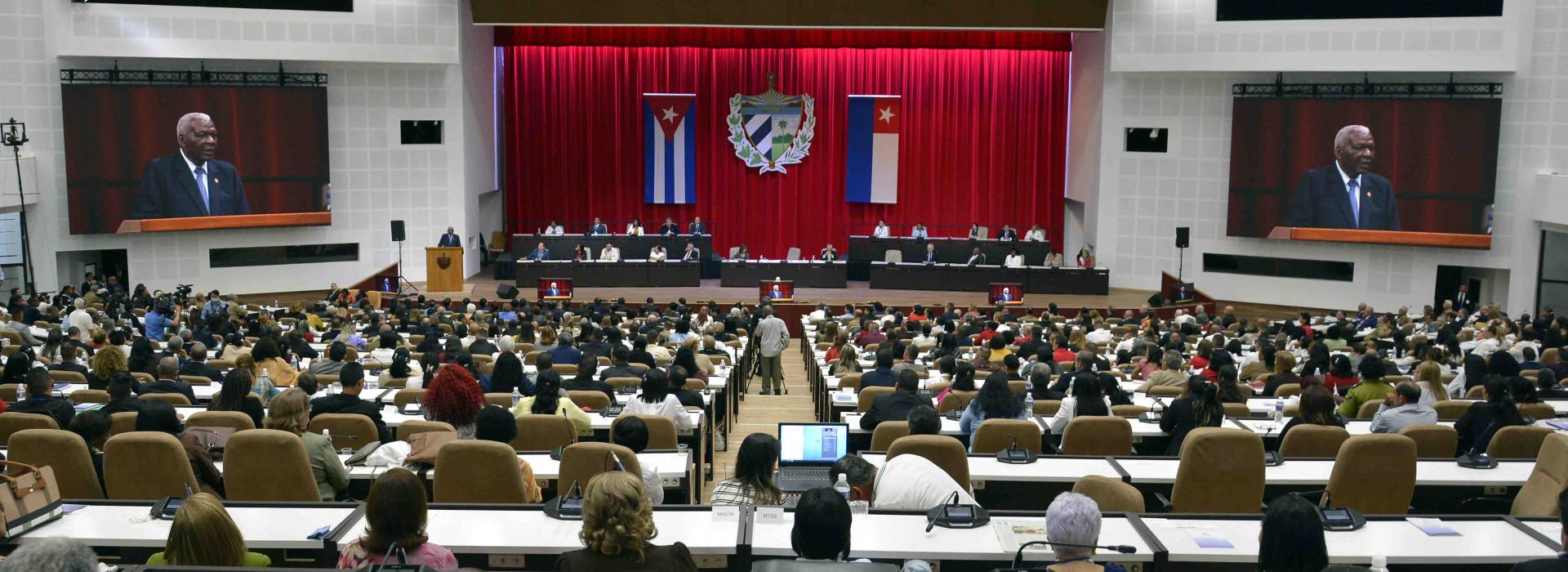
In that grand hall, all recognized nation-states officially express themselves, sometimes with very explicit speeches in addition to their votes. During this 2025 session, the resolution presented by Cuba passed by a wide margin; however, contrary to previous years, instead of two countries (the United States and Israel) opposing it, seven did so and twelve abstained after our "good" neighbor imposed "respectful" pressures, as the Cuban Foreign Minister denounced before any voting took place.
Little was said about the fact that 156 states supported Cuba. In reality, little is discussed, even within the country, about those who support Cuba from so many places—perhaps because talking about this support is as complex as the many understandings that exist externally about our country.
Among those 156 official votes are representatives from right-wing governments, progressive ones, socialist-oriented states; European kingdoms, African nations, those from Southeast Asia; countries lost among deserts, jungles, oceans, plateaus; in short, with as many internal complexities as Cuba may have, even if many are not exactly the same.
It is essential to speak about the efforts of those who do not want us to place us—given circumstances here and there—in a state of enmity with former socialist republics of Eastern Europe and with countries in Latin America. Look at the list of abstentions and those declared against us; locate them on a map and you will perceive, in the other hemisphere, the turbulence of a region still reconfiguring after the collapse of the USSR; meanwhile, in our hemisphere, one can understand the desperate race of the United States to regain its hegemony, along with the crises inherent in neoliberal democracies born from dictatorships that were never truly defeated and whose arms and nerves remain active—neither asleep nor silent.
We must talk about that, of course, but much more about the bloc that the Insular Caribbean forms in support of Cuba in international arenas. Let them also ask our pieces of land, tormented by fires and hurricanes, about Mexico and Venezuela. And we must speak of the African bloc—excluding Morocco—highlighting names such as Namibia, Mozambique, Algeria, the countries of the Sahel...
And we must go beyond state politics and talk about the peoples, even when their voices are more than once hijacked in the international arena and gagged by corporate media outlets.
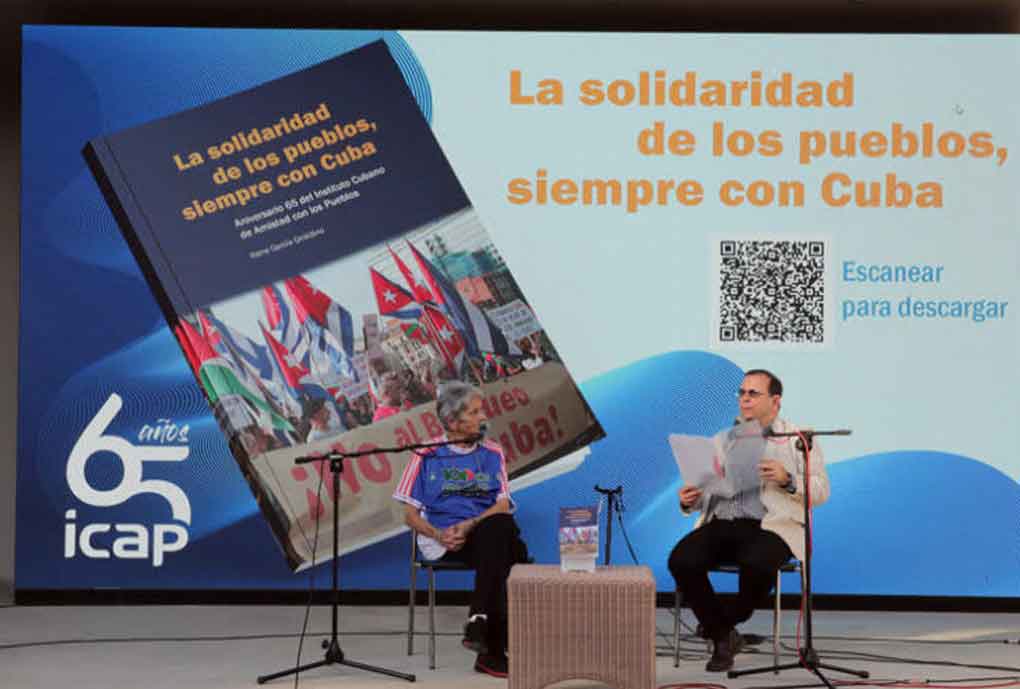
Let it be said, because the peoples know how to organize, and our hospitals and polyclinics can surely attest to it, as in today’s harsh circumstances they see aid of all kinds arriving in boxes, counted suitcases, or containers; aid gathered in many ways, from people with a lot of money to others who sacrifice eating well for a week, simply because it is for Cuba.
These are not random acts of affection, but rather a world of affection that Cuba has managed to build. In the tension of the rope, in the midst of storms, and almost always with water up to our necks, they pull from one side to save the other and vice versa, because there is the certainty that destiny, one way or another, is shared. (Granma Digital) (Photo: Cartoon by Lema)