
Radio Cadena Agramonte emisiora de Camagüey






Havana, Mar 14.- José Martí remains a guide and example for the daily work of press professionals in Cuba.
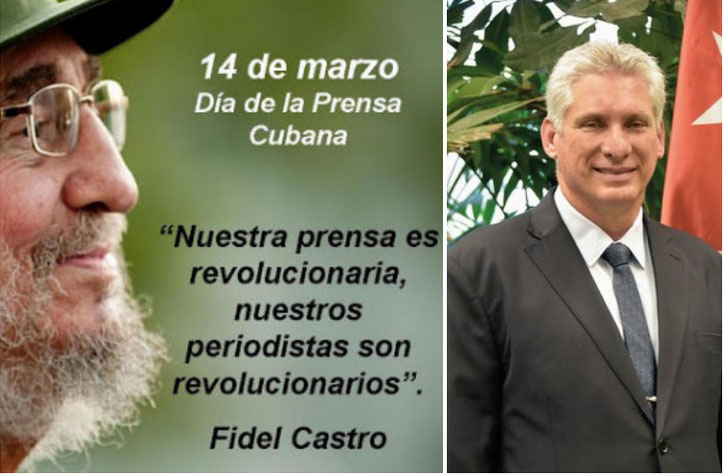
Cuban Press Day, celebrated every March 14th in homage to the founding of the newspaper Patria by José Martí, is a propitious date to highlight the significance of the work carried out by media workers in Cuba. They are professionals who assume, with dedication and responsibility, the mission of informing, educating, and contributing to the formation of public opinion from a perspective committed to the essential values of the nation. In their daily work, they face multiple challenges that demand dedication, preparation, and a firm ethical vocation.
In a particularly difficult context for the country, marked by economic, social, and political tensions, press workers have the responsibility of responding to citizens' concerns with objectivity and transparency. It is not enough to inform: journalism is required to interpret reality with rigor and a critical sense, to accompany society in its searches and aspirations. Being equal to the public agenda implies a professional exercise committed to the truth and collective interests, beyond triumphalism or simplifying visions.
The inspiration of José Martí is vital in this endeavor. Patria, the newspaper he founded in 1892, was much more than a means of information: it was an instrument of struggle, a platform to promote unity and expose pro-independence ideals. Martí's journalism defended the truth with absolute ethics, always seeking the common good. This heritage continues to be a guide for press workers in Cuba, who have before them the mission of preserving the most genuine values of the nation and the Revolution.
In this scenario, constant professional improvement is essential. The practice of journalism today demands increasingly broad preparation, allowing for the understanding of social phenomena in their complexity and offering effective responses to new communication dynamics. The consolidation of an effective press model for socialism, capable of dialoguing with society and achieving immediacy and quality, is a challenge that demands creativity, discipline, and commitment.
The Cuban press also faces the challenge of responding with intelligence and coherence to the cultural and ideological warfare being waged. In this context, journalism must contribute to the defense of national identity, through the generation of content that promotes critical thinking and the strengthening of cultural and patriotic values. The search for creative and viable alternatives is essential to consolidate a narrative of its own, one that expresses the interests of the Cuban people in the face of campaigns of discredit and manipulation.
The unity that Martí preached is key to this endeavor. Cuban journalism, from its commitment to the Revolution and the people, must continue to be a factor of social cohesion and consensus-building. In its hands lies the possibility of contributing, through responsible and ethical words, to Cuban society advancing firmly and with conviction in the defense of its essential values. (Text and Photo: Cubasí)