
Radio Cadena Agramonte emisiora de Camagüey





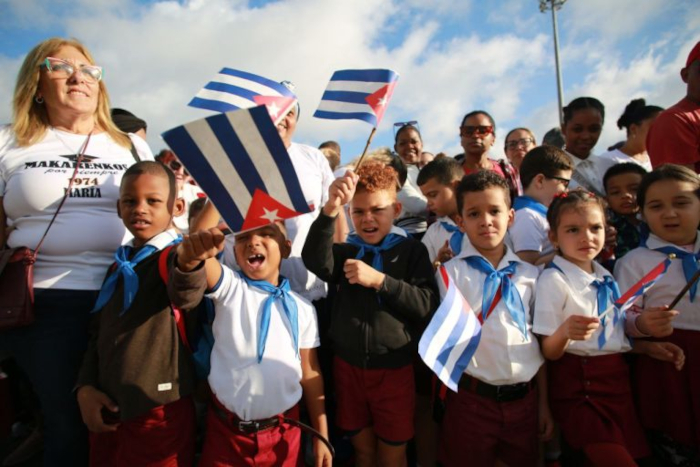
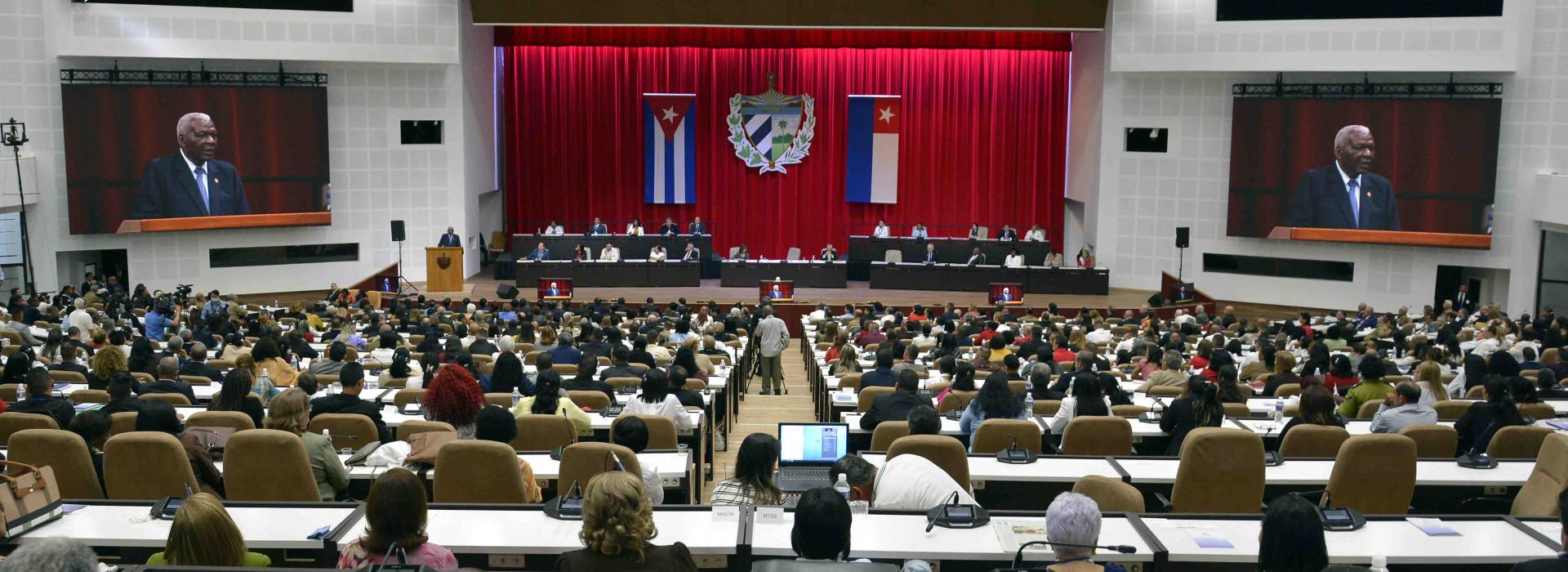
With the new Code of Childhood, Adolescences, and Youth, Cuba grants this segment of the population a commitment to their dignity, full development, and their right to grow up protected, heard, and to be the protagonists of their own destiny. It gives them a law designed by and for them, says Marlen Triana Mederos, Deputy Minister of Education.
If the collective construction of the new Code for Children, Adolescents, and Youth has left anything behind, it is that this legal norm, like no other, should not fall on deaf ears or fall prey to bureaucracy. Rather, it deserves—and it is everyone's responsibility— to have a real expression of its application in the place where the new generations are, the family, the student or work centre, the community, the institutions, and society as a whole.
The Code must have a tangible impact on the lives of each individual. Because it is for them and by them, asserts Juventud Rebelde.
These are criteria that Marlen Triana Mederos shared with this newspaper, and we must aspire to this result because Cuba has an inclusive, comprehensive, and representative final text, which was drafted through study, experience, and the opinions of many voices, taking into account the diverse realities of the country.
A concrete example is the recognition of the rights of children with disabilities. It explicitly establishes the obligation to make reasonable adjustments, provide individualized support, and guarantee universal accessibility in all areas (education, health, justice, and participation) in accordance with the Convention on the Rights of People with Disabilities.
Furthermore, the text incorporates topics that historically have not been addressed by Cuban legislation, such as the right of intersex people not to be subjected to non-consensual medical interventions and the right to digital identity.
Among the most innovative aspects are the explicit right to child and adolescent participation; the principle of the best interests of the child, with clear criteria for its application; the absolute prohibition of corporal punishment and humiliating treatment, without exception, as well as the recognition of rights in the digital sphere.
Other issues include the creation of a National Comprehensive Protection System, the establishment of a National Observatory to monitor rights, coordination between the different levels of government to guarantee comprehensive protection, and prior consultation with children, adolescents, and young people as part of the Code development process.
It adds that the new Code creates a National System for the Comprehensive Protection of Children, Adolescences, and Youth which provides for a structure of inter-institutional commissions at the national, provincial and municipal levels, chaired by high State authorities, such as a deputy prime minister at the national level, governors (provinces) and intendants (municipalities), and composed of the main bodies and institutions linked to childhood, adolescences and youth.
These commissions will meet periodically and may create specialized working groups. This institutional architecture constitutes a significant advance because it recognizes the need for intersectoral coordination to guarantee the rights of new generations.
We are aware that having a good regulation is not enough. Implementation requires training, resources, coordination, and legal culture. The challenge is significant, but the Code includes clear paths for action and establishes intersectoral coordination mechanisms that can significantly facilitate its application. We are faced with an opportunity to consolidate a protection system that functions in an articulated manner and with a rights-based approach, she believes.
She affirms that this Code does not solve everything, but it is a solid foundation for moving forward. It was designed with love, responsibility, and commitment. It not only recognizes rights but also organizes ways to enforce them. It represents a firm step toward a country that better cares for those who will sustain it tomorrow. It offers them a voice, protection from violence, access to technologies, spaces for participation, and mechanisms to claim their rights.
She asserts that the most revolutionary aspect of this Code is that it listened to children, adolescents, and young people to create a law designed from and for them.
The consultation process constituted an unprecedented and valuable exercise in active citizenship among these ages. It strengthened the legitimacy of the legislative process by incorporating the voices of those who will be its primary subjects of rights. This process was consistent with the letter of the Code itself, which advocates the right to participation.
Beyond the content of the draft, the consultation demonstrated the critical capacity, commitment, and maturity with which they assume their role when given a real space to participate. Their contributions not only enriched the text but also reflected their most heartfelt concerns and aspirations.
This experience sets an essential precedent for future public policies that impact children, adolescents, and young people. It reaffirms the intrinsic value of systematically including young people in the decision-making processes that affect them. The challenge now is to institutionalize these types of consultations, better prepare all stakeholders, and ensure transparent and sustained feedback from the children and adolescents themselves.
This experience sets an essential precedent for future public policies that impact children, adolescents, and young people. It reaffirms the intrinsic value of systematically including young people in the decision-making processes that affect them. The challenge now is to institutionalize these types of consultations, better prepare all stakeholders, and ensure transparent and sustained feedback with the children and adolescents themselves.
She expresses that with the new code, the country is giving them a commitment. A commitment to their dignity, to their full development, to their right to grow up protected, heard, and as protagonists of their own destiny. It is giving them a law designed for them, which recognizes their rights in all their dimensions. (ACN) (Photo: Cubadebate)