
Radio Cadena Agramonte emisiora de Camagüey





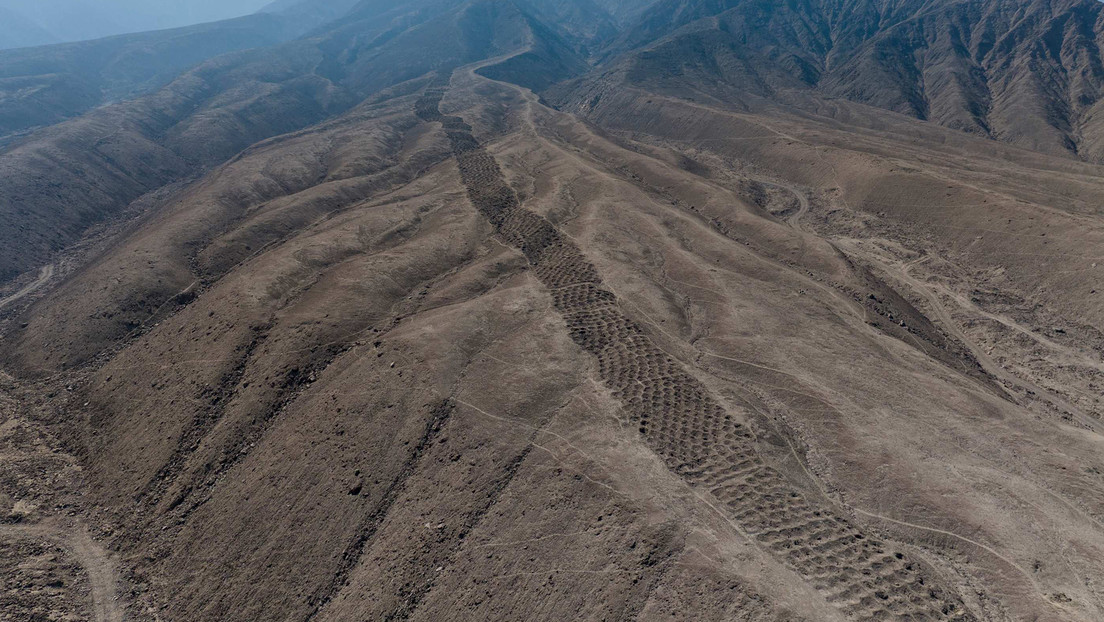
Approximately 5,200 holes stretching across a band nearly 1.5 kilometers long, forming one of the most unique archaeological sites in the world, located in the Peruvian Pisco Valley in the Andes, has been a mystery for nearly a century. Until now.
An international team of archaeologists recently published a study in the journal Antiquity, offering new theories about the enigma of Monte Sierpe, a hill in southern Peru famous for hosting the "Band of Holes," as it is informally known.
After using drones to map the site and conducting microbotanical analysis of sediment samples, they concluded that "Monte Sierpe originally functioned as a barter market and was later used as an accounting mechanism for Inca tax collection."
They discovered numerical patterns in the arrangement of the holes, pointing to an underlying intention in the organization of the site. This data supports a model in which Monte Sierpe was a localized indigenous system of accounting and exchange, they emphasized.
The microbotanical remains indicate that the holes were potentially periodically lined with plant materials and that goods were deposited inside them, using woven baskets and/or bundles for transport.
At some point, it was suggested that extraterrestrial connections were behind this complex—a hypothesis debunked by scientific research. Charles Stanish, a professor of archaeology at the University of South Florida and co-author of the study, provided more details.
In an interview published this Thursday by the British newspaper The Guardian, the expert indicated that fossilized seeds revealed traces of crops such as corn, part of the gigantic system of storage facilities used for the storage, exchange, and taxation of agricultural products.
"We showed that the seeds did not fly, were not transported by air; they had to be deposited by humans," Stanish stated. "We didn't find any, with the exception of one seed from the colonial period, down there, and we found one slightly pre-Inca, carbon-dated, which was fascinating," he added.
Meanwhile, Peruvian archaeologist Henry Tantaleán, who participated in the research, noted that the findings place the use of the complex between the 14th and 16th centuries, as an exchange point for the Chincha kingdom, which primarily lived off marine resources, agriculture, and trade before the expansion of the Inca Empire, which later incorporated it as a point for tax collection and redistribution.
"The results were conclusive: the pits contain high concentrations of pollen, phytoliths, and plant microremains associated mainly with corn, a fundamental crop for the Inca economy," he told the local agency Andina. "The pits functioned as storage facilities for agricultural products, similar to colcas, but with the particularity of being isolated from a major Inca settlement, making them a unique installation of their kind," he added. (Text and photo: RT)