
Radio Cadena Agramonte emisiora de Camagüey





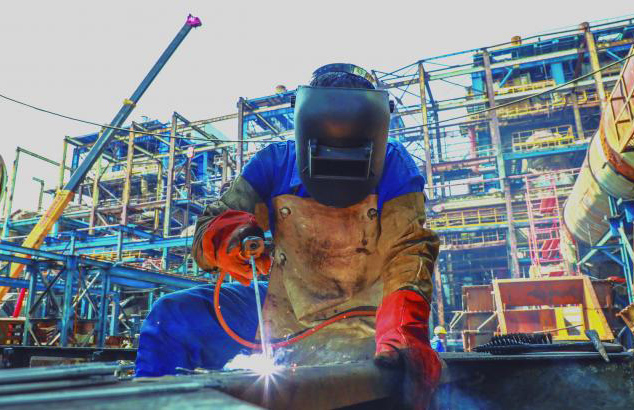
Havana, Dec. 5 - Vicente de la O Levy, Minister of Energy and Mines, confirmed that 2026 will present a slightly improved situation regarding the stability of the National Electric System (SEN, for its acronym in Spanish), thanks to the incorporation of four thermoelectric units and 1,000 megawatts of renewable energy, although disruptions due to fuel shortages will persist.
The Céspedes 3, Renté 5, Céspedes 4, and Este Habana 2 units completed major maintenance in 2025. The latter two will be synchronized in December and will operate from January with additional stable power, he stated in an interview with the Granma newspaper.
The minister explained that in 2025, thermal capacities that had been absent for months were gradually recovered, while photovoltaic solar parks were incorporated, reaching peak levels where 30 percent of the national generation came from renewable sources.
He added that the 1,000 megawatts of solar energy installed this year will be available from January 1, 2026, and that this figure is expected to increase during the next fiscal year, in coordination with the Herradura 1 wind farm.
De la O Levy emphasized that during Hurricane Melissa, provinces like Guantánamo and Granma were able to operate as an “energy island” thanks to distributed generation, which prompted a rethinking of the regional electrical system design.
However, he pointed out that the main obstacle at present is not technical, but financial: “We have more than 3,200 MW technically available, but blackouts persist because we lack the fuel to power the distributed generation, which currently has more than 1,000 MW inactive for that reason.”
The minister emphasized that the country maintains an availability of over 80 percent of emergency generators, which allowed it to guarantee vital services for more than a month in areas affected by the weather event.
Acknowledged that the Plan of the Economy foresees a decrease in the impact of the storm in 2026 compared to 2025, but warned that blackouts will not be eliminated, as fuel allocations do not cover actual needs and scheduled shutdowns will continue at thermoelectric plants such as Guiteras and Felton.
Regarding Felton 2, he reported that a financing option using national resources has been identified to complete its reconstruction, which is included in the national strategy through 2030, which also includes new units in Nuevitas and Mariel.
In terms of logistics, he noted that progress is being made on the rehabilitation of the supertanker base in Matanzas, which is key to speeding up the national distribution of fuels, and whose completion is part of the Government Program.
Finally, he expressed his gratitude for international cooperation, particularly Vietnam's donation of four 20 MW solar parks and China's delivery of 5,000 photovoltaic systems for homes following Hurricane Melissa.
“2025 was a very tense year, with the worst fuel shortage we've ever experienced, and 2026 will be difficult, although with better conditions. It's the beginning of the energy transformation, but there's still a long way to go,” he concluded. (Text and photo: ACN)