
Radio Cadena Agramonte emisiora de Camagüey





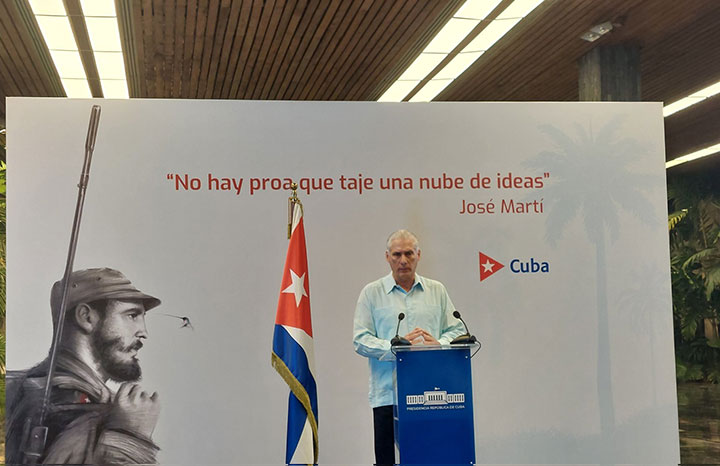
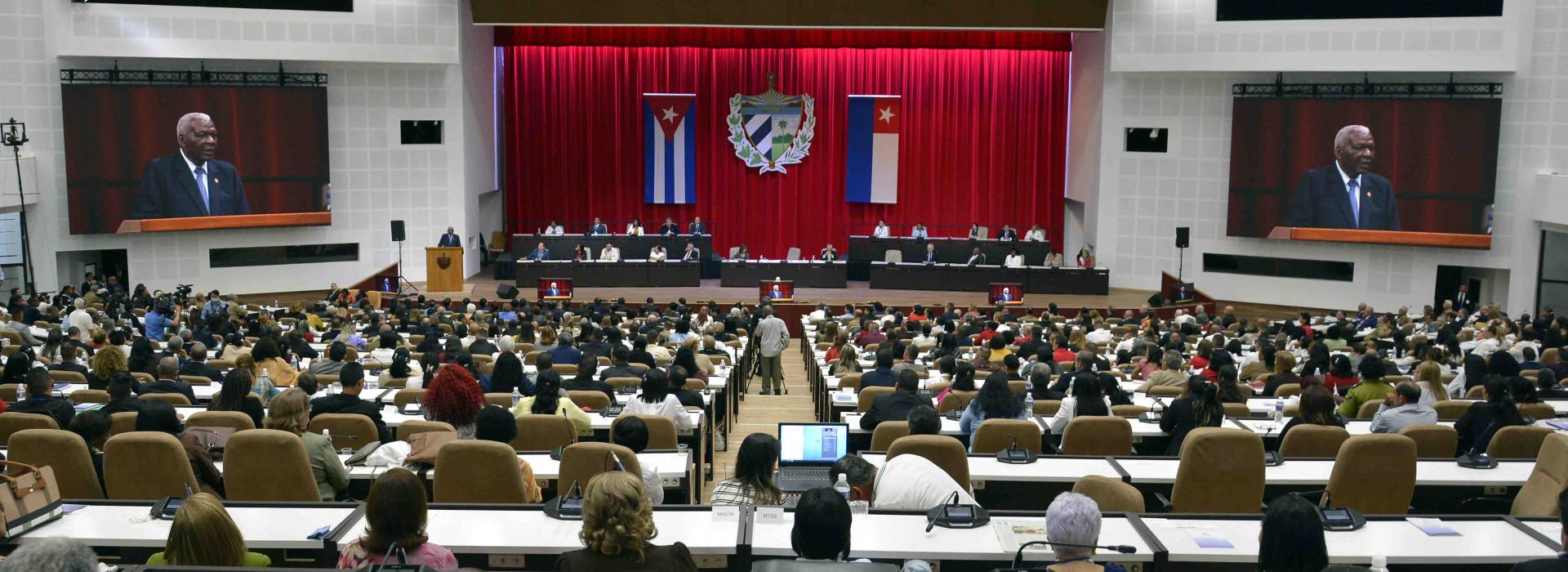
Havana, March 13.- Miguel Díaz-CanelBermúdez, First Secretary of the Central Committee of the Communist Party and President of the Republic, appeared before the media to address issues of national and international affairs that impact the country's current situation.
The exchange, which continues from the one held last February 5, is being broadcast on the Cuban national radio and television network.
The appearance can also be viewed on the digital platforms of the media outlets, the website of the Cuban Presidency, and in a rebroadcast on the Mesa Redonda program.
This update stems from the tightening of the hostile escalation applied by the United States government against Cuba, which has had an impact on various aspects of the country's life, such as the energy issue.
Cuban president delves into the state of relations with the U.S.
On the most pressing issues of national and international current affairs that directly impact the country's situation, Miguel Díaz-CanelBermúdez, First Secretary of the Central Committee of the Communist Party of Cuba and President of the Republic, delves deeper today in his appearance before the media.
As this space is a continuation of the one held last February, Díaz-Canel reflected on the set of measures and actions implemented in those days due to the tightening of the energy blockade to guarantee the nation's vitality and services under those circumstances.
However, he confirmed that for more than three months, no fuel ship has entered Cuban ports, and the entire energy sector is working under very adverse conditions, with an immeasurable impact on the daily life of the population. As complexities accumulate, this will lead to adjustments in these measures, which will be announced soon.
Regarding the current state of relations between the largest of the Antilles and the United States Government, which imposes most of these adversities through its tightened siege policy, he reported on the conversations held with U.S. representatives, which he assured are still in the initial phases and have been conducted with the discretion, sensitivity, and responsibility they entail.
The Head of State explained that these processes are long and are still far from any concrete solution, which requires establishing contacts and channels of dialogue based on a willingness to do so.
He added that these conversations have been facilitated by other international actors who have acted as mediators and emphasized that they are carried out in correspondence with the consistent policy of the Cuban Revolution and in consultation with the main instances of the Party, the Government, and the State, guided primarily by the sovereign interest of the Cuban people.
He pointed out that in the current phase of the approaches, work is being done to determine which bilateral problems need a solution, the ways to solve them, and whether there is a will to materialize actions by both parties for the benefit of the peoples, with a view to finding areas of cooperation to guarantee security and peace.
Díaz-Canel: Facing the complex energy situation, Cuba does not stop
Faced with the tightened energy siege imposed by the United States government against the island, actions and alternatives to maintain the country's vitality even under those conditions have been sustained in a challenging context, as confirmed today by Miguel Díaz-CanelBermúdez, First Secretary of the Central Committee of the Communist Party of Cuba and President of the Republic, in his appearance before the national media.
The Cuban president confirmed that for more than three months, no fuel ship has entered Cuban ports, and the entire energy sector is working under very adverse conditions, with an immeasurable impact on the daily life of the population.
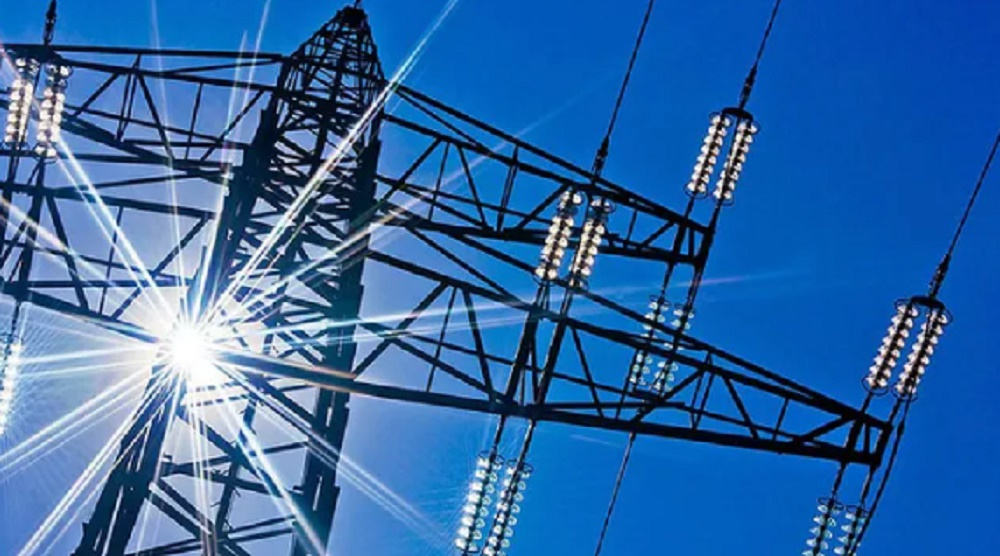
Given the shortage of energy resources, he specified that the energy sector continues generating during daytime hours using national crude oil, thermoelectric plants, Energas, and the contribution of solar energy, which has advanced steadily in recent times. However, this last method is not available at night, which increases the deficit, which is also considerable at other times.
He explained that these conditions influence the instability of the National ElectricPowerSystem (SEN, by its acronym in Spanish), with more than 1,400 megawatts (MW) of capacity in distributed generation that could not be used due to the low availability of fuels. If these limitations did not exist, this would contribute to significantly alleviating the daily blackout hours and the operation of the SEN, which, due to instability, recently had a disconnection due to the unforeseen outage of the Guiteras plant.
The Cuban Head of State assured that obviously the energy issue impacts all other aspects of daily life, such as water supply and food preservation, services, communications, medical services, education, and transportation.
Díaz-Canel stressed that nothing is turned off with the intention of bothering anyone and highlighted the superhuman effort of the workers of the Electric Union who work completely dedicated even when many of them have the same hardships. Therefore, the lack of understanding from some regarding these efforts is somewhat outrageous, although it is not even the majority tone.
The First Secretary also pointed out that in response to this, actions are being promoted for the change in the energy matrix and the recovery of generation capacities based on the increase in national crude oil production and maintenance work on thermoelectric plants, along with the incorporation of new forms of generation such as photovoltaic solar parks.
In this very complex context, he exemplified several signs of Cuba's humanist disposition and its Revolution: the predicted increase in manufactured gas service to more than 25,000 customers, the installation of photovoltaic systems in isolated homes and community social centers, the recovery of the Matanzas Super Tanker Base, the care and energy support for hospitals and other healthcare centers, and sensitive services like hemodialysis.
These and other things are evidence that in the midst of the current challenging scenario, the island does not stop to lament its problems and seeks alternatives to move forward with its own efforts and from the base of solidarity that distinguishes the nation and the people, he emphasized.
He noted that this is an arduous fundamental effort to advance solutions, to build spaces for understanding that allow progress in the process and move away from confrontation, based on principles of equality and respect for the political systems and regulations of both countries, and sovereignty and self-determination.
At the university: Temporary solutions to face difficulties
Cuban universities are adopting temporary actions to face the real difficulties of the current energy situation in the country, expressed today Miguel Díaz-CanelBermúdez, President of the Republic, during his appearance before the national press.
The First Secretary of the Central Committee of the Communist Party of Cuba responded to a question from Raicel Guanche, news editor of the newspaper Juventud Rebelde, related to the transformation of universities and the concern of professors, students, and families to complete the current semester in the context.
"How does a school center work, how does a university work, with blackouts, without fuel for the transport of professors and students, with a food deficit, to be able to deploy all the potentialities that the teaching-learning processes, the use of information technologies provide us?" the President asked.
He said that creatively, both the Ministry of Education and the Ministry of Higher Education adopted a set of measures aimed at reorienting the curricular design in both entities.
"In the case of higher education, the blended learning option was also used, which is not new, because we even have courses that in normal times, like all courses for workers, work under blended learning conditions, and on this occasion it turned into a community scenario."
He mentioned that professors have to go more to the community or have to attend more directly to the student, the professor-student relationship is transformed, the classroom is the community scenario, constituted by the community's production centers, the Municipal University Centers, and these classrooms are made available to students, and work is done in that sense.
He commented that it hasn't worked the same in all places, so it has been necessary to discuss, evaluate, dialogue, address concerns, complaints, dissatisfactions, and listen to proposals being made by both professors and students, as well as families.
He insisted that they continue to seek temporary solutions until these difficulties are overcome and that in the coming days both ministries will provide details of the measures adopted. He assured that as soon as possible, daily dynamics in higher education will be resumed.
He recalled the historic date of this March 13 and what it means for the Cuban student movement, and reaffirmed that education in Cuba is a priority and will continue to be so.
Topics such as the energy situation, solidarity with Cuba, the update on relations with the United States government, the role of unions in the current context, donations received from friendly countries, and others were addressed by Díaz-Canel in his appearance before the national press.
President Díaz-Caneladdresses labor protectionamidenergy crisis
Miguel Díaz-CanelBermúdez, First Secretary of the Central Committee of the Communist Party of Cuba and President of the Republic, appeared this Friday before the national media to analyze the energy situation and its impacts, both nationally and internationally.
The exchange, broadcast on the national radio and television network and digital platforms, continued from the one held last February 5 and will be rebroadcast on the Mesa Redonda television program.
When answering a question from Joel García, director of the newspaper Trabajadores, about what more the country could do to protect workers in this situation in the workplace, the president acknowledged that the reduction in productive and service activity has generated labor and salary adjustments.
"A principle that we all have to share is that we defend the labor protection and salary protection of our workers," the President noted.
Díaz-Canel explained that labor legislation provides for special treatments for those who remain without relocation. "During the first month, 100 percent of the salary is paid, and from that month onwards, 60 percent, assumed by the State budget," he specified.
He pointed out that in the business sector, there are three sources of support: contingency reserves, unused reserves, and compensation funds. "If we articulate what the budget can contribute and these three modalities, we can achieve adequate labor and salary treatment," he affirmed.
The President insisted on the need to take advantage of the workforce in community projects, local food production, care for vulnerable people, and educational processes.
"It is better that everyone, even if we have to change jobs, are contributing, we do not demobilize," he expressed.
He also underlined the role of unions in defending relocated workers.
"The union today has to be more than in the factory, in those spaces where its workers are relocated," he said.
Díaz-Canel concluded that the active participation and the capacity for adaptation and analysis of managers, businesspeople, unions, and workers strengthen national unity.
"In unity lies the reason for all our victory, for everything we can advance in all our endeavors," he stated. (Text and photo: ACN)