
Radio Cadena Agramonte emisiora de Camagüey





Havana, Dec 16.- A recent press conference by the Minister of Justice and two representatives of the confrontation bodies of the Ministry of the Interior provided significant data on the results of actions to prevent the illicit use and trafficking of drugs in Cuba in recent years, in line with the increase in international challenges posed by this scourge.
The information provided that day and the subsequent statements by the Deputy Minister of Foreign Affairs, Josefina Vidal Ferreiro, dismantle any manipulation of the issue by the United States Government, while resoundingly confirming the Island's clean record in the fight against drug trafficking.
The Deputy Minister was clear in stating that U.S. specialized agencies are well aware of Cuba's effectiveness in confronting drug trafficking, as they directly benefited from it, until Secretary of State Marco Rubio instructed the unilateral severing of dialogue and cooperation on matters of migration and law enforcement.
In this regard, the press conference reported that between 1990 and November 2025, the Cuban Border Guard Troops sent 1,547 intelligence reports to the U.S. Coast Guard Service and received only 468, including responses and reports from the northern party.
And it's not just with U.S. counterpart services; the Border Guard Troops foster operational cooperation in confronting international drug trafficking with services in the region; they exchange intelligence information, characteristics of boats, and maneuvering elements.
Furthermore, they share information when mass landings occur as an alert of possible threats to their territories, with the aim of determining possible causes of this phenomenon. Everything is carried out in real-time, with the goal of increasing effectiveness in combating this transnational crime. This cooperation takes place in an atmosphere of respect, professionalism, transparency, and with strict adherence to the truth.
The result of this cooperation and the permanent vigilance of the forces protecting our maritime borders and coasts is the detention and capture of 14 fast boats and 39 drug traffickers, with a total of 4,487.47 kg of drugs in recent years, which constitutes the best endorsement of the materialization of the will to fight against illicit drugs and international drug trafficking in any of its manifestations. These are boats transiting near Cuban waters, bound for neighboring countries.
These are just the most recent figures, which are part of the more than 40 tons of drugs that Cuba has seized in the last 14 years, all destined for the U.S. drug market.
Last November, amid the recovery process from the severe impact of Hurricane Melissa, the Border Guard Troops, with the support of the population and the "Mirando al Mar" Detachments of the Committees for the Defense of the Revolution, successfully confronted a massive landing on the northern coast of Guantánamo, securing 792.5 kg of marijuana and 12.25 kg of cocaine.
On the aerial border, the forces of the Ministry of the Interior and the General Customs of the Republic tirelessly confront proven plans by Cubans and foreigners residing abroad to introduce narcotics into the national territory via air routes, using passengers, cargo, and postal shipments, combining traditional and novel methods of operation and concealment.
As a result of these efforts, between 2024 and 2025, 72 operations with different types of drugs—cocaine, methamphetamines, and synthetic cannabinoids—from 11 countries have been thwarted, with the United States being the main sender. A drug cooperation agreement has been in place with the U.S. since 2016, but its procedures for effective exchange have not been implemented, although Cuba maintains its willingness to collaborate and has not ceased to report on these incidents and their organizers.
The country upholds as a fundamental element of its drug confrontation policy the development of international operational cooperation. To this end, the Ministry of the Interior maintains information exchange with 37 points of contact with anti-drug services, and through the Interpol-Havana National Central Office, has circulated 58 Cubans and two foreigners for the crime of illicit drug trafficking; it also holds meetings with representatives of anti-drug and border services from several countries accredited in our national territory.
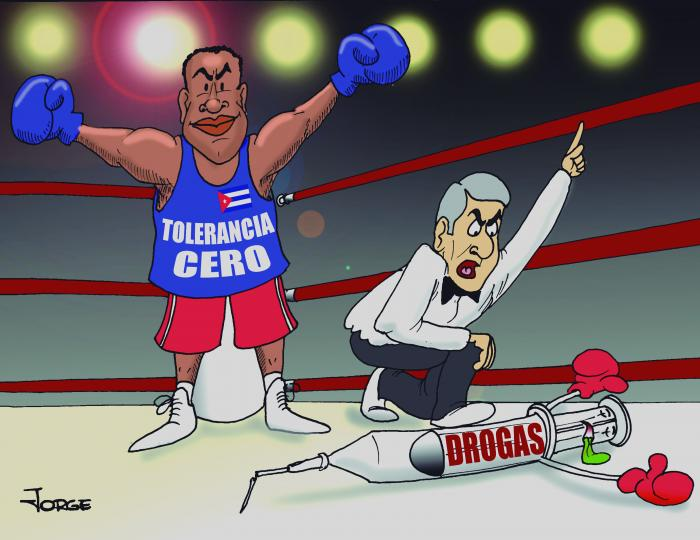
Cuba wins with its comprehensive and multifactorial policy that prioritizes prevention, based on education, culture, health, sports, and healthy recreation; while reinforcing systemic confrontation with the participation of all. And it continues to defeat the serious challenges of today's world, committed to the political will of zero tolerance. (Text and photo: Granma Digital)