
Radio Cadena Agramonte emisiora de Camagüey





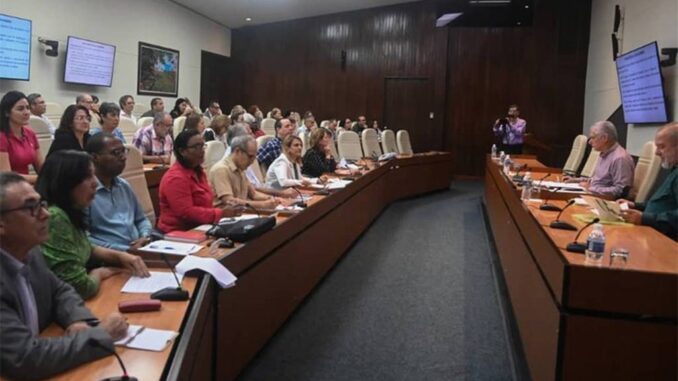
Havana, Dec 25.- Mathematical models predict total control of the epidemic by the beginning of the year in Cuba, affirmed the renowned mathematician Raúl Guinovart Díaz, director of Science and Technique at the University of Havana.
He stated this during the weekly meeting of experts and scientists on Health convened by the President of the Republic, Miguel Díaz-Canel Bermúdez, to address the fight against diseases caused by viruses transmitted through mosquitoes, scientifically known as arboviruses.
The specialist noted that the incidence in different regions of the country has decreased, although the provinces of Las Tunas, Holguín, and the special municipality of Isla de la Juventud still show an increasing trend in reports. Guinovart Díaz emphasized the importance of continuing with the applied measures to maintain the results being achieved.
In this regard, the Deputy Minister of Public Health, Carilda Peña García, confirmed that febrile syndromes have decreased by 25.8% compared to the statistics of the previous week. All provinces have seen a decrease in reports, although they are still in epidemic status; meanwhile, Matanzas, where chikungunya infection began in Cuba, is on a successful track, according to epidemiological terms.
Compared to the previous seven days, there have been 5,638 fewer consultations for febrile syndromes in the country’s healthcare institutions, an indicator that marks the control of the epidemic, both for dengue and chikungunya cases.
Dr. Ailuj Casanova Barreto, General Director of Medical and Social Care at Minsap, explained that more than 93% of pregnant women with 37 weeks of gestation are currently hospitalized, in an effort to keep them in safe places to avoid risks for them and their babies, who are considered the most vulnerable.
At this moment, she noted, there are 27 patients in severe and critical conditions in intensive care, with the majority being children. However, it is important to note that awareness of risk among them has increased; they are arriving early at health services, and discharges from intensive care are occurring with very good prognoses.
“As things stand, if we continue like this, we can close the year without any fatalities among pregnant women due to arboviruses in the country,” added the doctor.
During the meeting, which was also attended by Prime Minister Manuel Marrero Cruz, advances in caring for patients in the chronic phase of chikungunya were discussed, focusing on the establishment of multidisciplinary consultations that include specialties in Physical Medicine and Rehabilitation, Pediatrics, Natural and Traditional Medicine, Internal Medicine, and Psychology.
In Matanzas, for example, more than five thousand patients have been treated, with nearly 60% needing some rehabilitation service, indicating the importance of these consultations across all provinces in the country. (Text and photo: Granma Digital)