
Radio Cadena Agramonte emisiora de Camagüey





Camagüey, December 29 - The year 2025 was one of intense work for the people of Camagüey, who were committed to materializing the objectives, indicators, actions, and goals of the Government Program to correct distortions and re-boost the economy, stated Jorge Enrique Sutil Sarabia, the provincial governor.
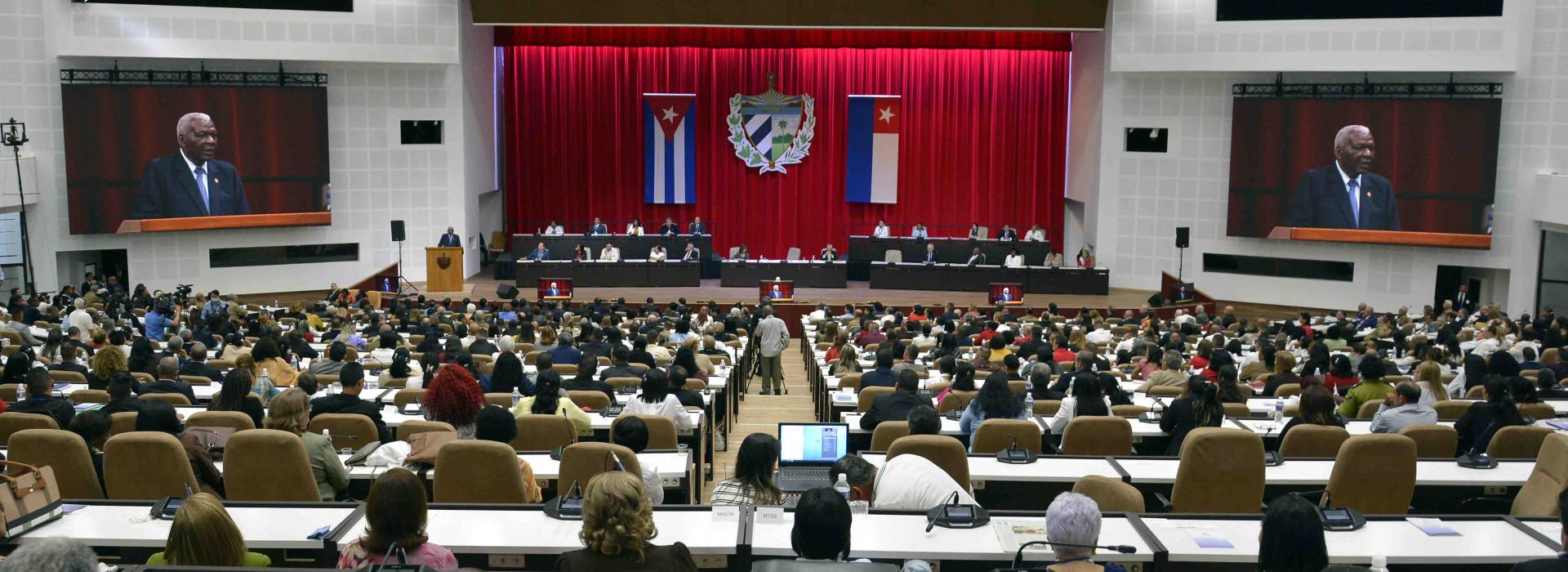
Amid a complex wartime economy scenario, Camagüey reported to the Council of Ministers and the National Assembly of People's Power, moments that marked a starting point for moving forward and addressing the persistent dissatisfactions among the people, he emphasized.
https://www.acn.cu/images/2025/12/29/1229-camaguey-programa-de-gobierno8.jpg
For the second consecutive year, this province, he noted, managed to reduce the fiscal deficit through greater control and rationality in the use of budgetary resources, as well as rigorously prioritizing expenditure decisions by budget holders or administrators to ensure the sustainability of basic services that must be financed.
He also mentioned that the territory, with the potential to become surplus territory in the medium term, achieved a 12 percent growth in its ceded revenues, representing an additional 751 million pesos compared to 2024.

After Havana, he added, Camagüey is the second province that collected the most fines this year, contributing over 181,000 pesos to the state budget.
Similarly, he noted, 67,779 inspections were conducted for overpricing, which led to the detection of 47,147 violations and the application of over 13,000 decree-laws.

Currently, the province has 123 companies, including 78 under national subordination and 45 under local subordination, to which 291 private MSMEs and nine state-owned ones, six non-agricultural cooperatives, and 143 local development projects are also added, contributing over 595 million pesos to revenues, he specified.
The formation of the International Economic Association Project Camagüey became one of the most significant achievements of the territory in 2025, said Jimmy Camejo Martín, director of the Ruta Invasora Grain Agroindustrial Enterprise, a collective that also aspires to become Camagüey's first export hub.
This year, he said, should conclude with the export of 650 tons of charcoal, which will facilitate the acquisition of parts, components, aggregates, fertilizers, and other inputs to meet the 2025-2026 rice campaign, where 22,500 hectares are planned to be sown, with 60 percent dedicated to specialized cereals and 40 percent to popular ones.

In close alliance, he pointed out, they have worked with the Ignacio Agramonte Loynaz University of Camagüey and the Geocuba Camagüey-Ciego de Ávila Enterprise to develop precision agriculture for this type of crop, enabling the application of total and selective herbicides, as well as insecticides and fungicides with excellent results in the program.
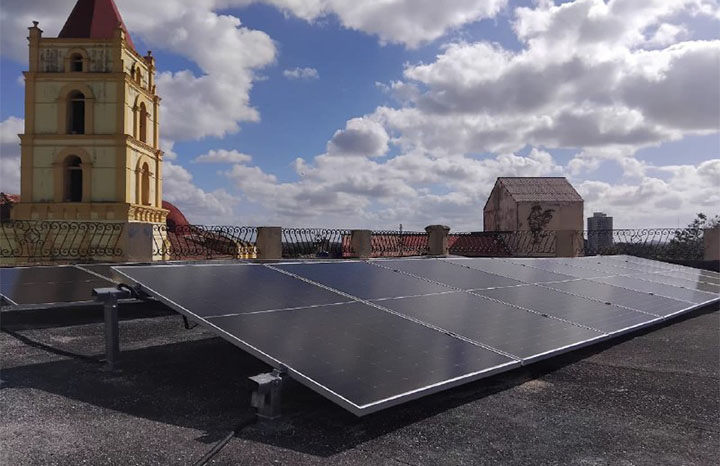
Similarly, he noted that this entity is betting on energy autonomy, as it already has 39 megawatts installed, of which nine are injected into the grid, while simultaneously fulfilling social commitments by selling prepared meals to vulnerable individuals and supporting the repair of the bus, ambulance, and hearse in the municipality of Vertientes, where the industry is located.
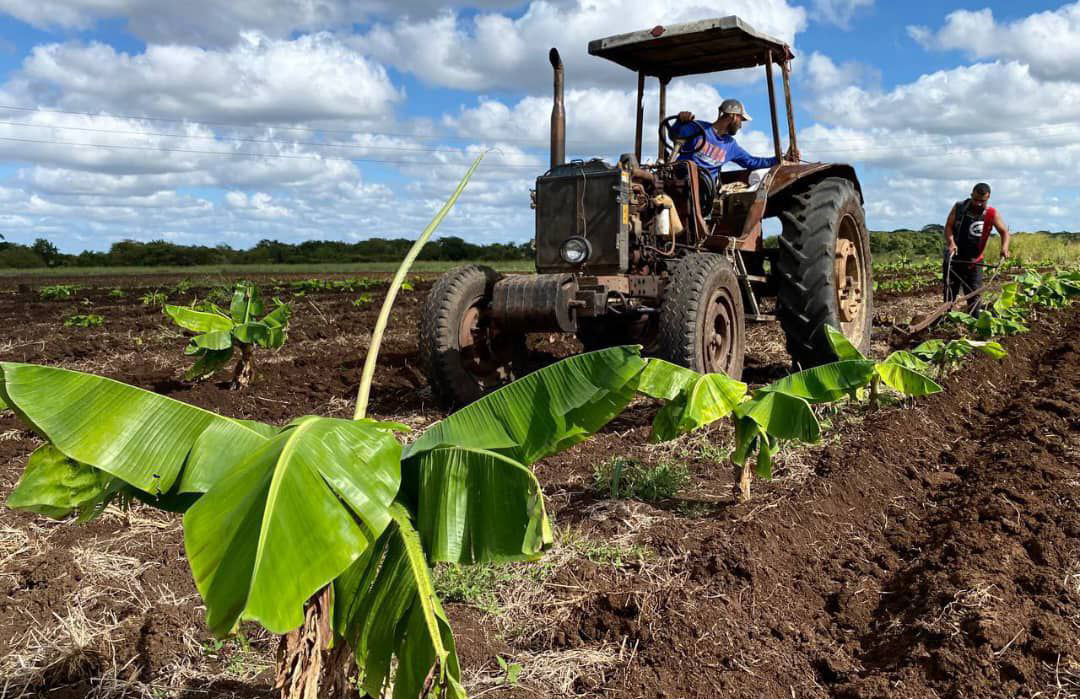
Precisely that locality, with 178,000 hectares of land under development, exceeded its planting plans this year during the cold and spring periods, thanks to the stability in cassava, plantain, sweet potato, and malanga crops, stated Orlando Hernández Vigoa, the Agriculture delegate in that municipality.
While still far from meeting the demands of the people, he acknowledged that a significant effort was made to deliver 37 pounds per capita during this year.

Among the producers contributing most to the people's food supply is Yaima Carballo Alonso, a woman passionate about the land, who, on her farm La Bendecida, has managed in just a year and a half to harvest cassava, sweet potatoes, pumpkin, and beans for Acopio.
The transportation sector, severely affected by fuel shortages, received 10 Photon microbuses this year, contributing to the daily transport of around 3,400 passengers on average across two main urban service corridors, explained Miguel Arias Vázquez, the provincial delegate of the Ministry of Transport.
Another result that has gained acceptance among the population was the incorporation of the railbus covering the Santa Cruz del Sur-Vertientes route, benefiting 23 communities in both localities, he emphasized.
Sutil Sarabia acknowledged those who, from various sectors, have challenged the complexities of the current historical moment and urged everyone to make the Government Program a decisive guide, where every Camagüey resident recognizes himself/herself as the main protagonist, with the conviction that Camagüey will continue working for the well-being of the people, he concluded. (Yadira Núñez Figueredo/ACN) (Photos by the author and Rodolfo Blanco Cué/ACN)