
Radio Cadena Agramonte emisiora de Camagüey





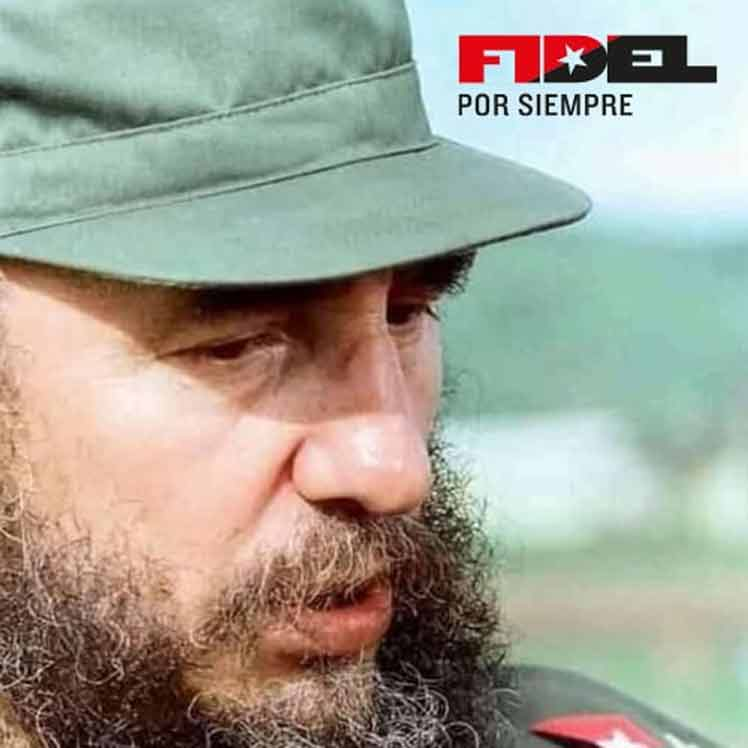
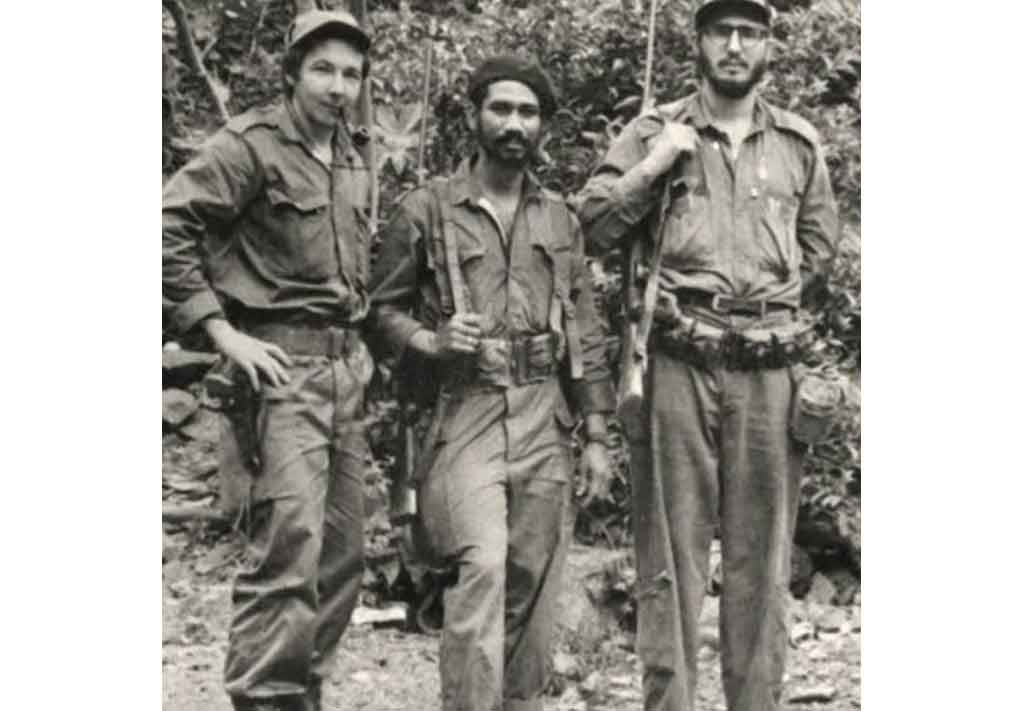
Havana, Jan 2 – Fidel Castro, in his trajectory as leader of the Cuban Revolution, emphasized that Cuba's history is part of the history of Latin America and the world, where the struggle against imperialist exploitation is fundamental. He stressed that the Revolution is not only the work of its leaders but a collective effort where the people are the true protagonists. Radio Cadena Agramonte is broadcasting several messages from Fidel Castro in their entirety, recalling his legacy and its relevance to the contemporary struggle.
AN INTERNATIONALIST AND GLOBAL VISION
"What is the history of Cuba if not the history of Latin America! And what is the history of Latin America if not the history of Asia, Africa, and Oceania! And what is the history of all these peoples if not the history of imperialist exploitation throughout the world!... The Cuban Revolution is for us, and for the peoples of America, something more: it is proof that the people can make it, that in the contemporary world there are no forces capable of halting the liberation movement of the peoples." [1]
With these words, Fidel placed the Cuban Revolution beyond its national borders, as the demonstrative vanguard of a possible and victorious global struggle.
THE REVOLUTION AS A COLLECTIVE AND DYNAMIC ENDEAVOR
Those who have no faith in the masses cannot be revolutionaries. In the context of defining the Revolution's cultural policy, Fidel emphasized the central role of the people, not as spectators but as actors and creators, reflecting his confidence in the transformative capacity of ordinary people.
"The Revolution is made by all of us. The Revolution is not made only by the leaders. The Revolution is made, first and foremost, by the people; and the leaders are simply interpreters of the people's aspirations. Those who have no faith in the masses cannot be revolutionaries. Those who believe they know everything and that the people know nothing cannot be revolutionaries. Those who underestimate the capacity of the people cannot be revolutionaries." [2]
THE CALL TO DEFENSE AND SACRIFICE
"Socialism or Death!" This emblematic and constantly repeated phrase, more than a fragment from a single speech, encapsulates the radical dichotomy Fidel presented as the core of the struggle: the Revolution (synonymous with Socialism) was a matter of life or death for the nation. It became the battle cry and farewell of his speeches, synthesizing the willingness for total sacrifice. Fidel was a firm defender of the idea that this Revolution was not made for a few to take advantage of it, but for an entire people to benefit from it. And we are willing to lose everything, even our lives, before renouncing the principles of this Revolution.
THE STRUGGLE AGAINST ERRORS
During the Rectification of Errors and Negative Tendencies process, Fidel addressed internal challenges with starkness, defining the Revolution also as a process of constant self-criticism and purification: "Revolution is also to struggle against everything that must be overcome within ourselves and within the society we are building. It is to struggle against bureaucratism, against corruption, against frivolity, against inertia. To rectify is not an act of weakness, it is an act of strength and fidelity to principles. No one should believe the Revolution is a straight and easy path. We advance by correcting errors, overcoming obstacles, clearing the path of the burdens we ourselves sometimes create." [3]
THE REVOLUTION AS AN ACT OF INTERNATIONAL SOLIDARITY
Fidel reaffirmed the internationalist principle as a constitutive part of Cuban revolutionary identity, especially through healthcare: "This Revolution we have made, why did we make it? Only for ourselves? No. We made it to share. To share what we have and what we do not have."
"To share the effort, the knowledge, the solidarity. A true revolutionary cannot sleep peacefully while anywhere in the world there is a people under aggression, a sick child without care, an injustice to fight. Our doctors are soldiers in white coats, and their weapon is science and conscience. That too is the Revolution: Homeland is Humanity, as Martí dreamed." [4]
THE WARNING ABOUT ETERNAL VIGILANCE
"The Revolution is something that must be defended every day, with actions, with conduct, with thought. It is not a title one acquires and that's it. It is a lifelong commitment. This Revolution could self-destruct. Today's revolutionaries could be the ones who destroy it tomorrow! Imperialism and its agents alone will not do it; they would contribute, but the main destruction would be done by us ourselves if we falter, if we become divided, if we lose faith, if we betray the principles for which so many have died. To be a revolutionary is to never surrender." [5]
[1] Speech delivered at the Second Declaration of Havana. Plaza de la Revolución José Martí, Havana. February 4, 1962.
[2] Closing remarks at the First Congress on Education and Culture. Lázaro Peña Theater, Havana. April 1971.
[3] Speech on the 30th Anniversary of the assault on the Moncada Barracks. Santiago de Cuba, July 26, 1986.
[4] Speech at the awarding of medals to members of the Henry Reeve Contingent. Havana, 2005.
[5] Address at an event with university students. University of Havana, November 17, 2005. (Granma Digital) (Photo: Taken from the Internet)