
Radio Cadena Agramonte emisiora de Camagüey





Rome, Jan 14.- A team of Italian archaeologists discovered, in excavations carried out in the Roman neighborhood of Pietralata, a place of worship, from the 2nd century BC (BC), presumably dedicated to Hercules, a statement said today.
Fabrizio Santi, scientific director of the excavation, said in statements to the press published on the website of the newspaper Il Sole 24 Ore, that in the sanctuary, which measures about 25 square meters, three bronze statuettes were found, eight centimeters high, representing that Greek mythological hero.
The discovery includes several bronze coins, which made it easier to determine the age of the place, in addition to three other sculptures, "currently in the process of identification, of which one represents a god," said Santi, who considered it to be "a surprising discovery."
The excavation revealed that the sanctuary was built on a disused votive deposit, and inside it contained terracotta heads and feet, female figurines and two heads of cattle.
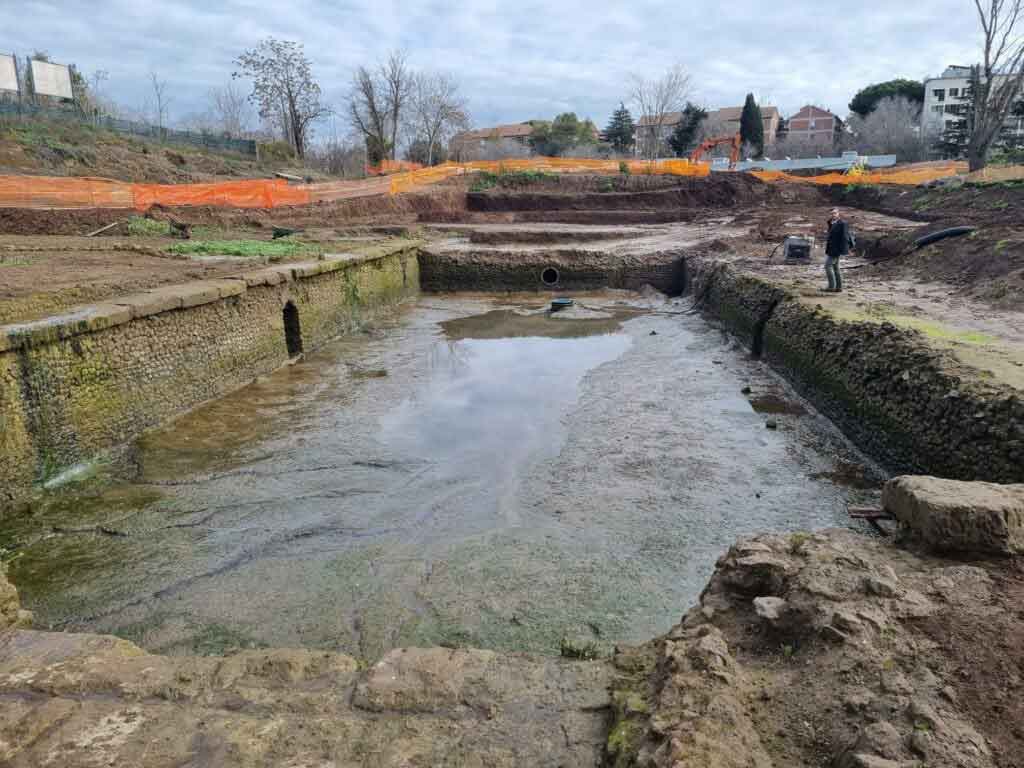
In the archaeological site, called ParqueAcacie 2, which has a total area of ??four hectares, two tombs and an equal number of monumental fonts and water tanks were also located, both from the 2nd century BC, which can be deduced from the masonry technique used, known as opus incertum.
“The tombs discovered constitute important evidence of the occupation of this part of the suburb by a wealthy family, while the two monumental ponds open up interesting research opportunities,” since “they could be linked to rituals, or to productive activities,” reported the archaeologist.
One of the tombs, which could date from the 4th or 3rd century BC, has a monumental entrance to the inner chamber, excavated in the rock, and is characterized by a stone portal, closed inside by a very large and heavy monolithic slab.
Inside, a large sarcophagus was found, as well as three urns, all made of peperino, and among the pieces recovered there were two intact vases, a black glazed cup, a small ceramic jug and a mirror.
The second tomb, perhaps built a little later, around the 3rd century BC, was closed with large blocks of tuff and has a side chamber with benches for the burial of the deceased, including an adult man, of whom only part of the skull has been recovered so far, with signs of surgical trepanation.
Among the ponds, one stands out, located on the east side of the site, approximately 28 meters long and 10 meters wide, with a depth of 2.10 meters.
The second pond, located in the southern area, is 21 meters long and 9.2 meters wide, with a greater depth, which reaches four meters, and is externally lined by walls of square blocks of irregular arrangement, which align directly with the walls of the basin, the expert said. (Source: Prensa Latina)