
Radio Cadena Agramonte emisiora de Camagüey





Camagüey, Jan 22. - Maintaining the status of surplus municipalities for Nuevitas, Camagüey, and Vertientes, and incorporating Minas, Sierra de Cubitas, Sibanicú, and Céspedes; reducing the fiscal deficit by more than 600 million pesos; increasing commercial circulation by more than 400 million pesos; seeking new exportable items; removing more than 800 vulnerable families from risk; and reducing infant mortality to less than six per thousand live births are some of the actions Camagüey proposes as part of implementing the agreements of the XI Plenum of the Central Committee of the Party, the National Assembly, and the Council of Ministers. The purpose is to fulfill the Government Program aimed at correcting distortions and re-boosting the economy.
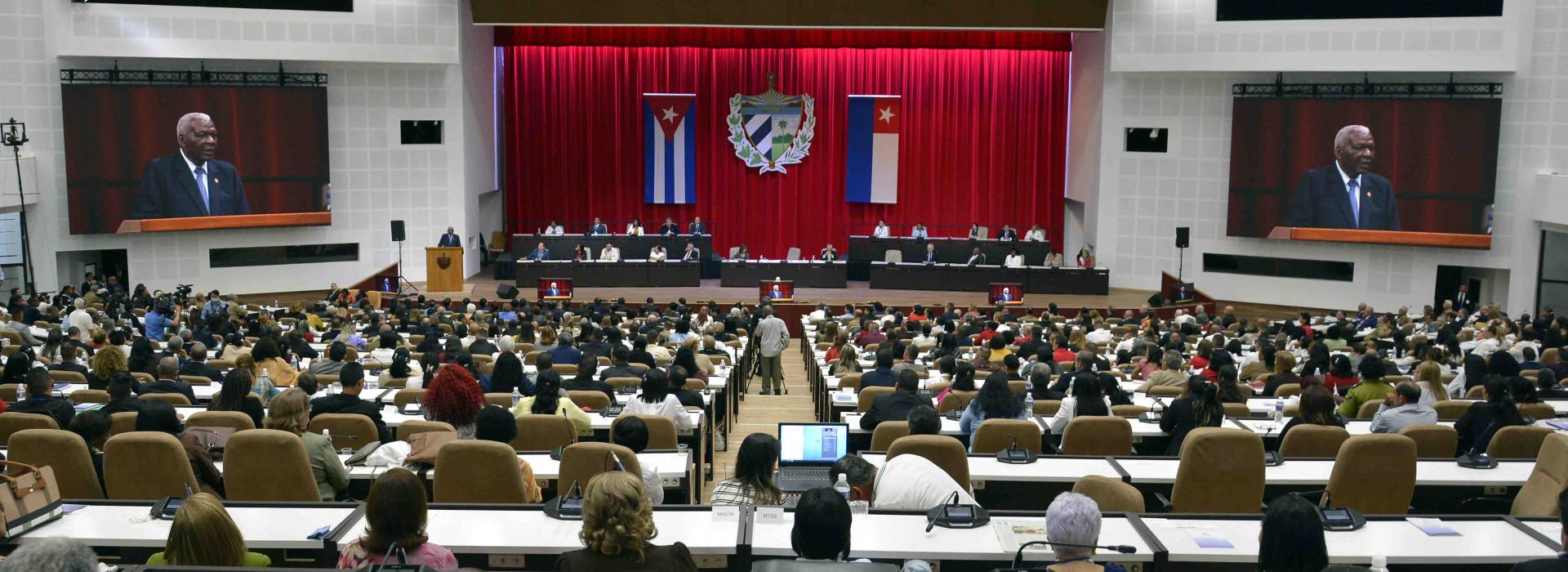
How to achieve this by utilizing the immense productive and human capital reserves of the province was one of the topics debated this Wednesday in an Extraordinary Government Council chaired by Political Bureau member and Prime Minister of the Republic, Manuel Marrero Cruz.
It was revealed during the session that there are 1,566 pending applications for land usufruct in the province, a figure deemed unforgivable in times when urgently increasing national food production is critical. In this regard, Deputy Prime Minister Jorge Luis Tapia Fonseca called for controlling lands that have already been granted but are not being exploited. Both battles are won at the municipal level, with proper oversight from the structures responsible for monitoring these processes.
The meeting also analyzed the tendency of a decrease in the cattle herd in Camagüey, which results in a considerable reduction in milk and meat delivery plans to the industry. To regain traditional production levels, work is underway to recover pastures and water storage sources.
"Beyond controlling productions, we must plant more, seek technologies to increase yields," explained Ydael Pérez Brito, Minister of Agriculture. He added that Camagüey has all the conditions to be self-sufficient in rice, but resources must be allocated to achieve this, and productive linkages with the new economic actors must become truly effective.
A key issue in the debate was highlighted by Yudier Rodríguez Pérez, President of the Municipal Assembly of People's Power in Minas: involving the population is essential to achieving production goals. "The people must make the Government Program their own for its materialization."
Marrero Cruz inquired about the actions being implemented in the municipalities proposed to become surplus and learned that the plans were based on objective reserves in those territories that are not being fully utilized.
From the debate in Camagüey on the Government Program, obstacles affecting the development of the local business network were identified. Among the most discussed issues in work collectives and other structures were increasing national food production, banking inclusion, and matters related to the social policies of the Revolution.
Also on the session's agenda were ensuring the accountability process of the Administration Councils to their Municipal Assemblies of People's Power and reporting on the management of the provincial Governor during the past year.
For her part, Ana María Mari Machado emphasized the need to perfect the People's Power system as the main element of the Cuban political system.
To achieve the effective implementation of the Government Program in the province, its structures adopted as premises: making greater use of the powers granted to state enterprises, generating greater income in foreign currency, applying science and innovation to different processes, and protecting the most vulnerable.
The Head of Government urged identifying all reserves that allow facing the challenges of the current year, so that it contributes to solving the main problems the country faces today. Therefore, he indicated that the debate should not remain at the provincial level but must go to the municipalities and the grassroots.
As a tool for its materialization, the Prime Minister stressed the role of popular control, which has always been a strength of the Cuban revolutionary process, and its permanent collective construction.
"These are times when we cannot continue doing more of the same. These are times of combat in which we must follow the example of our historical leaders." (Jorge Enrique Jerez Belisario/ Granma Digital Correspondent) (Photo: Takenfrom Adelante Digital)