
Radio Cadena Agramonte emisiora de Camagüey





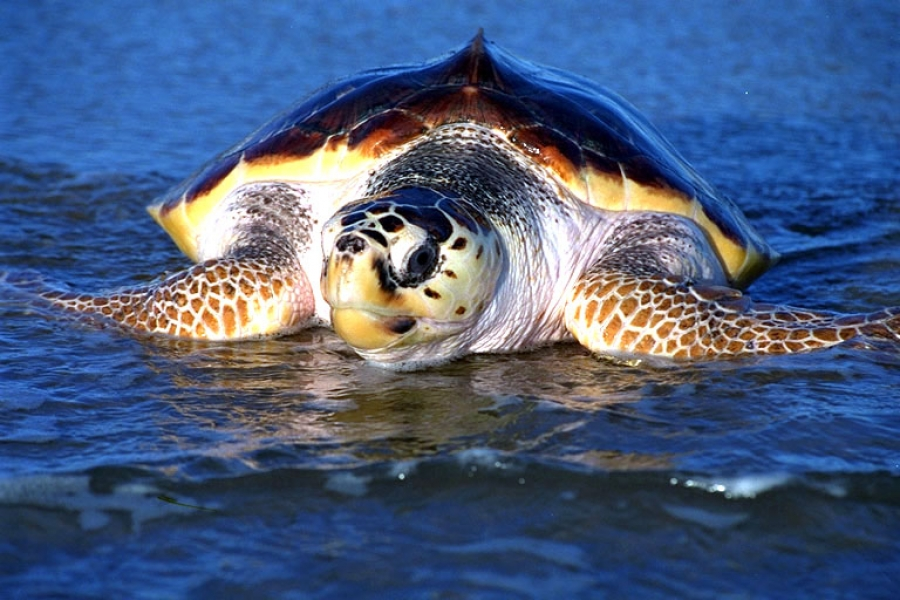
Havana, Jan 27. - A shipment of 121 kilograms of protected marine species, which included hawksbill turtle meat, was seized by authorities from the National Office of Environmental Regulation and Safety (ORSA, for its acronym in Spanish) in the eastern province of Holguín, official sources reported today.
Customs specialists at the Frank País International Airport in that city seized the cargo from a couple attempting to clandestinely take it out of the country bound for the United States, announced the Ministry of Science, Technology and Environment (Citma, for its acronym in Spanish).
During routine checks, the illegal merchandise was detected, leading to its immediate seizure. The couple involved was fined, detained, and handed over to the National Revolutionary Police (PNR, for its acronym in Spanish) due to the potential criminal implications of the case, the report specifies.
According to the authorities, the male involved is a "multiple repeat offender" in crimes against nature, from the municipality of Puerto Padre. Several articles of the customs regulations were applied to him, resulting in a fine of 22,000 Cuban pesos. The woman, also from Puerto Padre, was charged with an offense carrying a penalty of 10,000 pesos.
The seizure included 65 kilograms of hawksbill turtle (Eretmochelys imbricata) meat, a species critically endangered, whose international trade is prohibited by the Convention on International Trade in Endangered Species of Wild Fauna and Flora (CITES). Also included were 42 kilograms of crab meat and four kilograms of lobster tail.
The case, beyond the efficiency of the customs operation, raises questions about the effectiveness of administrative sanctions to deter a high-impact environmental crime, reflects the Citma communiqué.
The fines imposed — 32,000 pesos in total — pale in comparison to the market value these species would have illegally abroad, especially the highly prized and protected hawksbill turtle, it emphasizes.
This incident is just the tip of the iceberg of a trafficking network that causes incalculable damage to Cuban biodiversity. The hawksbill turtle, in particular, is an emblematic species whose capture and trade contribute directly to its disappearance.
Customs authorities indicated that, in addition to the fines, they are evaluating the possibilities offered by the Penal Code for the significant damage caused, which could lead to more severe criminal charges for the detainees.
The true cost, the irreparable and incalculable damage to marine ecosystems and critically endangered species like the hawksbill turtle, is not reflected in these figures, analyzes Citma.
The Holguín case underscores the urgent need for the legal response to be proportional not only to the commercial value of the shipment, but also to the ecological value lost, combining rigorous application of the Penal Code with a comprehensive strategy that attacks trafficking networks and educates about the real value of national biodiversity, which is the heritage of all Cubans and a global natural treasure.
Facing these challenges, our Ministry and, especially, ORSA, maintain close collaboration with authorities and institutions across the country, including Customs, the text adds. (PL) (Photo: Taken from Internet)