
Radio Cadena Agramonte emisiora de Camagüey





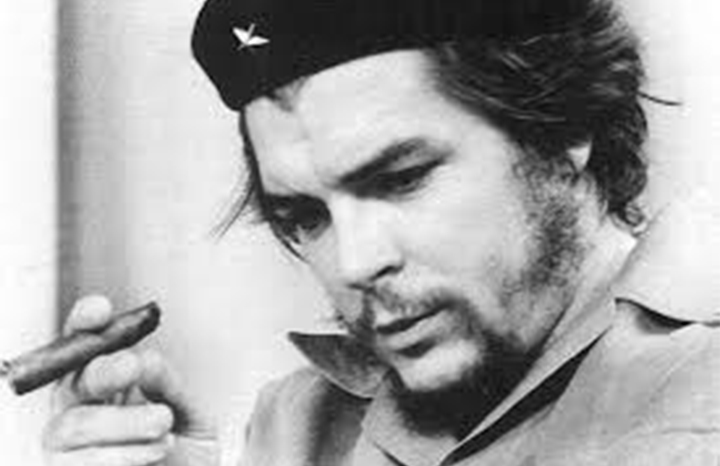
Havana, Feb 7 - Ernesto Che Guevara received an unusual summons on February 7, 1959, to appear at the then Presidential Palace, where the first Council of Ministers of the Revolutionary Government was located. He attended without imagining that he would be caught off guard there in his proverbial modesty, and even his rejection of the tributes he received from people and institutions.
That day, he would be informed by this highest governing body of the official agreement to grant him Cuban citizenship by birth, in recognition of his extraordinary merits in the armed struggle against the dictatorship of Fulgencio Batista.
The decision was based on Article 12, concerning citizenship, of the then Constitution of the Republic, according to a clause that defined: "Foreigners who have served in the struggle against the tyranny overthrown on December 31, 1958, in the ranks of the Rebel Army for two years or more and have held the rank of commander for at least one year shall also be Cubans by birth, provided they prove these conditions in the manner prescribed by law."
The only precedent for this agreement was the granting of Cuban nationality also to the Dominican Máximo Gómez, Generalissimo of the Liberation Army at the beginning of the pseudo-republic.
Furthermore, it had been decided to grant citizenship by naturalization to other foreigners who fought in the Rebel Army.
Luis Buch, then secretary of the Council of Ministers and tasked with informing Che of the decision, recalls that Commander Guevara received the news without flinching and expressed that such an honor was undeserved, as he "would have fought as he did in Cuba anywhere else in the world."
Buch specified that when he told Che that not accepting such recognition would be a snub to the Cuban people, the Guerrilla embraced him.
For the rest of his life, he honored his status as a Cuban, which he accepted as a commitment in his work during the consolidation and development of the Revolution. This was very much present in his farewell letter to Fidel in 1965, upon leaving to take the revolutionary struggle to other parts of the world.
In the historic document, he renounced his status as a Cuban, his rank of commander, and his position as minister to spare Cuba any responsibility for his actions, and confesses: "(…) here I leave the purest of my hopes as a builder and the dearest among my loved ones and I leave a people that accepted me as a son; that wounds a part of my spirit." (Text and photo: ACN)