
Radio Cadena Agramonte emisiora de Camagüey





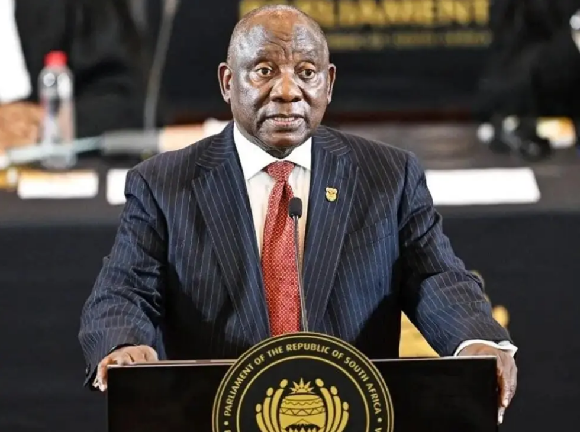
South Africa, February 14.- South African President Cyril Ramaphosa delivered a State of the Nation address to Parliament, in which he linked the concept of freedom with the situation faced by various peoples around the world. “We cannot consider ourselves free while the peoples of Cuba, Palestine, Sudan, Western Sahara, and others suffer from occupation, oppression, and war,” the president stated.
Ramaphosa emphasized that freedom must be understood as a universal principle and not a selective one. In this regard, he reaffirmed his country's commitment to an foreign policy based on the defense of international law, self-determination for peoples, and multilateralism.
In particular, the South African head of state advocated for the need to reach a just and lasting solution for Palestine. He also condemned the sanctions and pressures against Cuba, and referred to the prolonged conflicts in Sudan and Western Sahara as situations that demand attention and resolution.
Ramaphosa's positioning aligns with the historical line of South Africa's foreign policy established after the end of apartheid, closely linked to the principles championed by Nelson Mandela. Since 1994, Pretoria has promoted diplomacy aimed at solidarity with peoples in situations of occupation or conflict.
In this context, South Africa supports the right to self-determination for the Sahrawi people and the recognition of the Palestinian state in multilateral forums, maintaining a stance consistent with its own historical experience.
On the legal front, Ramaphosa defended the role of the International Court of Justice as a mechanism for resolving disputes between states. He highlighted the importance of applying international law consistently and without double standards.
South Africa thus positions itself as a voice of the Global South that articulates its historical experience against racial segregation with an agenda centered on international justice, sovereignty, and effective multilateralism. (Text and Photo: Cubadebate)