
Radio Cadena Agramonte emisiora de Camagüey





Havana, Feb 18.- The development of Information and Communications Technologies (ICT) maintained a relevant place on the country's agenda during 2025, in correspondence with the policy of computerization of society and the strategic objectives associated with digital transformation.
During 2025, although progress continued in the field of technology, there were not a few challenges, limitations, or areas where sufficient progress could not be made because, although the country has been promoting a digital transformation policy for several years, much remains to be done and achieved.
Nevertheless, last year saw some milestones that cannot be overlooked, and once again, in the difficult context the country is going through and due to the limitations of the intensified blockade that also affects the technological sphere, for example, in accessing websites or purchasing parts with U.S. components, the sector continued to advance in its modernization.
The Policy for Digital Transformation and the Digital Agenda up to 2030 constitute references for development, and have shown that the challenge is not limited to introducing technologies, but to ensuring that these translate into real impacts on public management, the economy, and daily life.
INTERNATIONAL EVENTS AND TECHNICAL MEETINGS
Cuba reaffirmed its role as a host of internationally relevant events for youth and technology. Among them, Varadero hosted the Global Youth Summit 2025, of the International Telecommunication Union, with the participation of young people from around the world, to discuss topics such as digital empowerment, artificial intelligence, and technological gaps.
Furthermore, events such as Sigestic 2025 and the VI International Scientific Conference Uciencia 2025 brought together specialists in systems management, scientific research, and technological development, reinforcing academia-industry integration and the dissemination of ICT-related advances.
DIGITAL GOVERNMENT, CYBERSECURITY, AND DIGITAL EDUCATION
As part of the push towards digital government, the Soberanía platform was launched, which integrates a digital identity for citizens and facilitates the management of online procedures, including services such as civil registry, document requests, and administrative services.
The platform, available at the web address www.soberania.gob.cu, allows user registration and the account certification process, as a necessary previous step for carrying out an online procedure.
Soberanía facilitates the digital identification of the citizen, while also creating, for each user, their profile and digital space, in which the holder can find their personal information and that related to the management of their requests.
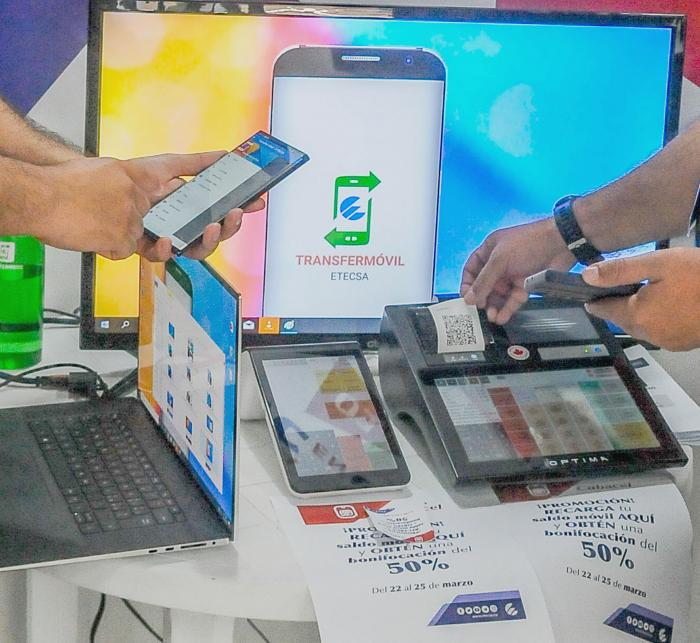
On the other hand, digital tools such as Transfermóvil and EnZona were consolidated as fundamental payment gateways in the Cuban digital environment, expanding their services and functionalities to support electronic commerce and digital payments, in line with the strategy of digitizing services to the population.
As a cross-cutting priority in the digital transformation process, in terms of cybersecurity, the Fourth National Day was held focused on raising awareness among the population, especially young people, about the safe use of mobile devices, protection strategies against cyberattacks, passwords, phishing, and digital harassment, insisting on the need to create a computer security culture that involves both institutions and the population, given the increase in threats associated with the intensive use of digital technologies.
ADVANCES IN ARTIFICIAL INTELLIGENCE
January 2025 marked a milestone for the Island, by joining the AI Alliance Network, together with 13 countries and 15 development organizations in the field of artificial intelligence from the countries that make up Brics+, led by Brazil, China, India, South Africa, and Russia.
AI also found a path for promotion in state-owned companies and in technology micro, small, and medium-sized enterprises, with their own projects and others in strategic alliances.
2025 was also the year of Cecilia, a Cuban language model for artificial intelligence developed by the University of Havana, or Alic.IA, an interactive and collaborative legal assistant as a virtual assistant for Cuban lawyers.
Likewise, within the framework of the Havana International Fair, the Artificial Intelligence Consortium was presented, an initiative that seeks to articulate efforts between institutions, companies, and universities to promote solutions based on artificial intelligence in strategic sectors of the nation.
Cuba also ratified its vocation for international cooperation in the technological field. It participated in multilateral forums and promoted alliances in areas such as computerization, cybersecurity, and the development of digital capacities, relations that are part of the defense of a responsible and non-hegemonic use of information technologies.
Although there was only space to summarize some notes on the advances in 2025, digital transformation in Cuba is an ongoing process, marked by a clear will to take advantage of ICT as a space to promote development. (Text and photo: Granma Digital)