
Radio Cadena Agramonte emisiora de Camagüey





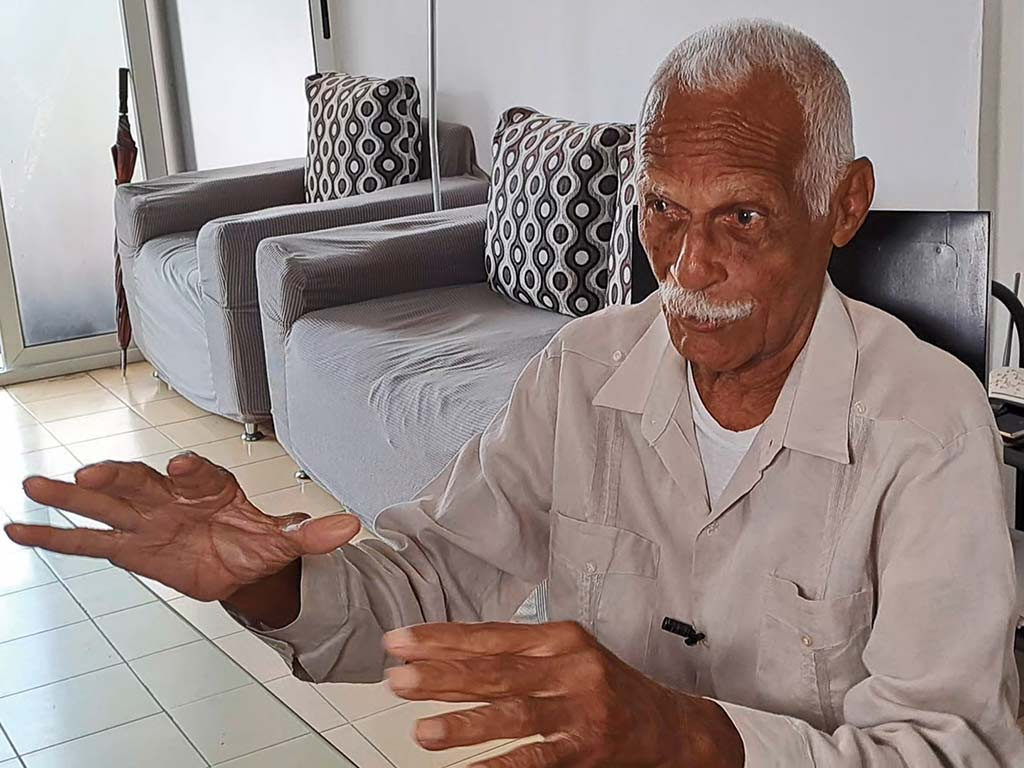
Havana, March 5.- With an unsteady step due to the weight of the years and leaning on the researcher, the elderly woman made her way to the place where a large panel displayed photos of the victims of the sabotage of March 4, 1960. "That is my husband, a longshoreman," she pointed to a young face. Like other workers, that afternoon he was unloading, in an atmosphere of tranquility and safety, weapons that had arrived from Belgium for the defense of the Revolution, and in an instant, everything was interrupted by a terrible explosion.
In painful remembrance, that woman recounted that her partner had survived the explosion of the ship, but when she went to the hospital where they had taken him, she was horrified to find him completely black from burns, without hair. He suffered for nine days until he died.
A crew member of the French-flagged vessel, a survivor of the terrorist act, does not forget the hellish spectacle of pieces of bodies, torsos without legs, heads, arms...
These are scenes drawn from real life captured in the impactful documentary The Enigma of La Coubre, by Colombian researcher and journalist Hernando CalvoOspina.
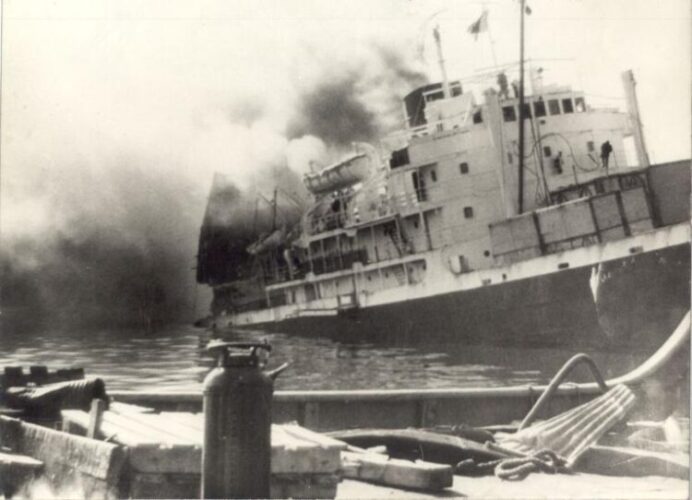
A first detonation on La Coubre attracted numerous citizens eager to help the victims; a second explosion caused a considerable number of dead and missing.
That March 4 was a day marked by anguish and heroism of workers, militiamen, soldiers, firefighters, and ordinary people who, defying danger, rushed to the scene to aid the wounded, and many of them also became victims when the second explosion occurred.
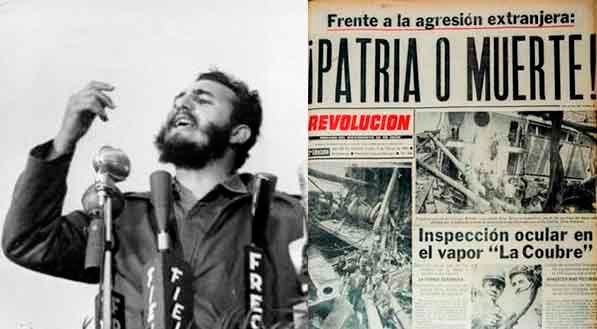
The next day, in front of the Havana cemetery, before a compact crowd that had gathered for the funeral honors of the fallen, Fidel explained that it had not been an accident in the handling of the cargo but sabotage. Members of the Armed Forces demonstrated this by dropping two boxes of grenades from an airplane at 400 and 600 feet: the boxes broke without any of the 50 grenades inside exploding, because, as he clarified, explosives have to be made to explode.
The details of the event still remain in unclassified documents. It was, however, the prelude to a fierce aggressive escalation by the US government and the CIA against Cuba.
In that rally on March 5, Fidel raised the phrase Homeland or Death! which became a collective attitude against the adversary. "We Cubans have acquired a real sense of life, which begins by considering it unworthy when one does not live with freedom, when one does not live with dignity, when one does not live with justice," the Commander-in-Chief said then. That conviction was the same one that led our liberators to launch themselves into the wilderness with the cry of Liberty or Death! Since then, revolutionaries acted convinced, as expressed in the National Anthem, born in the heat of the struggle, that to die for the homeland is to live.
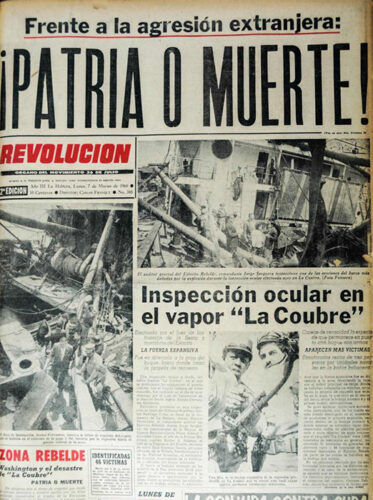
That is why it is outrageous that a small group of puppets, propped up by the most reactionary forces of anti-Cuban Miami, try to tarnish a slogan that turned out to be the first thing the mercenaries at Playa Girón heard from the lips of the militiamen determined to defend the new life that emerged in Cuba starting January 1, 1959.
Faced with the enormous risks to which Cubans were exposed, in October 1962, Che expressed, "the entire people were a Maceo," because like the Bronze Titan warned those who tried to seize Cuba that they would gather the dust of its soil soaked in blood if they did not perish in the struggle. It was another moment of Homeland or Death, followed by many more throughout the Revolution.
The pro-Yankee little choir that has dared to offend our slogan surely does not know that more than 20 years ago Fidel said: "I am going to use a phrase, not definitive, because we should not renounce the idea of Homeland or Death, nor the idea of Socialism or Death. I am going to say what a young deputy said in the National Assembly: Homeland and Life! " And the fact is that the fighting spirit of Cubans has centered on defending the right of the millions who live on this land to live in peace against those who want to destroy our social project at all costs.
The usurpers of that phrase are of the same ilk as those who clamor for a Yankee intervention in our archipelago and desire the tightening of the blockade, which is why they shamelessly applauded the former president of the United States, who dictated no less than 240 measures against Cuba. Who, then, is responsible for "blocking the dominoes" for more than 60 years, as one of the many vulgar expressions of the crude annexationist melody would say? Although it is good to remind them that this "blocking" has never prevented us from moving forward.
We prefer to say, like Martí: "What the enemy must hear is nothing more than the very voice of attack," and that voice is and will always be for Cubans Homeland or Death! (Text and photos: Trabajadores Digital)