
Radio Cadena Agramonte emisiora de Camagüey





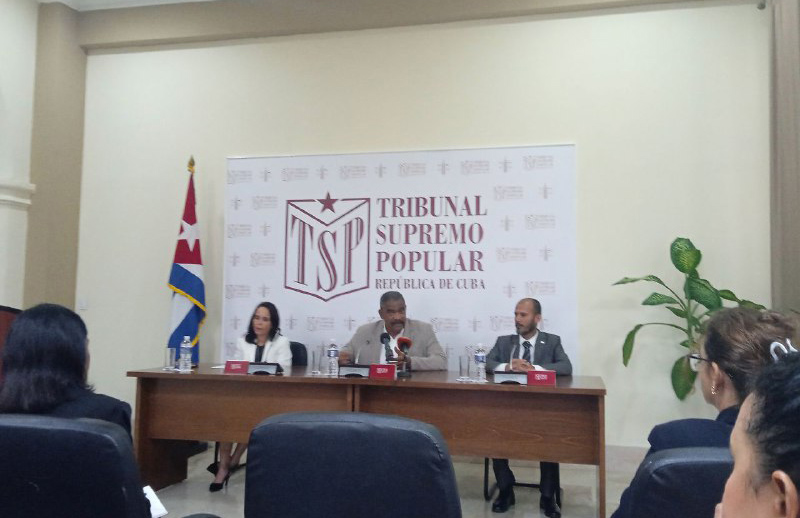
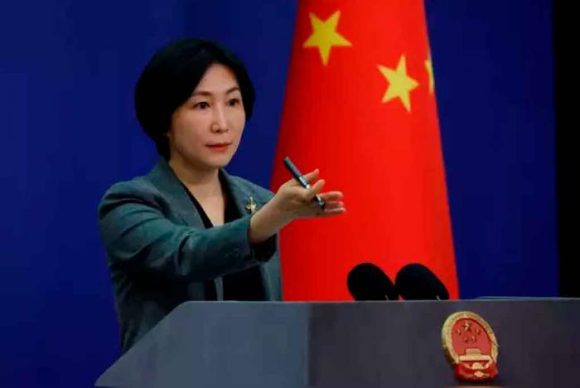
Havana, December 9 - The Supreme People's Court (TSP, for its acronym in Spanish) provided an update on Monday regarding the country's progress in implementing the Family Code, three years after its approval, at a press conference held at the court's headquarters.
Rubén Remigio Ferro, president of the TSP, explained that in the process of applying the rule, they have accompanied the different institutions that, due to their social purpose, are closely linked to families and to the different conflicts that can be generated in that nucleus.
He added that conferences and discussions have been held with various sectors and the population to clarify any remaining doubts about this code, which, due to its novelty and scope, generates questions and concerns among citizens.
He emphasized that the Cuban judicial system has been one of the main pillars of the practical application of this jurisdiction, ensuring due compliance with its statutes.
Yomays Olivarez Gainza, president of the Civil, Family, and Administrative Chamber of the TSP, noted that divorce represents approximately 75 percent (%) of the family matters handled, which is not a new issue, considering that according to data from the National Office of Statistics and Information (ONEI, for its acronym in Spanish), Cuba has high rates in this category.
He added that within this matter, 25% of cases are processed by mutual agreement, which, although possible to do through notaries, are handled directly in the courts.
He specified that within this aspect, other family-related matters also arise, such as custody and care actions, with a focus on responsibility, which has the novel element of not being limited only to children born within the marriage, but to all minor children of the couple, in order to eliminate discrimination.
He emphasized that another important point introduced by the regulations when dissolving marital bonds is the economic compensation that redresses the disadvantaged property situation in which one of the parties finds themselves after divorce for not having engaged in lucrative activity and having dedicated themselves to the home in cases where this could occur.
According to Olivarez Gainza, within the context of marital dissolution, access can also be granted to the real right of habitation, which provides protection in favor of the family member in need of guardianship, with the purpose of facilitating access to housing for their continued development as a human being.
Regarding discrimination and domestic violence, Maryla Anna Pérez Bernal, judge of the Civil, Family, and Administrative Chamber of the TSP, stated that this is a priority issue and one that has required extensive training for those responsible for administering justice.
She emphasized that this Code presents a definition of family violence that includes the different manifestations of this act, such as physical, psychological, property-related, economic, sexual, among others, and addresses not only people within affective bonds, but also those who no longer are.
She noted that the primary victims of these acts are women, girls, boys, adolescents, the elderly, and people with disabilities, placing them at the center of judicial protection.
He reported that one of the characteristics of this issue is the tendency not to claim compensation for moral and material damages, despite it being established.
She also commented that among the protection measures for those in this situation are the removal of aggressors, mandatory attendance at rehabilitation programs, among others.
During the meeting, the legal text contained in the Family Code was described as profound and inclusive, as it not only encompasses the different compositions of families, but also the defense of the parties and protection of those who require it. (Text and photo: ACN)