
Radio Cadena Agramonte emisiora de Camagüey





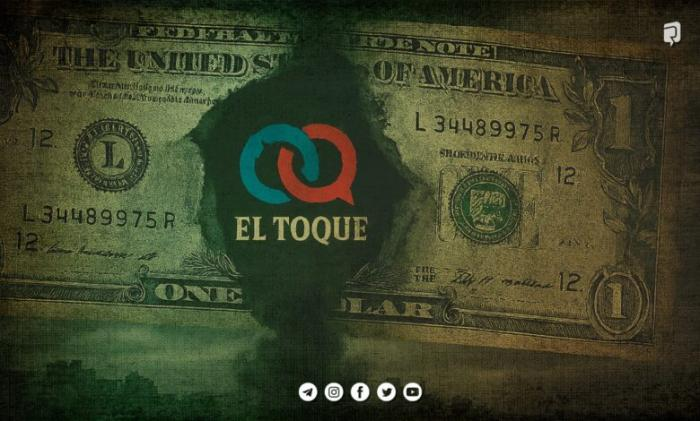
Havana, Dec. 10 - Since October 29, following Foreign Minister Bruno Rodríguez Parrilla's denunciation at the United Nations, a campaign has been underway to expose the true nature of the digital platform El Toque.
Far from being an independent media outlet, it is a privileged creation of the U.S. government, designed to attack the Cuban economy and the stability of the Cuban people.
On the program "Razones de Cuba" (Reasons of Cuba), compelling evidence of this subversive operation was presented. Raúl Capote, a former State Security agent, explained that the essence of the multifaceted war against Cuba has two axes: the war against the national economy and the war against the consciousness of Cubans. El Toque has been precisely that: an attack directed at the country's economy, but also at the stability of the people, he stated.
Capote highlighted that this type of operation of induced inflation and exchange rate manipulation is not new. It was experimented with against Chile, Nicaragua, and Venezuela. The difference lies in the development they have had since then.
He exemplified with the case of Dollar Today in Venezuela, which managed to skyrocket the exchange rate through very similar operations.
The investigation by Cuban Security organs has identified 18 key executives and operators of El Toque, whose faces were published by the Razones de Cuba site. According to the former agent, this revelation caused a stampede among those implicated – many of whom even lack legal migratory status in the countries where they reside – for fear of criminal proceedings.
Among the exposed names is that of Gretel Valladares Carbonell (pseudonym Filo), who was in charge of managing funds from USAID and the NED, distributed by the U.S. State Department. Katia Sánchez Martínez was also mentioned, the current community manager of El Toque and, significantly, also an employee of the U.S. Embassy in Havana, which shows direct coordination.
The current leadership of El Toque consists of four people: José Hassan, Eloy, Alejandro, and Ana Lidia. Capote revealed that Ana Lidia is the "brain" of the operation, while José Hassan acts as the public face, and publicly confessed to receiving funding from the U.S. government. This internal dynamic reveals power struggles, exacerbated by the allegations.
THE FARCE OF THE ALGORITHM: ELEMENTARY, SIMPLE, AND CRUDE
The supposed technical sophistication of El Toque to calculate an informal exchange rate was dismantled in the same program by two academics from the University of Havana. Doctor of Sciences Raúl Guinovart Díaz, a prominent mathematician who led the COVID-19 prediction models, and Doctor of Sciences Yubán Gutiérrez Quintanilla, First Vice President of the Association of Economists and Accountants of Cuba, analyzed the method.
Both specialists agreed on having felt disappointment upon discovering the procedure.
Guinovart Díaz stated he thought the algorithm they used was sophisticated, but in reality, they use a very elementary, primary concept in the teaching of statistics: the median.
He explained that the computational process is of absolute simplicity, basically reduced to ordering a list of data, a first-year programming exercise.
He also highlighted the lack of rigor in their analyses, which do not correspond to what, according to their declarations, constitutes the basis of their algorithm and validates its veracity. What is presented as a technical indicator is nothing more than crude manipulation, lacking the complex econometric and statistical models that truly analyze macroeconomic variables.
A CLEAR PURPOSE: TO HARM CUBA
The publication of articles that, feigning concern, cite Cuban scientists – like Guinovart himself – on sensitive topics such as dengue, is another facet of this hybrid war. They seek to create anxiety and destabilize, while on the other hand manipulating economic perceptions with a fraudulent algorithm.
The statistical method El Toque uses to calculate and publish the dollar exchange rate on the Cuban informal market is elementary and crude, pointed out Guinovart Díaz. This mechanism, he explained, consists of calculating a Representative Rate of the Informal Market (TRMI by its Spanish acronym) by taking the median of the prices published in social media ads and classified sites.
To obtain the median, all price data is ordered from lowest to highest and the central value is taken. The analysis of a specific period, from November 13 to 22, revealed that four key Telegram groups provided an average of 348 daily messages with prices, which represented more than half of the total sample used by the platform.
In statistics, whoever controls 50% plus one of the data in a sample determines the value of the median, the mathematician pointed out.
The academic questioned the use of such small samples, given the supposed processing capacity of the platform, and warned that this methodological choice makes the system very convenient for manipulation. By concentrating the effort on flooding only those four groups with messages, the median could be shifted to the desired value, he stated.
The investigation presented evidence of non-compliance with the very filters declared by El Toque: duplicate messages counted more than once, identical or very similar text structures suggesting automated generation, and equivalent posts in different groups at the same time.
Given that this TRMI has become the main reference for the informal exchange rate on the Island, its manipulation has a direct impact on the economy. Gutiérrez Quintanilla listed the damages: distortion of prices and state economic planning, fostering inflation and erosion of purchasing power, stimulation of speculation, and discouragement for remittances to enter through official channels.
In a context of economic blockade, these practices prevent foreign currency from entering the national banking system, affecting Cuba's capacity to carry out essential imports. The experts' conclusion is emphatic: The manipulation is not found in the calculation performed by the algorithm, but in the selection of the data. They have a number and go out to find the data so that the calculation yields the number they already have.
This dynamic, according to the analysis, is linked to the economic phenomenon of overshooting, where prices in volatile markets react in an exaggerated manner to artificially created expectations.
The allegation is clear: El Toque is a media arm of the unconventional economic war against Cuba. Its funding is foreign, its operators are mercenaries in the service of foreign powers, and its main tool is the crudest deception, disguised as technique.
As was stated in the program, it is a creature that must, and that will die, in the face of truth and the resistance of the Cuban people. (Text and photo: Granma Digital)