
Radio Cadena Agramonte emisiora de Camagüey





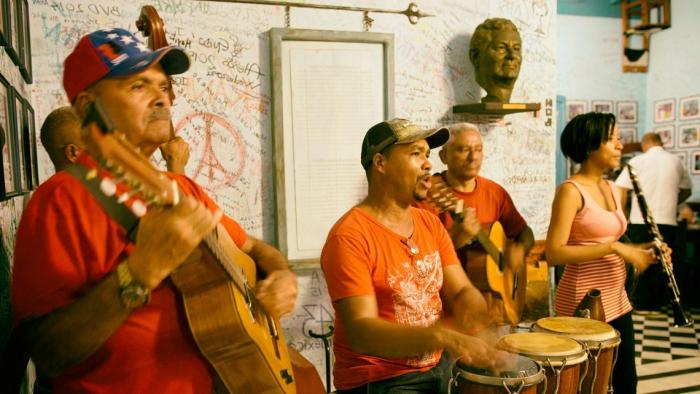
Havana, December 10 - As of Wednesday, December 10, 2025, the practice of Cuban Son is registered on the Representative List of the Intangible Cultural Heritage of Humanity, coordinated by the United Nations Educational, Scientific and Cultural Organization (UNESCO).
This is explained in a statement issued by the Ministry of Culture, the Cuban Institute of Music and the National Council of Cultural Heritage, which explains that the result was revealed during the meeting of the Committee on Intangible Cultural Heritage of this international organization, which is being held these days in the city of New Delhi, India.
The decision was supported by a comprehensive dossier prepared by the bearers with the assistance of the Center for Research and Development of Cuban Music, the Cuban Institute of Music, the National Council of Houses of Culture, and the National Council of Cultural Heritage, the message states.
In a separate section, it explains that "recognized as an essential element of national cultural identity, son in its different variants enjoys great vitality throughout the country and has extended its influence worldwide," and states that since its birth in the eastern region of Cuba, this musical-dance genre constitutes one of the foundational expressions of Cuban music, with a high degree of hybridization of African and Hispanic music.
The genre, details the writing, reached its peak from the 1920s onward, with the emergence and development of commercial broadcasting, and recalls that it was declared Cultural Heritage of the Nation in 2012.
With this declaration, son joins other native expressions that are part of UNESCO's Representative List of the Intangible Cultural Heritage, such as Rumba, Cuban Punto, Tumba Francesa, the Parrandas of Central Cuba, and Bolero, the information assures.
We receive with great pleasure the news that we will celebrate throughout the length and breadth of the Island, and that we understand as a well-deserved tribute to the creativity and joy of an entire people and as recognition to all soneros of the world and to the many bearers who have kept alive one of the most robust traditions of the national cultural heritage," the text concludes. (Text and photo: Granma Digital)