
Radio Cadena Agramonte emisiora de Camagüey





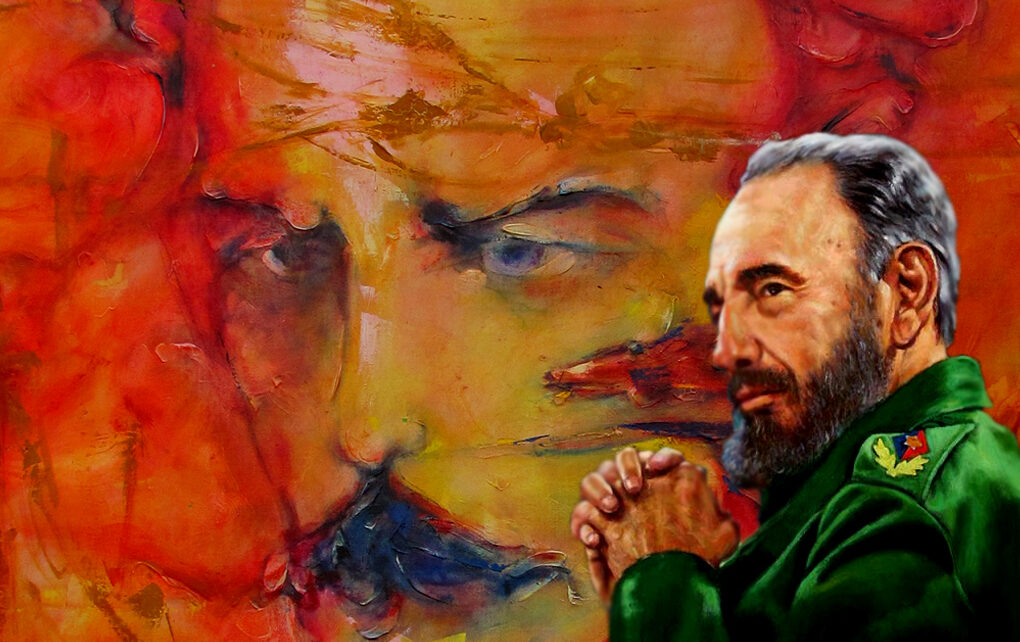
Havana, Jan 26. - The voices of José Martí, Simón Bolívar, and Fidel Castro rise from different moments in history, but the most important thing is that they converge on a common concern: the destiny of the Latin American peoples in the face of the imperialist power of the United States.
Martí's 15-year stay in the U.S. gave him the opportunity to understand that society and the transition of capitalism into its imperialist phase. He saw it at the peak of its birth as an imperialist nation. Of this new, incipient threat, the Apostle said: "...A political aristocracy has been born...and it controls newspapers, sells elections, often prevents in assemblies... that haughty caste, which poorly disguises the impatience with which it awaits the hour when the number of its secretaries will allow it to lay a firm hand on the sacred book of the nation, and reform, for the favor and privilege of a class, the protection of which these vulgar powerful men will believe is the fortune they long for, in gravely wounding them..."
With his brilliant vision, the Master bequeathed to history profound analyses and foresaw the dangers entailed by the strength and economic power that said tyrant was acquiring, controlling a large part of the economy and trade, imposing monopolistic prices (tariffs used as blackmail), with the goal of obtaining superprofits, increasing the misery and poverty of the workers, and foreseeing the danger it represented for the peoples of our America.
In his essay Nuestra América (1891), Martí warns of the danger that the expansion and power of the U.S. represented for the Latin American peoples. The "giant of the seven-league boots" alludes to an enormous being, capable of covering great distances with immense strides, a symbol of North American economic and military might.
"We can no longer be the people of leaves, living in the air, with our tops laden with flowers, and carried away by the wind, like leaves. Peoples who do not know each other must hurry to know each other, like those who are going to fight together. The giant of the seven-league boots is already standing, and he walks, and we must stop him at the door!"
With his poetic and prophetic vision, he warned of "the giant of the seven-league boots" that threatened to extend its dominion: "I lived in the monster and I know its entrails: and my sling is that of David."
Simón Bolívar, from the dawn of independence, pointed out the risk that the freedom proclaimed by the north would turn into misery for the south: "The peoples of America are freer and more prosperous the more they distance themselves from the United States." He also stated: "The United States seems destined to bring all of America misery in the name of liberty."
These phrases from Bolívar were not mere rhetorical warnings: they expressed the early awareness that political independence had to be accompanied by economic and cultural independence, for otherwise the region would remain subject to new forms of domination.
Fidel Castro, heir to these warnings, turned the denunciation of imperialism into a banner of resistance and dignity. In numerous speeches—such as the one delivered at the Plaza de la Revolución on May 1, 2000, or at the UN in 1960—he reiterated that "North American imperialism is the number one enemy of the peoples of the world" and that "the United States does not forgive Cuba for having made a socialist revolution 90 miles from its shores."
By contextualizing his words, it is understood that Fidel was not speaking only of Cuba, but of the need for continental resistance against Washington's economic, political, and military domination strategies. His insistence that "there is no reason whatsoever to make the slightest concession to imperialism" was a call for firmness and for the unity of the peoples.
To bring together these voices is to open a dialogue between eras and generations; their relevance is clearer today than ever, now that the eagle with its blood-stained talons flies over our America and the northern policeman walks like a roaring lion seeking someone to devour.
It is impossible to count all the lives that Yankee power has swept away and all that this declining empire will cost. What we do know is that the anti-imperialist struggle is the struggle for the dignity and self-determination of peoples.
We must return to the founding fathers of independence, where the clarity of their ideas illuminates the need for unity, sovereignty, and critical consciousness in our America. (ACN) (Photo: Cubaperiodistas)