
Radio Cadena Agramonte emisiora de Camagüey





There is an image of the historic center that celebrates its labyrinth of streets, the solemnity of its churches, and the terracotta red of its roof tiles. It is the postcard that justified its title as a World Heritage Site. But there is another side, one that does not appear in tourist guides and yet defines the daily experience of residents and visitors.
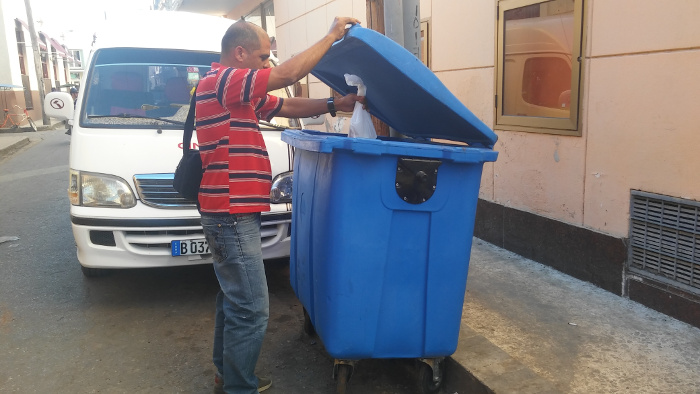
It is the reality of garbage accumulated in vacant lots and on street corners, of waste piled up against centuries-old columns, and of social indiscipline that slowly turns public spaces into territories of neglect. On yet another anniversary of the city's founding, the real question is not whether we can restore a building, but whether we are capable of restoring the collective respect for the common home that building represents.
This contradiction between historical grandeur and present deterioration is not an accident; it is a symptom of a fracture in urban management and the civic contract. On one hand, it reveals flaws in the institutional mechanisms designed to consistently and effectively guarantee hygiene and order. An intermittent waste collection service, surveillance that fails to deter uncivil behavior, and a lack of adequate containers in a complex urban fabric create a cycle of neglect.
On the other hand, it reflects a weakening sense of belonging. When a citizen does not internalize that heritage is, above all, their living environment, any corner can become a dumping ground. The act of throwing trash on the ground, far from being a harmless action, becomes a small but significant act of contempt for shared history.
Overcoming this challenge requires a response as comprehensive as the problem itself. Institutional will must translate into concrete and sustained actions. Sporadic cleaning operations are not enough; we need an agile waste collection system adapted to the dynamics of the city center, a permanent maintenance strategy for squares and parks, and clear signage that educates and guides.
Simultaneously, a coherent and pedagogical enforcement of the rules is essential, where penalties for persistent indiscipline demonstrate that the rules of coexistence are serious.
However, no government measure will succeed without a profound change in civic consciousness. Education about heritage must move beyond speeches and materialize in creative campaigns that show the real cost of filth, that celebrate exemplary neighbors, and that involve schools in the active care of their neighborhood.
The goal is to foster a pride expressed not only in words, but in the gesture of picking up after oneself and in speaking out against an act of vandalism.
The future of heritage-rich Camagüey is precisely at stake in this capacity to heal its dual face. The goal must be to align the exceptional beauty of its architecture with the impeccable dignity of its streets. Achieving this will be the ultimate proof that its universal value is not just an inscription on a UNESCO document, but a living principle guiding the behavior of a community and the effectiveness of its institutions.
On this anniversary, the greatest tribute to the former villa of Santa María del Puerto del Príncipe would be to initiate, together, a restoration even more urgent than that of its walls: that of its civic pulse and its daily order. So that the only face Camagüey shows is one of well-understood and better-cared-for pride. (Text: YalieskyRivero Alvarez/collaborator of Radio Camagüey)