
Radio Cadena Agramonte emisiora de Camagüey





Havana, Feb 3 – On February 3, 1962, U.S. President John F. Kennedy signed a decree imposing a total blockade against Cuba. Four days after the presidential order was issued, Washington’s illegal and inhumane policy became official.
The second month of a challenging year in every respect begins—not only for Cuba but for the region and the world. The calendar marks a new day. Once again, the small yet great Island awakens under the effects of the cruelest of blockades, as it has for more than six decades in the nation’s history.
What we live through today has been the reality for generations of Cubans. It is the daily battle of a people’s resistance. It is the everyday struggle against the sick maneuvers of successive U.S. administrations, which have for years ignored the demands of the international community calling for an end to the inhumane policy of economic suffocation against the Cuban family.
For more than 60 years, the economic, commercial, and financial blockade has defined United States policy toward the rebellious Caribbean island. The effects of this war against the economy, society, and dreams of progress of millions of Cubans have not ceased for a single day. In recent years, the cruel policy of the U.S. administration has been intensified.
Certainly, the impacts of this siege of economic suffocation are reflected in all spheres of society. No sector escapes the effects of the blockade—the longest and most comprehensive system of unilateral coercive measures ever applied against any nation.
The United States government has ignored for more than thirty years the systematic resolutions approved by the United Nations General Assembly and the voices within U.S. society advocating for an end to the blockade. It is an obsolete policy that has ended up discrediting and isolating the northern nation. Nevertheless, it remains immovable.
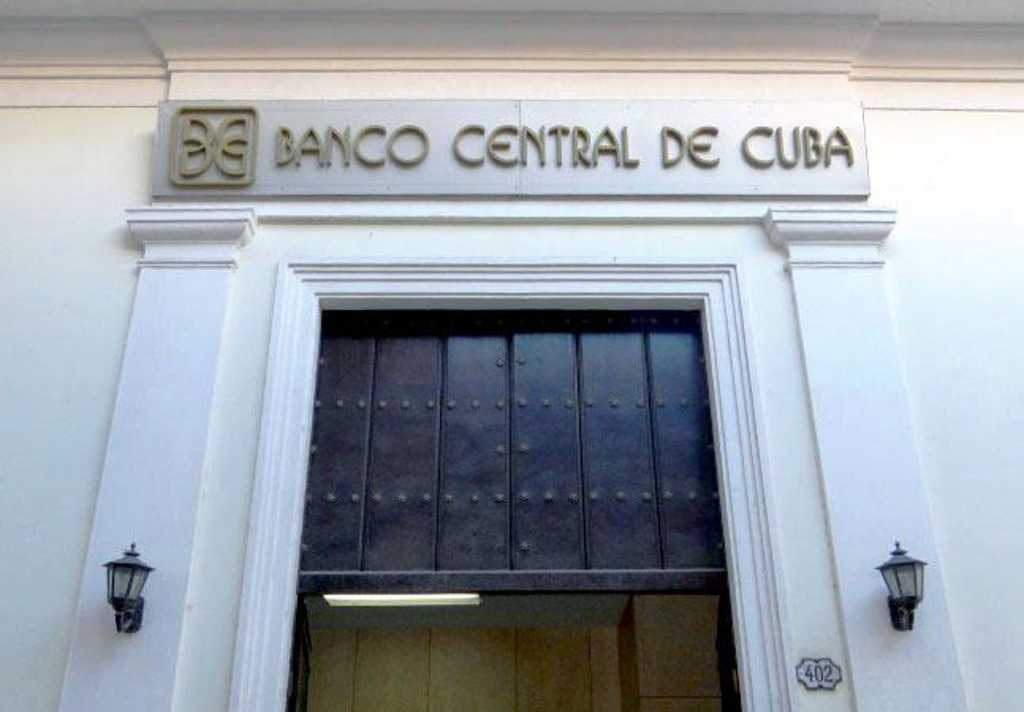
Financial persecution has been further reinforced with the arbitrary inclusion of Cuba in the U.S. State Department’s unilateral list of alleged state sponsors of terrorism. That absurd position by the occupant of the White House could be changed with a single signature. However, there is no political will to reverse one of the most damaging measures weighing on all sectors of the national economy, even though it is known that the reasons given for its implementation are unfounded and dishonest.
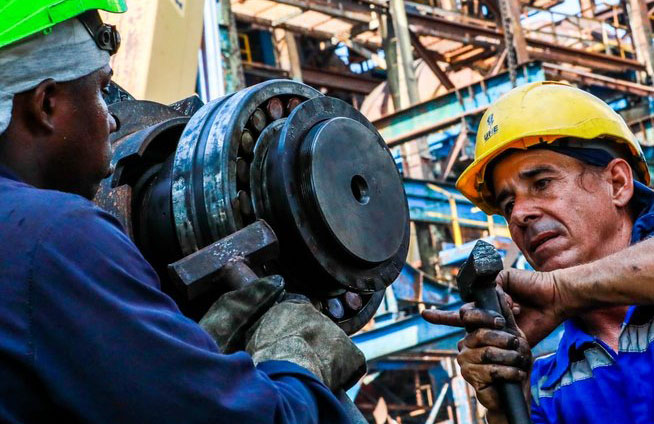
Beyond the multimillion-dollar figures that have harmed our economic development, every Cuban has their own experience of Washington’s hostile policy: the missing medicine, school supplies, the industry halted due to equipment we couldn’t buy, the housing that wasn’t built, transportation lacking spare parts, and what can be said of the national electricity situation, which daily hits all sectors of national life.
While the White House rigorously applies its script against Cuba, within U.S. society a large portion of its citizens—and even the Cuban emigration in that country—favors the normalization of bilateral relations. In the United States Congress, which turned the blockade provisions into law, there are also congresspeople opposed to this policy.
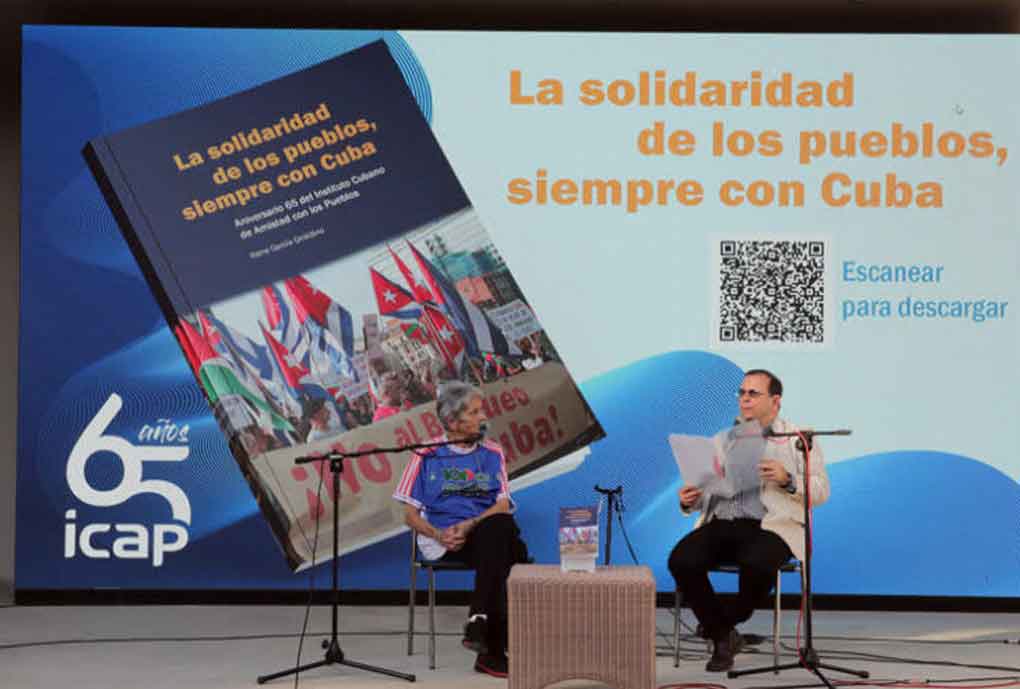
The people of Cuba are heroic. They show it every day. With our lights and shadows, we have moved forward, always appreciating immense international solidarity. Cuba is loved and defended by its good children, but also by many people, movements, and friendly organizations across different latitudes.
Our people’s boldness is recognized and admired globally. The greatest challenge lies in preserving the nation’s unity, because before the world, the blockade has already been defeated with unparalleled resistance. A people’sdignitycannot be blocked.
NOT AN EMBARGO—IT’S A BLOCKADE
One of the principles accepted in International Law since the London Naval Conference of 1909 defines that “a blockade is an act of war.” However, since February 3, 1962, when President John F. Kennedy signed his name, decreeing this illegal policy against Cuba, successive occupants of the White House—both Republicans and Democrats—have reaffirmed it under the worn and false pretext that it is a “bilateral matter.”
The then U.S. President, fulfilling the mandate entrusted to him by the U.S. Congress through Section 620a of the Foreign Assistance Act of September 1961, officially declared a total blockade against Cuba effective at 12:01 a.m. on February 7, 1962, although the presidential order had been signed on the 3rd.
Since that date, the U.S. blockade has been the main obstacle to the development of the Caribbean island. It represents more than sixty years of attempted economic suffocation, financial persecution, lack of food and medicine, the impossibility of obtaining spare parts for deteriorating machinery or public transportation, the absence of school supplies, or, in many cases, restrictions imposed on those who wish to make solidarity donations to our people.
Contrary to what Washington attempts to present, the blockade is not a bilateral matter between the two countries. Its extraterritorial character remains and is applied with total impunity, in clear violation of International Law.
The sanctions exercised against Cuba by successive U.S. administrations do not fit the definition of an “embargo.” On the contrary, they go beyond this and qualify as a “blockade,” as they pursue the isolation, suffocation, and immobilization of the nation, with the perverse purpose of starving its people and making them renounce their decision to be sovereign and independent.
The Torricelli Law enacted in 1992 reinforced economic measures and provided a regulatory basis for the blockade’s extraterritoriality. Four years later, in 1996, the Helms-Burton Act came into force, with the essential objective of obstructing and discouraging foreign investment in the Island, as well as internationalizing the economic, commercial, and financial blockade.
CUBA CONDEMNS NEW ESCALATION OF THE ECONOMIC SIEGE
Last week, Cuba condemned in the strongest terms the new escalation by the United States government in its effort to impose an absolute siege on fuel supplies to our country.
The executive order by U.S. President Donald Trump, announced on January 29, declares a supposed national emergency, under which his government may impose commercial tariffs on imports of products from countries that supply oil to Cuba.
To justify such an extreme action, the text of the aforementioned order cites a long list of lies and defamatory accusations against Cuba. Prominent among them is the absurd assertion that our country constitutes an “unusual and extraordinary threat” to the United States’ national security.
With this decision, the U.S. administration, through blackmail, threats, and direct coercion of third countries, attempts to impose additional pressure components to the economic suffocation actions that, from Trump’s first term, were designed to prevent the entry of fuel to the neighboring island.
In this regard, the Cuban government denounced in a statement that this “consolidates a dangerous way of conducting U.S. foreign policy through force and exercising its ambitions to ensure its imperialist hegemony. As announced, that country arrogates to itself the right to dictate to sovereign states with which nations they may trade and to which they may export their national products.”
Cuba has reiterated that the U.S. government has reached this point after failing for 67 years to subdue and destroy a genuine and legitimate political and revolutionary process, one of full sovereignty, social justice, and peace promotion.
The world knows well—including the U.S. government itself—that Cuba is not a threat to the United States. The international community knows—even U.S. society—that we are a solidary and cooperative country, willing to help and contribute to other states.
And yes, let no one doubt it, we are a heroic and combative people. More than once, in tense, dangerous, and very complex situations, we have shown that surrender will never be possible in the face of economic pressures, threats, or blackmail.
KEY ASPECTS OF THE U.S. BLOCKADE AGAINST CUBA
What does the U.S. blockade imposed on Cuba consist of?
A set of measures of coercion and economic aggression, constituting genocidal conduct. Itseeksthe “isolation,” “suffocation,” and “immobilization” of Cuba.
When was the blockade imposed on Cuba?
After the partial blockade proved futile in subduing the Cuban people, then U.S. President J.F. Kennedy, fulfilling the mandate entrusted to him by the U.S. Congress through Section 620a of the Foreign Assistance Act of September 1961, declared a total blockade against Cuba effective at 12:01 a.m. on February 7, 1962. The presidential order had been signed on February 3.
Why is it a Blockade and not an Embargo?
The actions taken against Cuba by the U.S. government do not fit the definition of an “embargo.” Cuba has not been and is not a threat to United States security, making the attempt to apply legitimate defense measures contrary to international law.
The United States uses the term “embargo” to avoid acknowledging that it applies wartime measures to Cuba. On the other hand, the “isolation, suffocation, and immobilization” to which they subject Cuba do typify a “blockade”—meaning to cut off, close, and isolate from the outside world.
What is the objective pursued by imposing the blockade?
To intentionally subject the Cuban people to conditions of existence that may cause them physical, total, or partial harm; to weaken their will to fight and triumph and make them renounce their decision to be sovereign and independent.
Why is the U.S. blockade against Cuba not a bilateral matter?
The U.S. government insists on manipulating the truth, and the blockade persists, with the Cuban family being the most affected. The purpose is to create the image that the Revolution and socialism are economically inefficient and cannot meet the people’s needs. In reality, Cuba is the victim of a unilateral coercive policy with extraterritorial implications that violate international law. No country in the world has been subjected to such a harsh and prolonged blockade.
Why is the blockade imposed on Cuba illegal?
The blockade prevents Cuba, through various means, from developing economic, commercial, and financial ties with third parties, aiming to subdue the country by force or starvation.
The U.S. legislative framework that legally sustains the blockade against Cuba insists on calling this unilateral sanction an “embargo,” applying wartime measures to Cuba in peacetime. No norm of the international legal order has ever endorsed a blockade in peacetime.
Cuba does not and has not represented a threat to U.S. national security, and there are no arguments to support the prolongation of a national emergency situation.
The blockade against Cuba violates the human rights of the Cuban people. The blockade contravenes the fundamental principles and rights of international law: the Principle of Sovereign Equality, the Principle of Non-Intervention, the Principle of Independence, and the Right to Nationalization.
BLOCKADE CHRONOLOGY: 1959 TO FEBRUARY 1962
1959
June 11, 1959: In the context of the Agrarian Reform Law decreed in May 1959, the U.S. threatened to reduce the sugar quota, prohibit U.S. private investment, and eliminate all economic aid if American properties were nationalized without prompt compensation.
November 13, 1959: As part of a series of maneuvers aimed at hindering Cuba’s acquisition of necessary weapons for its defense against counterrevolutionary activities and pirate air incursions, the U.S. government pressured the UK government to prevent the sale of 15 combat aircraft to Cuba.
1960
May 26, 1960: The U.S. Embassy in Havana issued a note stating that the Mutual Security Act of 1960 established that no assistance would be given to Cuba unless the President determined it to be in the national and hemispheric interest of the United States.
June 29, 1960: U.S. firms TEXACO, ESSO, and SHELL, traditional suppliers of oil to Cuba, interrupted supply and refused to process crude oil acquired from the USSR, as a result of pressure exerted by the U.S. government.
July 6, 1960: Public Law 86-592 was approved, amending Section 408 of the Sugar Act of 1948 and authorizing the U.S. President to determine Cuba’s sugar quota for the rest of 1960 and the first quarter of 1961, based on national interest and regardless of any other quota provision (74 Stat. 330). Based on the authority conferred by the Sugar Act of 1948, as amended, President Eisenhower set Cuba’s sugar quota for 1960 at 39,752 short tons, plus certified sugar for entry before July 3, 1960, that had not yet entered or was stored for consumption. This measure, dictated by Presidential Proclamation 3355 (25 FR 6414), implied a reduction of 700,000 short tons from the original quota of 3,119,655 short tons—95% of the remaining tonnage to be exported to the U.S. that year—effectively reducing such imports to zero. A shipment of 2,379,903 short tons, gross value, had been certified according to regulations issued by the Secretary of Agriculture (7 CFR 817).
September 2, 1960: The Department of Commerce issued a decree eliminating general licenses for exports to Cuba of certain automotive vehicles and their functional parts, imposing a requirement for validated licenses (25 FR 8638).
September 7, 1960: The Treasury Department, to facilitate the enforcement of the Department of Commerce’s export regulations, issued a provision including Cuba in a list of countries to which ships would not be cleared until complete export shipping documents and all required export declarations were presented.
September 29, 1960: The U.S. government notified the Cuban government of its decision to suspend operations of the nickel concentration plant in Nicaro, which was U.S.-owned.
September 30, 1960: The State Department announced it had recommended that U.S. citizens “refrain from traveling to Cuba unless there are compelling reasons to do so.”
October 20, 1960: The Department of Commerce amended the Export Regulations and imposed strict, total controls establishing a prohibition on exports to Cuba, except for certain non-subsidiary foods, medicines, and specified medical supplies (25 FR 10006).
November 1960: The Postal Department Regulations were amended (25 FR 10991), and the first restrictive measures were imposed on postal service from the U.S. to Cuba by placing Cuba among countries toward which exports from the U.S. are subject to particular restrictions. From the enactment of this provision, a general license was required for gifts, including food, clothing, medicines, and drugs.
December 16, 1960: Pursuant to the authority conferred by the Sugar Act of 1948, the U.S. President issued Presidential Proclamation 3383 (25 FR 13131), reducing Cuba’s sugar quota to zero for the first quarter of 1961.
1961
January 3, 1961: The U.S. government announced the severance of diplomatic and consular relations with the Cuban government.
January 16, 1961: In Press Release No. 2491, the State Department announced that due to the severance of relations and its inability to extend normal protective services to Americans visiting Cuba, citizens wishing to make such trips must obtain passports specifically endorsed by the State Department. It was communicated that all outstanding passports, except those of U.S. citizens remaining in Cuba, were being invalidated for travel to Cuba unless specifically endorsed for that purpose. Exempted from these regulations were persons whose travel could be considered in the best interest of the United States, such as journalists or merchants with previously established business interests. It was indicated that this action had been taken in accordance with the State Department’s normal practice of limiting travel to those countries with which the United States does not maintain diplomatic relations.
February 15, 1961: President Kennedy, in a Memorandum to Special Assistant for National Security Affairs McGeorge Bundy, asked whether “it would save valuable dollars in gold reserves” and also “make things more difficult for Castro” if the United States interrupted purchases of tobacco, vegetables, fruit, and other goods from Cuba (Memorandum to McGeorge Bundy, Special Assistant for National Security Affairs, The White House, February 15, 1961, NSA).
February 23, 1961: The Department of Commerce amended the Export Regulations and decreed that exports to Cuba could not be made under general license (26 FR 2311).
February 24, 1961: Secretary of State Dean Rusk sent a Memorandum to the White House advocating an “embargo” on Cuba. He indicated that cuts in imports could exacerbate Cuba’s already precipitous external reserve position and that any adverse regional consequences would be worthwhile (Morris Morley, etc.).
March 2, 1961: The U.S. government announced it was considering, in the case of Cuba, applying the Trading with the Enemy Act.
March 10, 1961: The Department of Commerce amended the Export Regulations, including a list of food and medicinal products requiring a general license for export to Cuba (26 FR 2310).
March 31, 1961: Public Law 87-15 was approved to amend Section 408 of the Sugar Act of 1948, extending presidential authority to establish Cuba’s sugar quota until June 30, 1962; it also established that sugar supplies should not be purchased from any country with which the United States did not have diplomatic relations (75 Stat. 40). (Diplomatic relations with Cuba had been severed on January 3, 1961.)
March 31, 1961: In accordance with the provisions of the Sugar Act of 1948, as amended on this date, the U.S. President issued Presidential Proclamation 3401 and determined that, for reasons of national interest, Cuba’s sugar quota for 1961 would be zero.
May 13, 1961: Charles Bowles, Acting Secretary to the President, wrote a Memorandum for President Kennedy to determine the possibility of applying the Mutual Defense Assistance Control Act, known as the Battle Act, to Cuba. Its terms establish that it may be applied to any nation that threatens U.S. security; its application would require the U.S. to inform countries receiving foreign aid of Cuba’s inclusion under the Act and request their cooperation in extending an embargo on shipments of arms and strategic materials to Cuba; while making it mandatory to cut off all foreign aid to any country that, aware of these provisions, did not cooperate.
September 4, 1961: The U.S. Congress approved the Foreign Assistance Act of 1961 (75 Stat. 444; 22 USC 2370), which in its Section 620(a) prohibited all assistance to the government of Cuba and, as a means to implement and enforce such policy, authorized the U.S. President to establish and maintain a total embargo on all trade between the United States and Cuba. Subsection (b) prohibited assistance to the government of any country unless the President determined it was not dominated or controlled by the international communist movement. Subsection (c) prohibited assistance to any country that was indebted to any U.S. citizen for goods or services provided when that citizen had exhausted all available legal means and the debt was not denied or contested by that government.
December 1, 1961: Under the authority conferred by the Sugar Act of 1948, as amended, the U.S. President issued Presidential Proclamation 3440 (26 FR 11714) and determined, in the national interest, to set Cuba’s sugar quota at zero until June 30, 1962.
December 21, 1961: The Kennedy Administration, in an effort to further tighten the embargo on Cuba, prohibited for 90 days exports from certain U.S. businesses and individuals. The Department of Commerce required U.S. producers and suppliers traditionally involved in trade with Cuba to ask customers about the destination of purchased products and report “suspicious transactions” to the Agency (New York Times, 12/21/61). Because U.S. corporations reported unusually large requests from third parties for goods known to be needed in Cuba, Washington was prepared to subsidize, where possible, losses incurred by companies forced to terminate their trade with Cuba. For example, when molasses were included in the embargo, Publicker Chemical Corporation needed an alternative market. The U.S. government agreed to sell surplus corn to the Corporation “as a loss in substitution of molasses in the production of industrial alcohol” (Morris Morley, Imperial State and Revolution: The United States and Cuba, 1952-1986, Cambridge University Press, Cambridge, 1987).
1962
February 3, 1962: Under the legal authority of Section 620(a) of the Foreign Assistance Act of 1961, President John F. Kennedy decreed Presidential Proclamation 3447 (27 FR 1085), imposing a blockade on trade between the United States and Cuba; it charged the Secretary of the Treasury to implement it regarding imports, and the Secretary of Commerce to continue the “embargo” previously imposed on exports. The Secretaries of Commerce and the Treasury were also authorized to administer and modify the blockade. Proclamation 3447 entered into force on February 7.
February 6, 1962: The Treasury Department promulgated the Cuban Import Regulations (27 FR 1116), which prohibited the importation into the United States of all merchandise of Cuban origin. According to the issued provisions, embargoes establish that all articles and transactions embargoed are subject to prior approval of a specific license for each transaction, which may or may not be granted. In the case of Cuba, the general policy was to deny such approval.
February 7, 1962: The total U.S. blockade against Cuba enters into force. (ACN with information from the Presidency of Cuba by Angélica Paredes López) (Photo: EstudiosRevolución)