
Radio Cadena Agramonte emisiora de Camagüey





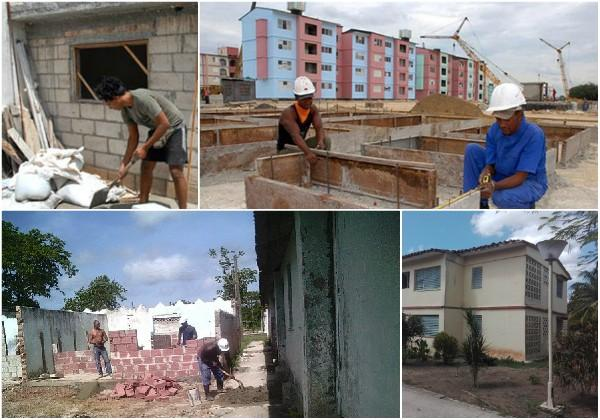
Havana, Feb 9. - With the aim of improving and expanding access and legal security in housing tenure; diversifying the housing supply to cater to different population sectors and age groups; and integrating housing production and management with an economic, sociocultural, and environmental approach, in line with territorial planning schemes, the Draft Housing Law was published today. It will undergo a popular consultation process until February 28.
The regulation, which repeals the 1988 General Housing Law, introduces significant changes in the management, financing, and tenure of properties.
It also recognizes the constitutional right to adequate housing and a safe habitat, and designates the Ministry of Construction as the governing body to propose, direct, and control state policy in this area.
Among the most notable innovations, the draft eliminates the penalty of housing confiscation for permanent departure from the country by the owner. Additionally, it removes the prior administrative authorization for the transfer of vacant lots and the cession of rooftop use, aligning with the Territorial Planning Law.
Similarly, natural persons will be allowed to own up to two residential properties, not counting declared vacation homes. The regulation also equalizes the transfer rights of vacation homes with other personally owned homes.
To promote construction, funding sources are diversified, including bank credits, budget subsidies, and, innovatively, mortgage financing, which will be regulated by specific legislation.
Furthermore, the proportion of housing under rental or lease agreements will be increased, even permitting subleasing.
The law establishes preferential mechanisms and subsidies for prioritized sectors, such as the protected population (workers in key sectors without resources), the prioritized population (people living in overcrowded conditions, young people of working age, large families), and vulnerable individuals (elderly adults, persons with disabilities, victims of domestic violence).
Additionally, a specific chapter is included on youth access to housing, recognizing their particular situation.
To reduce regulatory dispersion, the new law also proposes the creation of an entity responsible for proposing, implementing, and controlling housing and habitat policies. (Granma Digital) (Photo: Taken from the Internet)