
Radio Cadena Agramonte emisiora de Camagüey





Havana, Feb. 10. – In a context where the empire attempts to suffocate Cuba, the world responds with high-level support. Thus, the embrace of solidarity and support persists—even more and despite the blockade—from diverse latitudes.
Mexico, from where over 800 tons of humanitarian aid have recently set sail for the Largest of the Antilles, will always be solidary, seeking the best way to support the Cuban people in solidarity, the president of that country, Claudia Sheinbaum, told the press.
At the same time, she insisted that it is the interest of her Government and her people that the consequences of the empire's measures do not worsen the situation experienced by the Caribbean nation. That is what we want to convey to the Government of the United States: that it is very important that there be no humanitarian crisis situation, she emphasized.
Russian presidential spokesperson Dmitry Peskov insisted that the suffocating techniques by the United States are causing serious difficulties for Cuba. He stressed: We are speaking with our Cuban friends about possible ways to resolve these problems or, at the least, to provide the assistance within our reach.
Repeatedly, the Russian Foreign Ministry has confirmed its principled position regarding the unacceptability of exerting economic and military pressure on Cuba, including the blockade of fuel supplies to the Island, which could provoke a serious deterioration of the economic and humanitarian situation in the country. At the same time, it has maintained its firm willingness to continue providing Cuba the necessary political and material support. This was conveyed to the member of the Political Bureau and Minister of Foreign Affairs, Bruno Rodríguez Parrilla, through a telephone conversation, by his Russian counterpart Sergey Lavrov.
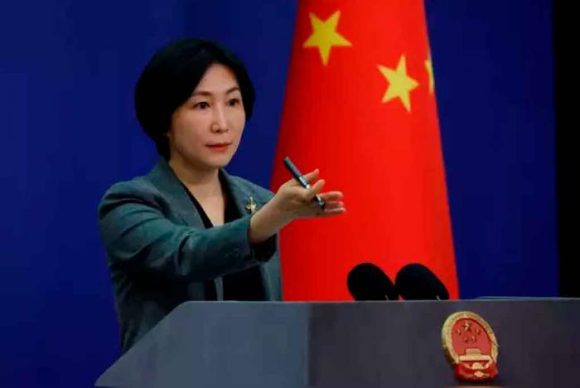
China firmly supports Cuba in defending its national sovereignty and security, expressed GuoJiakun, spokesperson for the Asian giant's Ministry of Foreign Affairs. In this sense, he ratified Beijing's firm opposition to measures that deprive the Cuban people of their right to subsistence and development, as well as to inhumane practices.
On numerous occasions, China has urged Washington to stop depriving the Cuban people of their right to development; while emphasizing its confidence that, under the leadership of the Cuban Party and Government, the people will overcome any difficulty.
Through a statement, the Venezuelan Government rejected the Executive Order, by which the U.S. Government seeks to impose punitive measures on countries that decide to maintain legitimate commercial relations with the Republic of Cuba. Similarly, it expressed its solidarity with the people of the Largest of the Antilles and called on the international community to confront the humanitarian consequences arising from aggressions of this nature. Considering Cuba a threat to the national security of the United States constitutes a nonsense that entails serious threats against its existence as a nation, the document emphasized.
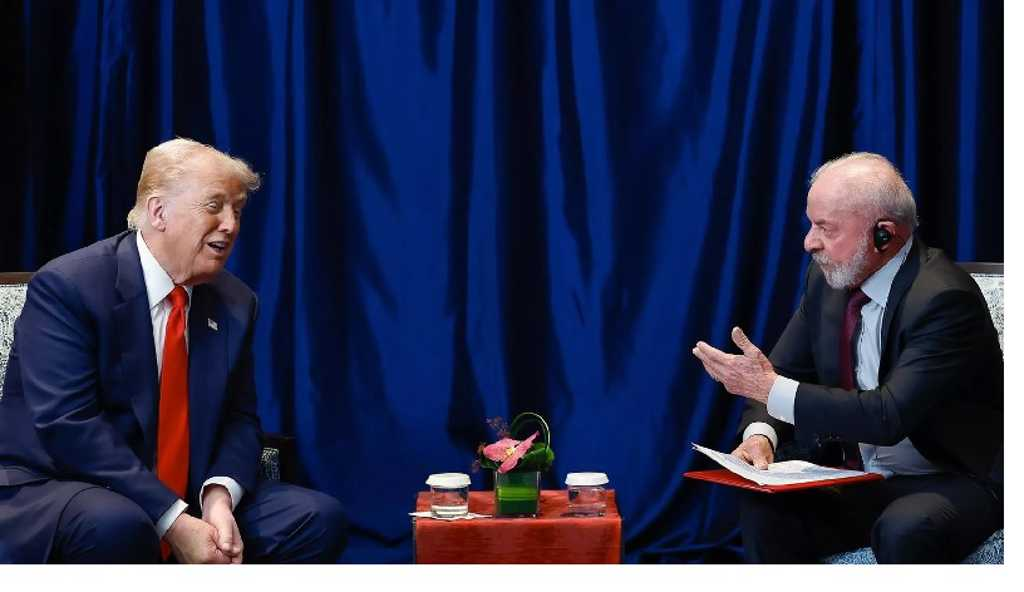
For his part, Brazilian President Luiz Inácio Lula da Silva stated that, for over 60 years, Cuba has been a victim of a massacre fueled by U.S. speculation. He affirmed, during the celebration of the 46th anniversary of the Workers' Party (PT): Our country stands in solidarity with the Cuban people. We, as a party, must find a way to help.
He also questioned Washington's measures to restrict the Island's access to oil, thereby reinforcing the statement in which the PT described the blockade imposed on the Island as "criminal," and advocated for an end to sanctions and the full reintegration of Cuba into the world economy.
Pope Francis, in turn, showed concern about the escalation of aggressions by the United States Government against Cuba and called for avoiding any action that could increase the suffering of the people of the Island.
For his part, Ahmed AboulGheit, Secretary-General of the Arab League, met with the Cuban ambassador in Cairo, Alexander Pellicer, and reiterated his support and solidarity with the Largest of the Antilles in the face of imperialist aggression.
MULTILATERAL SUPPORT
https://www.granma.cu/file/img/2026/02/medium/f0440667.jpg
The Non-Aligned Movement (NAM) assured that the measures taken by the Trump administration have extraterritorial effects and negatively affect not only Cuba and its people but also third States and international economic relations.
In this sense, it reiterated its call to the U.S. Government to end the blockade—which constitutes the main obstacle to its full development—and to eliminate the additional unilateral measures imposed since 2017, including the arbitrary designation of Cuba as a State Sponsor of Terrorism, which cause enormous material losses and economic damage to the people of the Caribbean nation.
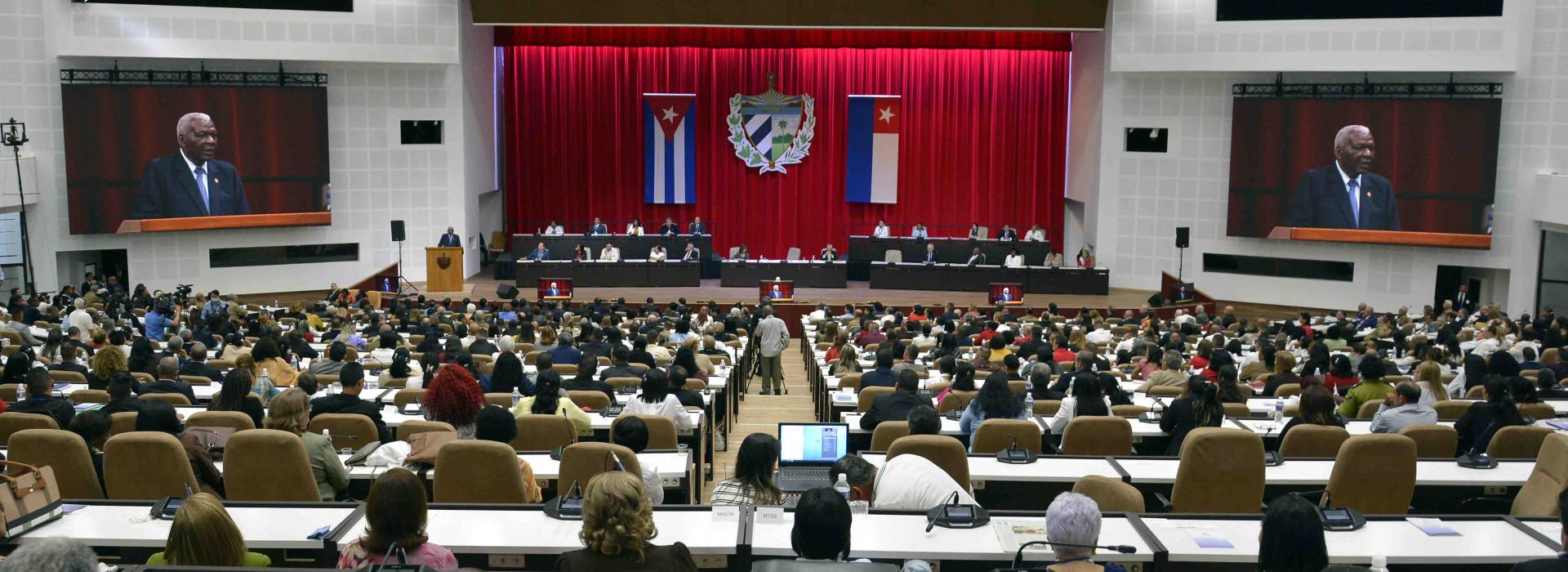
NAM reaffirmed its solidarity with the Cuban people and Government and urged the international community to defend international law, multilateralism, and the purposes and principles enshrined in the United Nations Charter.
https://www.granma.cu/file/img/2026/02/medium/f0440668.jpg
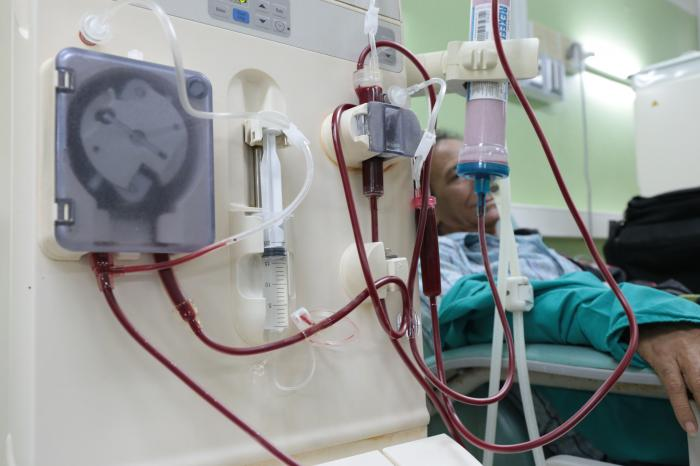
The UN continues to monitor the situation in the country and work with the government to provide greater support, including food, water, sanitation, and medical care. We are concerned about the growing fuel shortage and its impact on the population, stated the organization's spokesperson StéphaneDujarric at a press conference.
https://www.granma.cu/file/img/2026/02/medium/f0440669.jpg
The Group of 77 and China reaffirmed its solidarity with Cuba and stated, through a communiqué, that the measures taken by the U.S. Government have clear extraterritorial effects and are contrary to the purposes and principles of the United Nations Charter and International Law, undermine multilateralism, international economic cooperation, and the rule-based, non-discriminatory, open, fair, and equitable multilateral trading system. At the same time—it insisted—they worsen Cuba's difficulties in conducting financial and commercial operations, threatening the livelihood and integrity of its population.
https://www.granma.cu/file/img/2026/02/medium/f0440670.jpg
The Group of Friends in Defense of the Charter of the United Nations rejected U.S. actions, based on a narrative constructed on falsehoods aimed at portraying Cuba as a threat it does not represent and which seek to deliberately suffocate the Cuban economy and inflict additional suffering on its people. They recalled that, for over six decades, the Cuban people have been subjected to the most prolonged and cruel blockade ever applied against any country. They pointed out, in turn, that "these measures also demonstrate that the attempt to present the blockade as a mere 'bilateral commercial embargo' is a distortion of reality that ignores its clearly extraterritorial reach and its profound impact on third countries and on international economic relations." Finally, they reiterated their unwavering solidarity with the Cuban people and Government.
https://www.granma.cu/file/img/2026/02/medium/f0440671.jpg
The Bolivarian Alliance for the Peoples of Our America (ALBA-TCP) categorically rejected the Executive Order of the President of the United States.
This action, which falls within the historical policy of economic, commercial, and financial blockade against Cuba, seeks to subject an entire people to extreme living conditions. Far from bending the Cuban people, these actions, which have been condemned by the international community, repeatedly and almost unanimously, have demonstrated the capacity for resistance, dignity, and firmness of a nation that defends its independence and its right to build its own political, economic, and social project, without external interference, threats, or aggressions.
In this regard, the member countries of ALBA expressed "their solidarity and accompaniment to the Government and people of Cuba" and reiterated their firm commitment to International Law and the United Nations Charter, as well as to the defense of multilateralism, fair trade, and unrestricted respect for the sovereignty of peoples. (Text and photos: Granma Digital)