
Radio Cadena Agramonte emisiora de Camagüey





Havana, Feb 10. – The Ministry of Public Health is implementing a set of measures to reorganize and rationalize resources in order to preserve essential services, given the complex national scenario, aggravated by the intensification of restrictions by the U.S. Government and severe energy difficulties.
The sector's head, Dr. José Angel Portal Miranda, stated that the objective is to preserve the essential, reorganize the necessary, and ensure that what is maintained functions well, without abandoning the principles of the public health system.
In an appearance on the program Buenos Días, he acknowledged the complexities of the moment. "No one can think that measures like these will not significantly affect the health sector," he said, referring to the actions of the U.S. Government.
He emphasized that the blockade, a decades-long reality, exacerbates the situation facing our health system, worsening problems such as the lack of medicines and resources. In the face of this, he explained that greater efficiency, better organization, and increased sensitivity are being sought.
The plan, which is dynamic and adaptable to each territory, focuses on guaranteeing the continuity of basic services for the population. The main measures announced are:
Priority for essential services: The Maternal-Child Program and care for patients with terminal illnesses, cancer, and other vital chronic conditions will remain the highest priority. "No one will lose the opportunity to continue a treatment that is life-defining," assured Portal Miranda.
Reorganization of the workforce: Personnel in institutions will be reduced, prioritizing those who live closer to work to decrease mobility. Work groups will be created for specific periods, and transportation alternatives for workers will be sought.
Increased decision-making capacity in municipalities: To reduce population displacement, problem-solving at the local level will be enhanced. This includes deploying professionals to the territories, creating temporary brigades, and strengthening the Family Doctor and Nurse Program, completing clinics that lack a doctor.
ADJUSTMENTS IN CLINICAL AND HOSPITAL SERVICES
Consultations will be maintained, although patients must contact the institution to confirm whether their appointments have been rescheduled or not.
Hospital stays will be reduced whenever possible.
The use of diagnostic means will be optimized, prioritizing urgent cases and enhancing the clinical method.
Levels of elective surgical activity will be reduced, maintaining only urgent and emergency surgeries.
It is intended to maintain dental care activity.
OTHER MEASURES
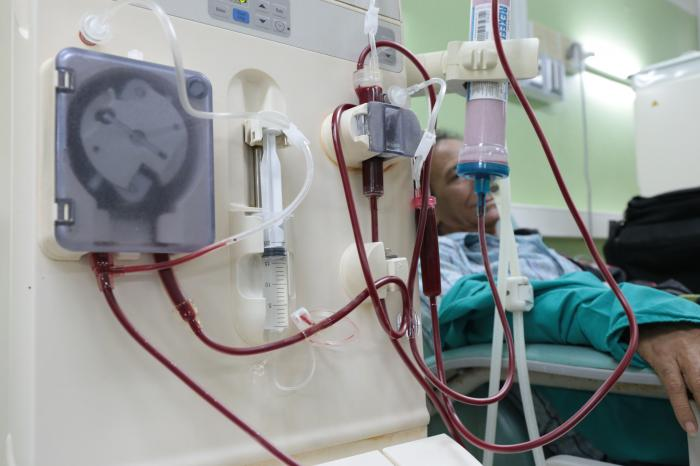
Guarantee for continuous treatments: For patients requiring hemodialysis, radiotherapy, or depending on vital equipment, coordination with transportation will be made to maintain services. If transfer is not possible, hospital admission will be arranged to avoid interrupting treatment. Medibuses will be maintained as much as possible.
Care for social institutions: Food and medical care will be ensured in senior centers, nursing homes, maternity homes, and psycho-pedagogical medical centers.
Enhancement of alternatives: The use of Natural and Traditional Medicine will be increased, and telemedicine will be developed for second-opinion consultations and discussion panels among specialists, avoiding transfers.
Emergencies and surveillance: Fuel will be guaranteed for ambulances, prioritizing emergencies. Essential anti-epidemic and vector control actions will be maintained, as well as the surveillance and transport of samples to study outbreaks.
Production of hypochlorite: The production and distribution of sodium hypochlorite in pharmacies will be increased to ensure chlorination of drinking water in the face of possible supply problems.
Continuity of teaching: Teaching activities for Medical Sciences students will be maintained, decentralizing them to university campuses and health centers. Distance learning formulas will be used for general education and postgraduate subjects. There will be a differentiated program for foreign students.
Reinforcement of personnel: Retired sector workers living near institutions will be called to join on a contract basis, and management teams in units will be reinforced.
Prioritized communication: Communication with the population will be strengthened, updating websites, responding to concerns promptly, and reinforcing public service offices.
"It is necessary to explain with transparency the reorganizations that are carried out; our population has always understood the difficulties when we speak clearly, with respect and honesty," the minister stated.
He acknowledged that the measures are not easy, neither for our workers nor for the population, and involve greater demands.
He highlighted the awareness that health workers face the same difficulties as the people in their homes, but he trusted in their capacity to respond, as they have demonstrated in epidemics, natural disasters, and missions.
"Today the challenge is different, but the essence remains the same: to guarantee the health of our people even under adverse conditions. It is our responsibility, and we will fulfill it," he assured. (Text and photo: Granma Digital)