
Radio Cadena Agramonte emisiora de Camagüey





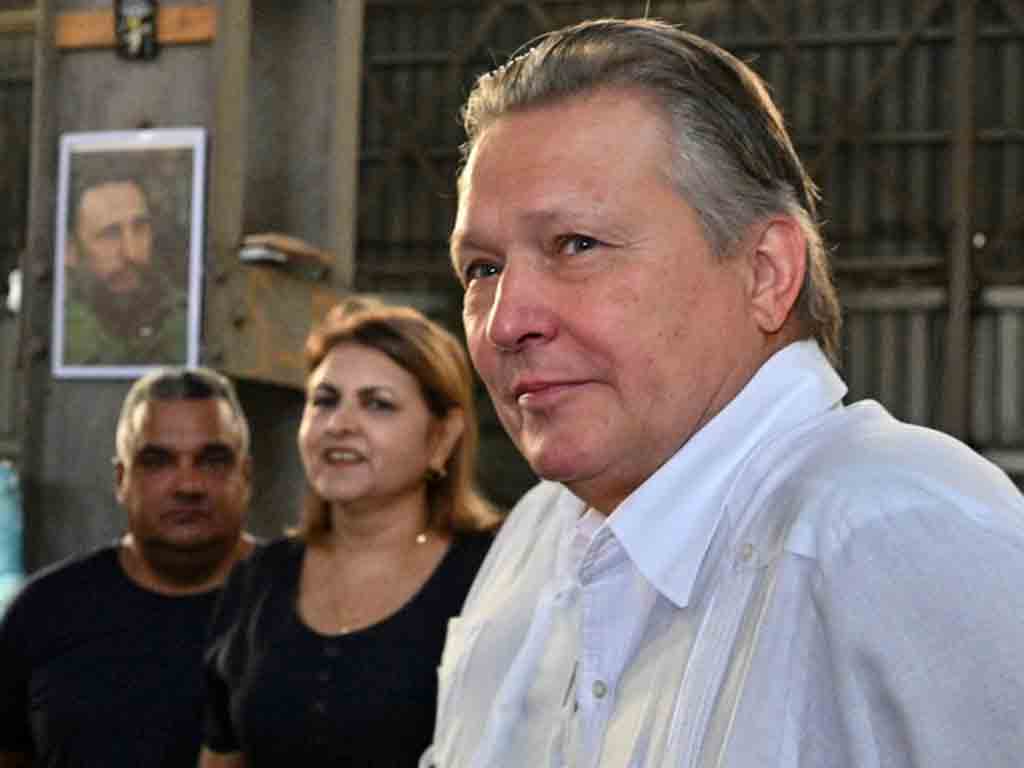
Moscow, Feb 13.- "Not only today, but for several decades, Cuba was, is and continues to be our most important partner in Latin America," stated Russia's ambassador to Cuba, Viktor Koronelli.
In an exclusive interview with the Russian channel RT, published this Friday, the head of the diplomatic mission of the Eurasian giant in the Caribbean nation emphasized that relations between Moscow and Havana are at the level of strategic cooperation. We will continue together on this path, overcoming difficulties. The diplomat commented on how, in the face of the onslaught suffered by the Cuban people and government from a fuel blockade imposed by the United States, a large part of the international community has shown itself to be on the side of truth.
Well, political support, the support of other states, other countries, is always important. And, truly, the international community in this very complicated situation demonstrated that the vast majority of countries are on Cuba's side, stated Koronelli.
In that context, he highlighted that "obviously, in addition to political support, Cuba needs material support."
In this regard, he added that Russia is analyzing the possibilities of providing this aid on a bilateral level, but they are also doing so through international organizations.
The ambassador recalled that each year, through its contribution to the World Food Programme, Moscow supplies several food products to Havana and will continue to do so, he affirmed.
Likewise, Koronelli specified that joint projects with Cuba continue, despite fuel shortages. It is clear that this very complicated situation with fuel affects some of them, but we do keep them on our agenda.
In this regard, he added that the holding of the Russian-Cuban Intergovernmental Commission for Commercial, Economic, Scientific and Technical Cooperation is scheduled for April.
This meeting is to be held in Moscow. We hope that the fuel shortage does not affect this very important meeting where we will examine the situation with the already agreed projects and we will continue to seek new ones, he insisted.
Previously, Russian presidential spokesperson Dmitry Peskov reiterated that his country is examining options to help Cuba amid a severe fuel shortage, as a consequence of the fuel blockade imposed by the United States.
We have held conversations over these days, we are in contact with our Cuban friends, we are discussing the options available to provide them with aid. For obvious reasons, these matters cannot be discussed so publicly, the Kremlin spokesperson declared in statements to the media.
On January 29, U.S. President Donald Trump signed an executive order declaring a national emergency in the face of the alleged unusual and extraordinary threat that, according to Washington, Cuba supposedly represents for the security of the North American country and the region.
The text accuses the Cuban government of aligning itself with numerous hostile countries, harboring transnational terrorist groups such as Hamas and Hezbollah, and allowing the deployment on the island of sophisticated military and intelligence capabilities from Russia and China.
Faced with these baseless accusations, the President of Cuba, Miguel Díaz-Canel, stated that this new measure evidences the fascist, criminal and genocidal nature of a clique that has hijacked the interests of the American people for purely personal purposes. (Text and photo: PL)