
Radio Cadena Agramonte emisiora de Camagüey





Las Tunas, Feb 21 - Justice in Las Tunas has handed down a sentence in a corruption case that directly affected the pockets of thousands of families in Las Tunas.
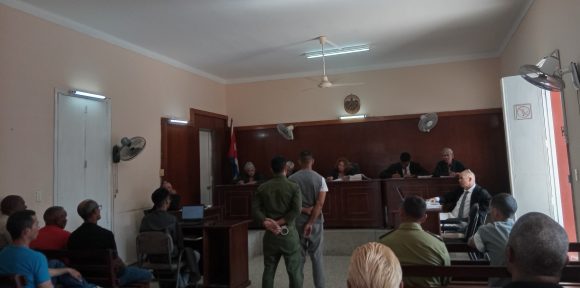
In an oral, public trial with an exemplary nature, the First Criminal Chamber of the Provincial People's Court found five individuals guilty of diverting food products intended for the basic food basket and social consumption in the province.
The events that were judged took place at the warehouse of the Basic Business Unit 639, belonging to the Wholesale Food Company of Las Tunas. The accused, taking advantage of their job positions at that center, stole rice, sugar, chickpeas, and beans. These foods, instead of reaching the homes for which they were intended, were diverted and illegally sold on the informal market.
The social and economic impact of the crime is considerable. According to what was proven during the process, more than 50,000 family units were affected by this action. Furthermore, the public treasury suffered a loss quantified at 623,088.68 Cuban pesos, a figure that shows the magnitude of the damage caused to the State budget.
The evidence presented and debated during the trial was decisive in establishing the criminal responsibility of all those involved. The court classified the acts as constituting the crime of embezzlement, typified in sections 1 and 2 of Article 297 of the Penal Code. Consequently, the sentences imposed on the five citizens range from 11 to 13 years of imprisonment.
The main sanctions are accompanied by a set of accessory penalties. Those sentenced face deprivation of public rights, disqualification from practicing their profession, position or trade, and a ban on leaving the national territory. Additionally, the corresponding civil liability was established, obliging them to compensate for the economic damage caused.
Judicial sources confirmed that during the entire processing of the file, as well as during the holding of the oral trial, procedural guarantees were strictly observed. Due process, enshrined both in the Cuban Constitution and in the Criminal Procedure Law, was respected in each of its phases.
The judicial avenue is not yet exhausted for those involved. Both those sanctioned and the representatives of the Prosecutor's Office have the power to file an appeal in cassation before higher instances, with the aim of challenging the ruling issued by the provincial court. (Text and Photo: Newspaper 26)