
Radio Cadena Agramonte emisiora de Camagüey





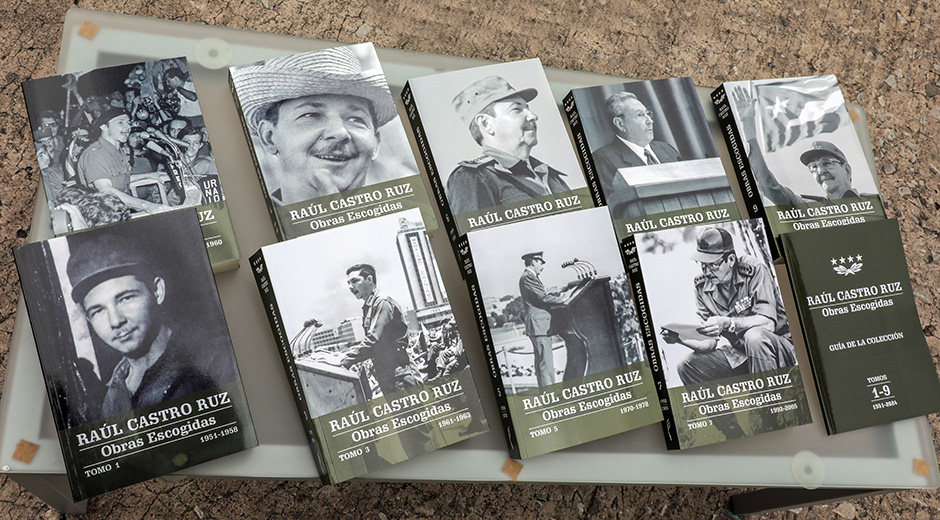
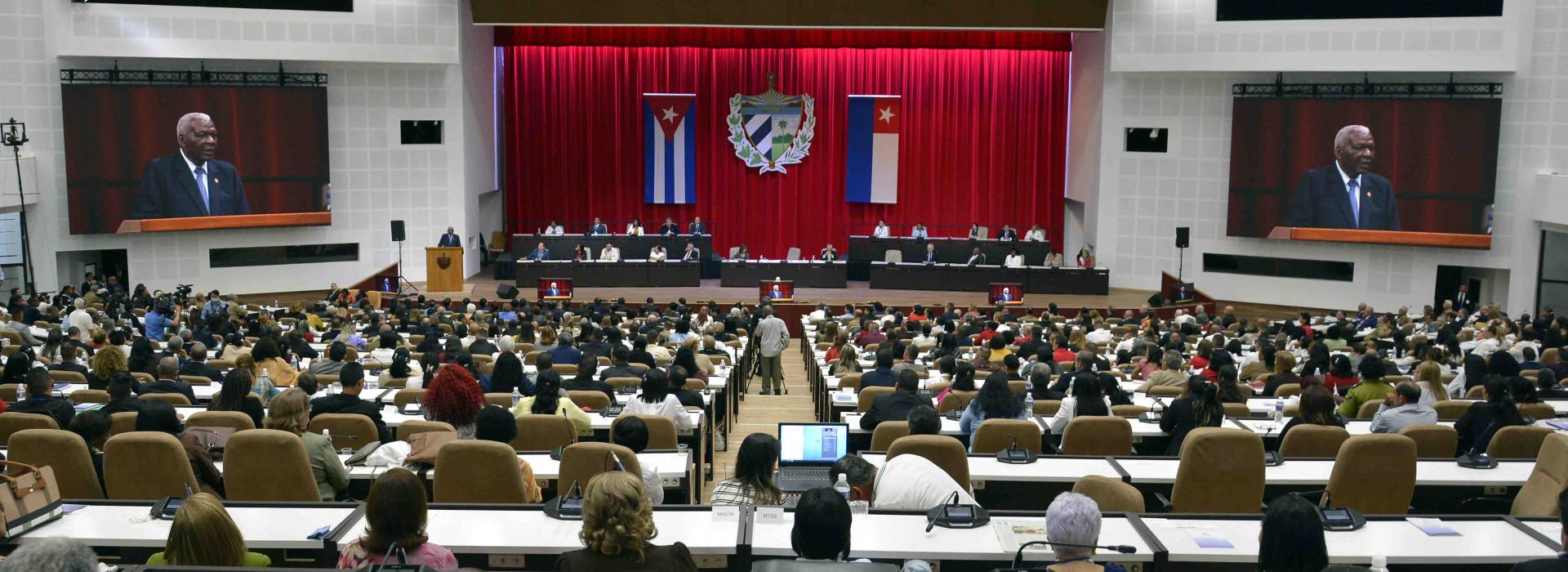
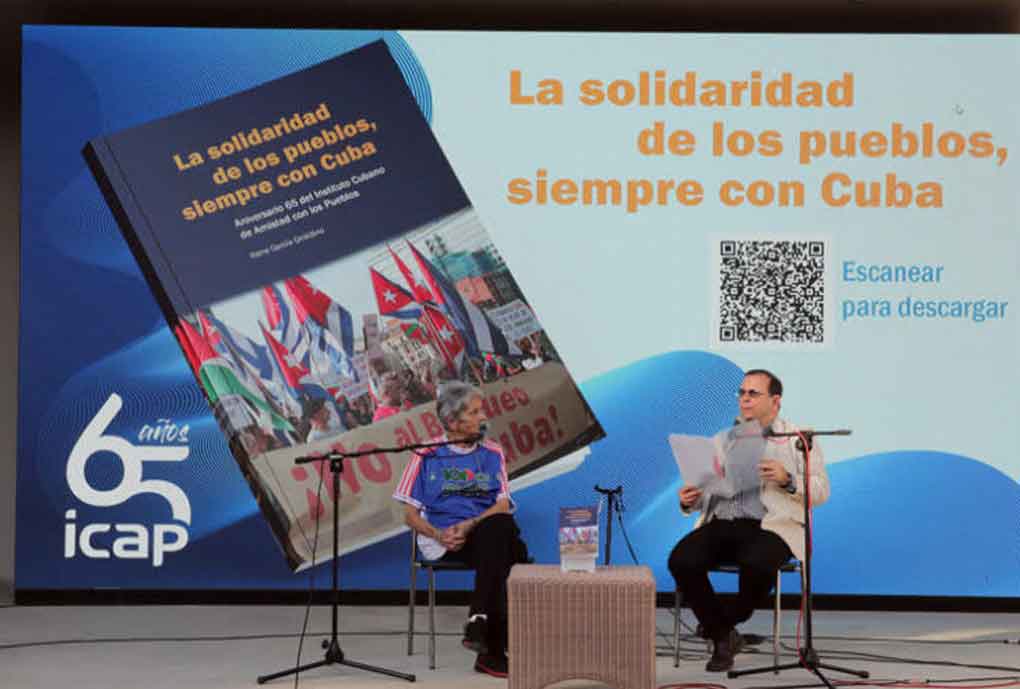
Havana, Feb. 27. - It is an immense honor, but even more so a commitment, to present on such a relevant date for the people of Cuba as February 24, also charged this time with symbolism and revolutionary epic, the Selected Works of he who has been, together with Fidel, helmsman of the Cuban Revolution for more than six decades, a paradigm for several generations of Cuban revolutionaries, and even today, close to turning 95, remains with his foot in the stirrup, ready to defend the Homeland and socialism against any threat or danger.
In the case of comrade Raúl—Fidel recalled at the close of the First Party Congress on December 22, 1975—it is truly a privilege for me that, besides being an extraordinary revolutionary figure, he is a brother. He earned those merits in the struggle and from the earliest times.
The family relationship served for me to enlist him in the revolutionary process, I invited him to Moncada. Ah! But when there, at the Santiago de Cuba Courthouse a patrol arrives and takes them prisoner, if Raúl had not done what he did at that instant, Raúl would have ceased to exist long ago, which was to take the pistol from the patrol chief and take prisoner the patrol that had made them prisoners. If he hadn't done that, they would all have been assassinated a few hours later at Moncada.
And that was the beginning. And the prison, and the exile, and the Granma expedition, and the difficult moments, and the Second Front, and the work carried out during these years.
It was not the first time that Fidel recognized Raúl's merits, earned by his own right in the revolutionary struggle; on January 21, 1959, he had already proposed him before the people as second in the leadership of the July 26 Movement: I do it –Fidel insisted-, not because he is my brother —everyone knows how much we hate nepotism— but because, honestly, I consider him to have sufficient qualities to replace me in case I have to die in this struggle; because, furthermore, he is a comrade with very firm revolutionary convictions, who has demonstrated his ability in this struggle, who was one of those who led the attack on Moncada, who spent two years in prison, who organized the Frank País Second Front, and who has given outstanding proof of ability as an organizer and as a leader.
How fortunate for Cuban men and women to have been able to count on those two beings united in blood, but above all in ideals, dedication and devotion to their homeland and their people! Thanks to them to a great extent, we are here today. We feel like their eternal debtors, committed to their ideas and example.
On the special relationship that always existed between Fidel and Raúl, the testimony of Núñez Jiménez is stirring and emotional: And then Fidel continues talking about the immense affection he feels for Raúl and reaches a climax of emotion where Fidel himself stands up, Raúl snaps to attention in front of Fidel and says: "Commander in Chief, order me," and then Fidel and he embrace, put their two heads together and remain with their eyes closed for what seemed to me a year of those minutes, seconds that the two brothers were together…
That revolutionary fraternity, that common trench of ideas and principles unfolds with all its force in the hundreds of documents that make up these Selected Works. We are not facing the launch of a simple collection of books, but rather in the presence of the living archive of the Cuban Revolution, expressed in the thought and action of one of its main architects.
This collection comprises more than five hundred texts gathered in 9 volumes, appearing in chronological order, from the article he published in the magazine Saeta of the University of Havana in 1951 —where his Marti-inspired and anti-imperialist thought is revealed at an early date— to his historic speech at the Carlos Manuel de Céspedes Park in Santiago de Cuba, for the 65th anniversary of the triumph of the revolution, on January 1, 2024, where he once again outlined in golden letters the importance of unity as the main strategic weapon.
But to delve into this great work, we must begin by understanding the man who beats in its pages, characterized by a simplicity and honesty that elevate his stature, a staunch enemy of falsehood and flattery, demanding of himself and others, audacious in strategy, fair in leadership, sensitive to the pain of others and deeply human, a fervent devotee of our history and our heroes, with quick and decisive responses in transcendental moments of our history, as was the case in the actions of July 26, 1953, in the Moncada trial or in that speech of August 6, 1960 in which Fidel lost his voice for a moment and in a matter of seconds Raúl took the microphone to point out: …it is neither a matter of destiny, nor issues of bad omens; it is, simply, a slight and unimportant setback, because one voice has gone for a moment; but there he is and he will be!. That is the Raúl we will find in these pages.
The loyal brother, the combatant who writes to his mother from prison and whose lines remind us again of Martí, the sensitive guerrilla fighter who wrote a will for the daughter of his comrade in struggle, José Luis Tassende, assassinated by the henchmen of the dictatorship after the actions of July 26, the strategist who dreamed of schools on the ashes of the barracks, the upright statesman and the human being who kissed with devotion the urn containing the ashes of his beloved Vilma.
Although one of the traits that Raúl has most highlighted about Fidel is his optimism based on the will to fight, which multiplied in the most adverse moments, that same quality can be found in him when reading these volumes. From the first volume of this collection we find that happiness in sacrifice and duty fulfilled and the permanent faith in victory.
We are aware that we are writing an epic of our contemporary history -Raúl wrote to his mother Lina Ruz González on May 1, 1958- and we all take care that in this Second Front we end with the same light with which we began it. But I am already so saturated that I only speak of revolution and naturally it will be like that until the end, because in five long years it is the only thing I have done. You will know how to understand me and even forgive me…Keep having faith in the great final triumph that will be for all good Cubans, that the more we suffer now, the sweeter freedom will taste to us».
That is the same Raúl, who in the hardest years of the Special Period played a fundamental role from the Party and the Armed Forces to shake and mobilize wills in the face of supposed impossibilities, the Raúl of "Yes, we can," -a phrase pronounced in a speech on the Isla de la Juventud, on July 26, 1994- and who was dealing blow after blow to the consciences softened by the difficult times that were being lived in the country.
This collection allows us to follow the thread of a life in Revolution, through which we can also travel through the main events of the history of Cuba in the last 70 years.
It is a great opportunity and a privilege that reading this collection offers us, to be able to follow the course of the Revolution, having as a guiding thread the work of one of its main protagonists. In its pages we find the young Raúl assuming with his generation the mission of realizing Martí's dream in the year of his centenary, in the notes on the moments prior to the assault on the Moncada Barracks —written from the Presidio on the Islade Pinos a year later— and in the campaign diaries in the Sierra Maestra and the Second Front, the valor and rawness of the insurrectional struggle palpitate.
In these documents we see the birth of the strategist who later stands out as a builder and defender of the triumphant Revolution. As Minister of the Revolutionary Armed Forces (FAR, for its acronym in Spanish), he forges a unique army in the world: a people's army, deeply political.
His speeches are lessons in ethics and a permanent call to unity, at times when the enemy sought fracture through anti-communist campaigns and the fostering of conspiracies and betrayals.
Significant events of our history such as: the First Declaration of Havana; the Declaration of the socialist character of the revolution; the confrontation with the mercenary invasion; the October Crisis; the fight against counter-revolutionary bands; the forging of our current Communist Party of Cuba; the denunciation of the micro-faction; the revolutionary offensive of 1968; the epic of Cuban internationalism in Africa and support for the Vietnamese cause; the consolidation of relations with the USSR and the socialist camp; the process of institutionalization of the country; the 1st Congress of the PCC (1975); the creation of the Organs of People's Power; the approval of the new Constitution (1976); the 11th Youth Festival (1978); the Process of Rectification of errors and negative tendencies; the perfecting of the doctrine of the War of all the People; the 2nd and 3rd Congresses of the PCC; the confrontation with the storm of the special period and the tightening of the blockade with the Torricelli and Helms-Burton laws; the 4th Congress of the PCC (1991); the migratory crisis and the disturbances of August 1994; the battle for the return of Elián González and the liberation of the Five Heroes, among many others, are addressed from the voice and pen of Raúl, which has inestimable value, because as our first secretary of the Party and President of the Republic, Miguel Díaz-CanelBermúdez, rightly points out in the prologue to the work: There is no transcendent episode of our national history, after the triumph of the Revolution, in which Raúl does not appear as a main protagonist.
The final volumes present us with the statesman and the guide, who assumed the leadership of the country with modesty and loyalty when Fidel fell ill. They capture his leadership at the head of the Party, the State and the Government and in conducting the historic process of reestablishing diplomatic relations with the United States, where the great victory announced by Fidel of the return of our five heroes was consummated. Also the audacity of the leader who undertakes essential transformations to update the Cuban economic model, he who with great courage and confidence in the future assumes one of the hardest blows for the homeland and his own life, the physical departure of his soul brother and he who leads strategic political processes for the destiny of the nation such as the drafting, debate and proclamation of the new constitution of the republic, as well as the progressive transition of new generations to the main positions of the country.
In the final pages of this collection, his voice acquires an ethical and universal dimension. With lucidity, he denounces the predatory consumerism that suffocates the planet, defends the integration of Our America and the proclamation of a Zone of Peace.
With the wisdom of one who has lived more, he leaves crucial warnings: study history, never lie, do not improvise, and guard national unity as the apple of our eye. This collection is, therefore, much more than the sum of nine volumes.
It is an intergenerational bridge for direct dialogue with the foundational epic; a leadership manual that teaches organization, austerity and adherence to principles; a treatise on revolutionary ethics, where coherence between saying and doing is the supreme value; an ideological arsenal to defend our truth in the midst of the cultural war practiced by imperialism; it is the most eloquent song to unity, reflected in the unbreakable fraternity between Fidel and Raúl, a metaphor for the unity of an entire people.
Without a doubt, these works are not for adorning shelves, but for being studied and debated in our classrooms, workplaces and organizations. They are, at the same time, an ethical compass and an arsenal of ideas for the complex time we live in.
May this collection circulate, be debated and loved! May it be food for our collective memory and for the future we continue building! May it serve as a spur for new research and approaches to this figure who holds in his record a unique and clarifying testimony of many passages of our national events still to be studied and understood more fully, especially by the new generations of Cubans, those most responsible for its continuity!
We must thank today and always Alberto AlvariñoAtiénzar and his work collective, Jorge Martín Blandino, Jorge Luis Aneiros, Daily Sánchez Lemus and the team of Ediciones Celia of the Office of Historical Affairs, for this gift to Cuba and to revolutionaries around the world.
Honor and eternal gratitude to our Army General. May his work, now in these pages, always guide us in the defense of this socialist, free, sovereign and independent Homeland.
Confident, as the song of our beloved and admired Raúl Torres says, that he will not be the last mambí, and that there are millions of arms with their machetes, we can then proclaim with pride and decision: ¡Hasta la Victoria Siempre!(Until Victory Always!) (Text: ElierRamírez/ Cubadebate) (Photo: Cubadebate)