
Radio Cadena Agramonte emisiora de Camagüey





This April will mark 65 years since the mercenary attack on Playa Girón. A terrorist act that became the first defeat of imperialism in Latin America.
For Nemesia Rodríguez Montano, the eternal girl with the little white shoes immortalized by JesúsOrta Ruiz, El Indio Naborí, in his Elegy, the wounds throb like the first day.
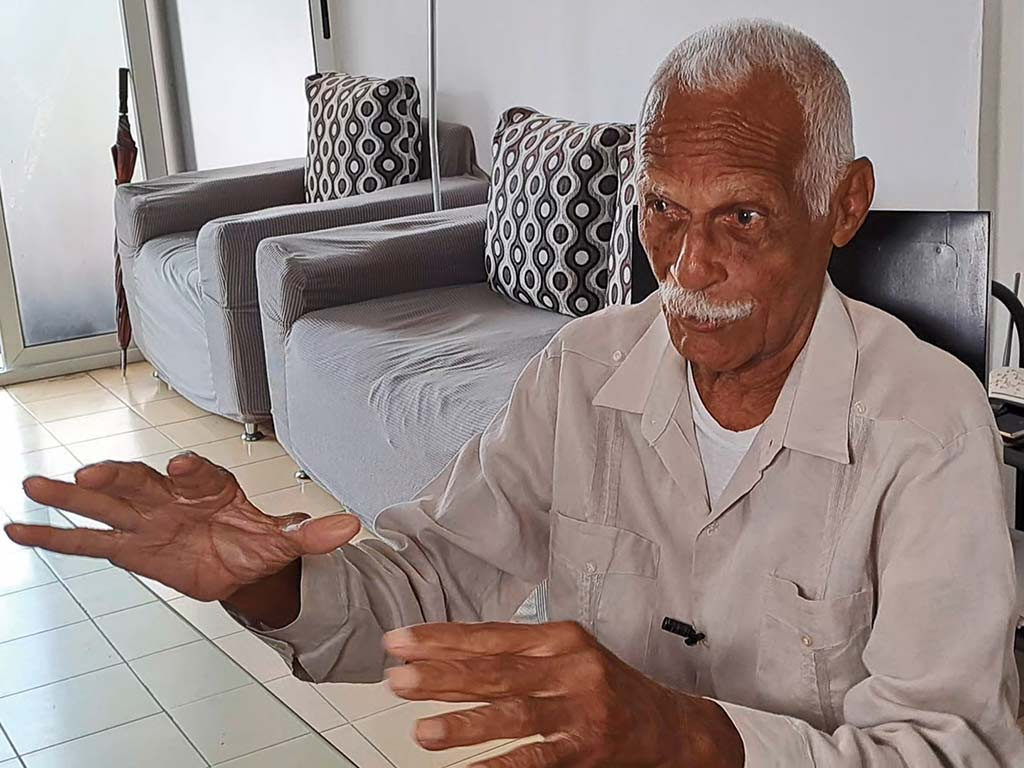
In the middle of spring, 15 years ago, in her house in Soplillar, in the Ciénaga de Zapata, she once again told the story, whose relevance transcends time.
Under a Soplillo Tree
Juliana Montano was turning 40 years old, she was happy, her children were going to school, and for a few days the cooperative had offered the possibility of acquiring products never before seen in that remote area of Cuba's geography. The days of the "little bus line" over water and mud during the swamp's "filling" times were left behind. Juliana thought that morning, that despite the poverty and humility in which they lived, the family had never felt such joy.
While she busied herself with the morning chores, the smell of burning firewood filled their space. Now they paid a good price for the sack of charcoal, the Revolution was taking care of bringing teachers and doctors to the place, where, until just a few months earlier, human beings died like animals.
She was so busy with her work that she didn't notice the unusual noise of the morning. Suddenly she heard more closely the voices of her husband and eldest son, urging her to "hurry up, we have to go, there's a landing at Girón, parachutes and planes…"
Juliana gathered what she could, her daughter Nemesia put away the best clothes and the white shoes recently bought at the town store. The only decent shoes she had had in her 13 years of life.
They got on the truck heading to Jagüey Grande, the eldest son drove hurriedly; her husband and mother-in-law were in the cab; in the back, Juliana and five children. Nemesia was the oldest…
Along the way, a plane with insignia of the Cuban Revolutionary Armed Forces flew overhead, which suddenly dropped bombs without regard for the truck's passengers, nor the white sheets they showed "as a sign of peace."
Juliana covered the children, huddled them in a corner, and quickly got up to knock on the cab roof so her son would stop the engine…
There was no time, in an instant the shrapnel caught her, perhaps she looked at her children and smiled…
"I thought I could save my mom," Nemesia Rodríguez Montano recounted sobbing 50 years later. "I didn't want to leave, the bombing tore off one of her arms; but I thought that was all… my father, pale, lifted the sheet that covered her torso. I saw my mother from the inside!"
Nemesia became agitated, while holding a photo of Juliana in her hand. "I have never been able to get over that event that marked our lives. My brothers and I, those of us who were on that truck on April 17, 1961, when we meet, we cry.
"Doctors tell me to avoid telling the story; but, even if it makes me sick, I have to tell it. Younger people need to know…"

In Soplillar, a small population settlement in the Ciénaga de Zapata, charcoal kilns coexist in perfect harmony with the community library; works established there by Alexis LeivaKcho and the Martha Machado Brigade, together with the Credit and Services Cooperative; cateyes and parrots alongside the doctor's office…
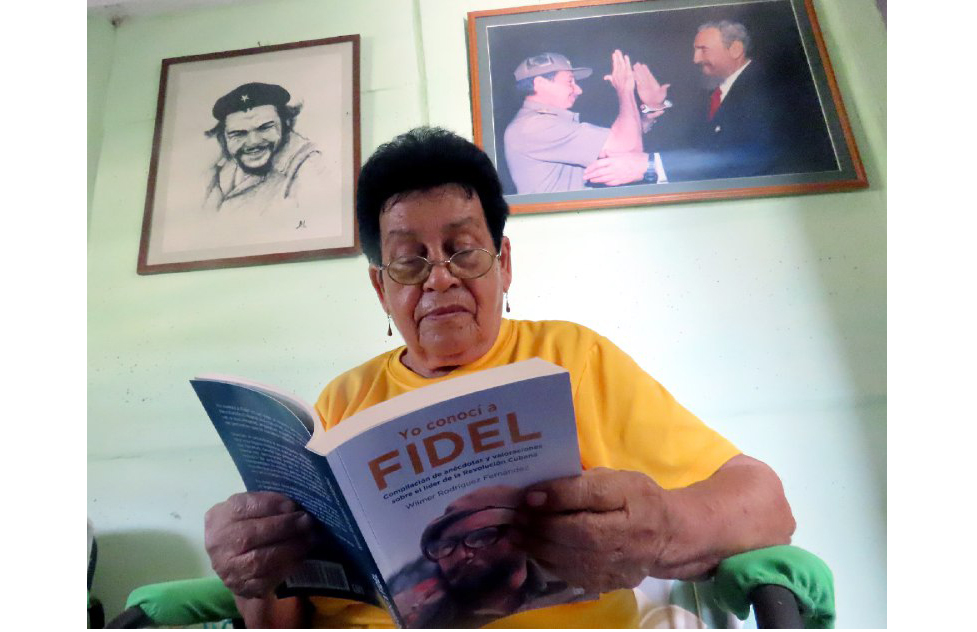
Nemesia looks at time. In her living room, soberly, Juliana's photograph occupies a privileged place. Her young and beautiful face is a perennial denunciation of injustice. She was one of the civilian victims of the Bay of Pigs mercenary invasion, simulator planes cut short her life.
Under a soplillo tree, she returned to that half of April that opened the wound with no possible scar. With her gaze fixed in the distance, she thought aloud:
"The miracle of my life was the Revolution. If there were a possibility of asking for another miracle, I would like to go back and not be me, that it hadn't happened to me… to live the Revolution with my family, to enjoy the benefits it brought for everyone.
"Today I hear the birds sing, I fear the wind, something I took on from my mom. There is no one who can tear me away from the Swamp. When I am very sad, I am able to walk many kilometers, slowly, of course, through the bush…" (Text and photos: ACN)