
Radio Cadena Agramonte emisiora de Camagüey





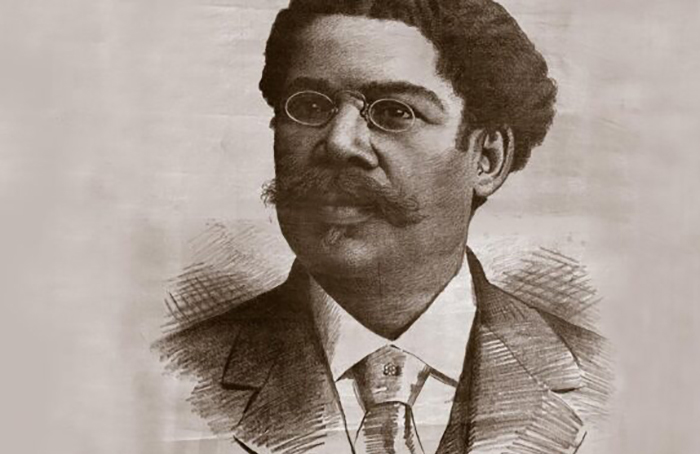
On March 5, 1933, the illustrious patriot Juan Gualberto Gómez, journalist and organizer in Cuba of the Necessary War, died in Havana, faithful until the last minute to the cause of the sovereignty of the Homeland.
He was a frontal fighter against imperialism, especially against the interventionist appendix of the Platt Amendment, and a defender of the rights of blacks and mestizos during the republican stage.
He was born on July 12, 1854, and his trajectory gains more value as an example of personal growth and improvement when it is known that he came into the world in a humble and humiliated cradle, born to enslaved parents, descendants of Africans who bought their freedom with great sacrifice while he was still in his mother's womb.
As if this were not enough, the great patrician added the merit of earning the trust of José Martí, summoner and evocator of the final feat for independence, who designated him to be the man in charge in Cuba of the preparations for the Necessary War, begun on February 24, 1895.
The patriotic vocation, honesty, courage, and intelligence of Juan Gualberto determined the Apostle's decision.
The hero's trajectory was very active in the conception and organization of conspiratorial actions from his entry in 1892 into the ranks of the Cuban Revolutionary Party, founded by Martí to support the war project, and as a member of the first Constituent Assembly of 1901.
He came from the practice of militant journalism, deployed by the dictates of his conscience starting in 1877. A profession in which he was a soldier and a crackling columnist, work for which he was intellectually very well endowed.
How had a son of miserable colonial slaves become that brilliant being, at the same time faithful and coherent with his class origin?
The freedom bought by his parents before he was born at the Vellocino sugar mill, in the current province of Matanzas, facilitated an act of patronage that his parents' masters had for him. A very rare stroke of luck, but one that fortunately befell him.
It turns out that the owner of lives and property was a humanitarian person, in whom a great affection grew for the sharp-witted little boy and his honest parents. In his native territory, she began by paying for his primary education and later took him to live with her in the capital, where she ensured the child continued his education in schools accessible to those with black skin.
In 1869, after the outbreak of the first war of independence, the family that protected him settled in Paris, fearful of the insurgency's advance towards the West.
The boy was with them and he stayed there studying, alternating night courses with daytime learning of carriage construction and repair.
This improvement was possible because in the City of Light there existed, in some way, the most favorable environment of the time in favor of equality and fraternity among all human beings, regardless of skin color, due to the immanence of the French Revolution.
Juan Gualberto took advantage of the time and that possibility, not so idyllic, but he rose up, fought, and became a cultured and good man.
As he later demonstrated, he sought to forge his intelligence based on knowledge and principles, drinking from the best and most elevated universal sources, heavily marked by his origins that neither he nor the rest of the world forgot.
Upon returning to Cuba in 1878, he coincided with José Martí on a trip the future Apostle was making incognito to Havana, as he lived abroad in exile.
The sympathy and agreement between them was rapid, and from then on their lives had a relationship that increasingly tightened, through correspondence and messages, in organizing the struggle for the liberation of the homeland.
It was the year in which the first War of Independence had ended with the unacceptable capitulation for the lawful patriots of the Pact of Zanjón, rejected by the giant General Antonio Maceo and many followers, through the Protest of Baraguá.
The following year, Juan Gualberto, fully identified with the best of libertarian thought, was deported to Spain when his ties to the conspirators of the Little War (Guerra Chiquita) were discovered.
He already had to his credit the founding in 1879 of the newspaper La Fraternidad, a publication that ceased publication with his forced departure.
Only in 1890 was he able to return, and he dedicated himself to strengthening his ties with The Teacher (Martí), who did not cease thinking about the continuity of the Cuban Revolution.
From exile, Martí was already contacting Cuban patriots scattered throughout the United States, Central America, and Cuba to selflessly organize the final anti-colonial insurrection.
When the decisive moment arrived, despite Juan Gualberto's efforts throughout the country and especially in the West, the uprising of February 24, 1895 in Matanzas was a failure.
Not so in the East, where the great GuillermónMoncada was operating with his last physical strength.
Committed to the cause to the core, he was pursued and captured again, so he had to travel back to France.
After the end of Spanish domination in 1898, he went to the United States, where he cooperated with the Cuban Revolutionary Party, and in that same year he returned to the homeland definitively.
Following the interference and invasion of the U.S. that frustrated Cuban independence, due to his brave and honorable trajectory, he was elected delegate to the Assembly of Representatives, opened on October 24, 1898. In this, he served as a member from November 11, 1898 to June 30, 1899.
He accompanied Major General CalixtoGarcía to Washington in 1898, as part of the commission that would negotiate recognition for the Assembly and the necessary funds for the disbandment of the Liberating Army.
Appointed delegate for Oriente on September 15, 1900, to the Constituent Assembly, in which he fought radically, without truce, against the Platt Amendment, which was finally imposed. (Text and photo: ACN)